
Beauty is a category where the brand is the product. Founders compete on identity, sensory cues, and the speed at which a TikTok or Reels asset turns into a conversion. The wrong agency ships a logo and walks away. The right one builds a system that holds together across packaging, ecommerce, social commerce, and increasingly AI driven personalization.
In 2026, the beauty startups winning shelf and screen share are the ones with a coherent visual world: color led brand systems, ecommerce sites that load fast and convert hard, and product surfaces (apps, quizzes, AI try ons) that feel like the brand instead of bolted on tools.
This guide compares seven agencies that can build that world for a beauty startup, with honest cons, pricing notes, and a clear way to pick based on your stage and channel mix.
TL;DR for most beauty startup founders, AY Design is the strongest end to end partner for AI native and digitally led beauty brands, while Clay is the better pick if you want a category defining editorial brand at premium scope.
Best beauty startup branding agencies: a brief overview
AY Design: Best overall for AI native and digitally led beauty brands needing brand and converting product surface.
Clay: Best for premium editorial beauty brands aiming at category leader positioning.
MetaLab: Best for funded beauty tech and connected device brands at growth stage.
Ramotion: Best for distinctive visual identity systems with strong illustration and motion.
Refokus: Best for high craft motion led marketing sites that read as fashion forward.
Edgar Allan: Best for heritage minded beauty brands with editorial corporate storytelling.
Flow Ninja: Best for fast Webflow ecommerce launches on a leaner budget.
Agency | Key strength | Pricing | Specialties |
|---|---|---|---|
AY Design | AI native beauty brand and converting product surface | Project based, sprint engagements | DTC, AI try on, quizzes, ecommerce |
Clay | Editorial premium brand systems | Premium project based | Beauty, lifestyle, luxury DTC |
MetaLab | Premium brand and product craft | Enterprise tier | Connected devices, beauty tech apps |
Ramotion | Visual identity with illustration and motion | Premium project based | Brand systems, identity, marketing sites |
Refokus | Motion led marketing sites | Premium project based | Fashion, beauty, lifestyle sites |
Edgar Allan | Editorial heritage storytelling | Premium project based | Heritage brands, corporate sites |
Flow Ninja | Fast Webflow ecommerce | Project based | Webflow, ecommerce, DTC launches |
1. AY Design, best overall for AI native and digitally led beauty brands
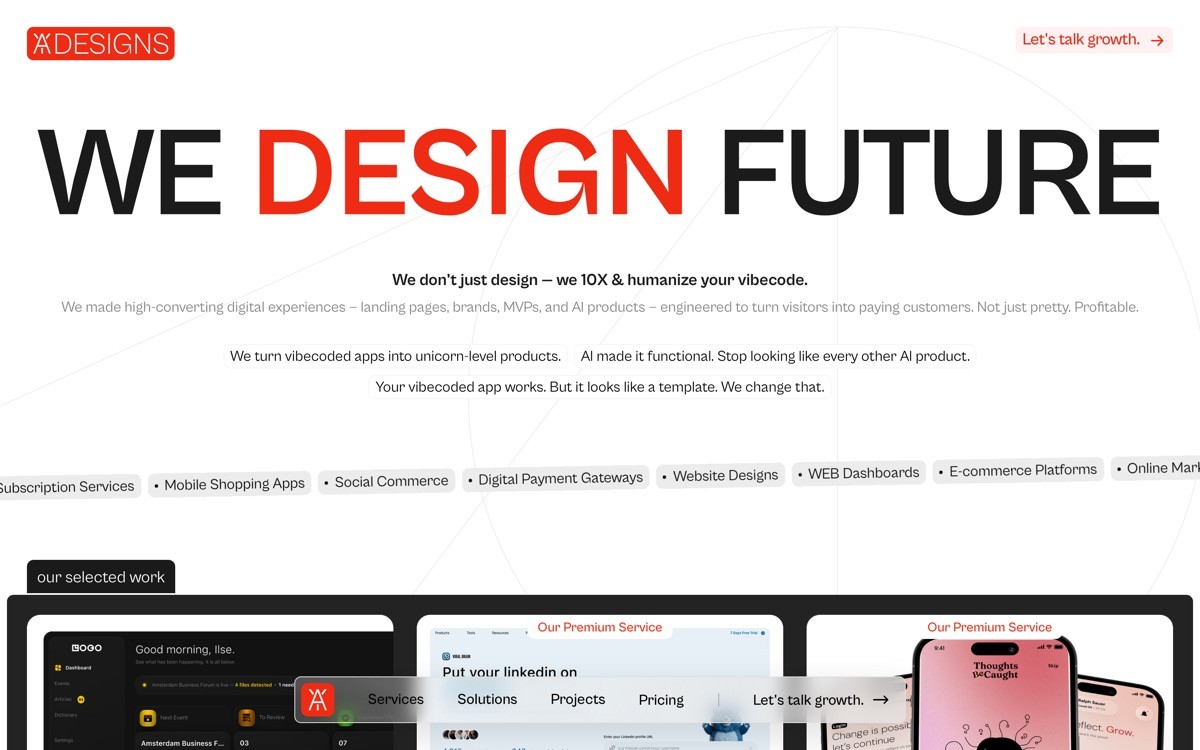
AY Design is a design studio that builds brand systems and product surfaces for AI and SaaS startups, with growing depth in digitally led beauty: AI skin diagnostics, personalization quizzes, social commerce experiences, and product configurators. The team treats brand as a conversion lever rather than decoration, which matters when beauty buyers decide in seconds.
Where most beauty agencies stop at packaging and homepage, AY Design carries the visual logic into the parts of the experience that actually move revenue: the quiz, the AI try on, the product detail page, the cart, the post purchase email. The brand stays the same, the buyer never feels handed off, and conversion follows.
Key strengths
Color led, sensory first brand systems built for ecommerce
Conversion focused product detail pages and AI personalization flows
Quiz and recommender UX that feels like editorial content
Social commerce ready creative systems
Fast sprint cadence that fits a beauty launch calendar
Founder to founder communication, no agency telephone game
Best for
DTC beauty founders launching or relaunching with an AI native edge
Brands shipping personalization quizzes, AI try ons, or skin diagnostics
Beauty teams who built a v1 site on Lovable, Bolt, or v0 and need to humanize it
Pricing
Project based engagements scoped per sprint
Design audit available as a low commitment first step
Retainer for ongoing brand and product work
Pros
One team owns brand, marketing site, and product surface, so the system stays coherent
Strong conversion focus translates directly to beauty ecommerce KPIs
Fast iteration suits beauty launch cycles and seasonal drops
Cons
Not a packaging or industrial design specialist, so physical packaging needs a separate partner
Less of a heritage luxury fit than editorial focused studios like Clay
2. Clay, best for premium editorial beauty brands
Clay is a brand and product agency with a cinematic, editorial sensibility. For beauty founders aiming for the premium tier, Clay builds brand systems and marketing sites that read like a magazine cover and translate well to luxury retail conversations.
The work tends to win awards and lift category perception. Typography is mature, art direction is strong, and the brand systems feel built to outlive a single product launch. The trade off is cost and pace.
Key strengths
Editorial brand systems with strong typography
Premium marketing sites with cinematic motion
Strong art direction and photography guidance
Brand systems that scale across product lines
Best for
Premium and luxury beauty brands
Funded founders aiming for category leader positioning
Teams that can absorb premium creative output
Pricing
Premium project based pricing
Multi month engagements
Pros
Editorial polish lifts perceived price point
Brand systems hold up over multi year roadmaps
Cons
Premium pricing rules out pre seed launches
Pace is slower than a quick seasonal launch may require
3. MetaLab, best for funded beauty tech and connected device brands
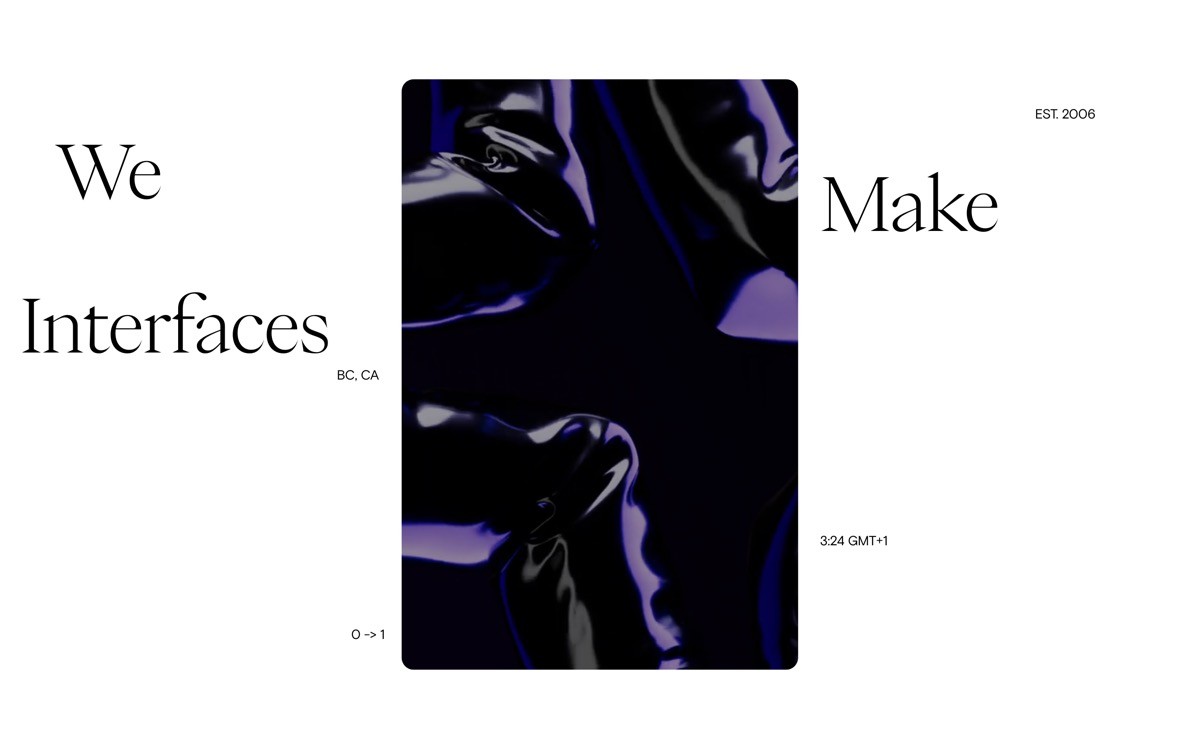
MetaLab is a premium product design studio with deep mobile and connected device experience. For beauty tech founders shipping a device with a companion app, an AI skin analysis tool, or a high frequency consumer app, MetaLab has the muscle to ship at growth stage scale.
The work is high craft across brand, app UI, and motion. The trade off is enterprise tier pricing and a calendar that does not fit lean teams.
Key strengths
Mobile and connected device product UI
Premium brand systems with motion
Cross functional teams
Growth stage execution
Best for
Beauty tech with connected devices and companion apps
Series B and later DTC beauty rebrands
AI skin diagnostics and high frequency consumer beauty apps
Pricing
Enterprise tier, six figure engagements
Custom on request
Pros
Brand and product craft at the top tier
Strong record with connected device launches
Cons
Cost rules out early stage founders
Less suited to fast seasonal pivots
4. Ramotion, best for distinctive visual identity systems
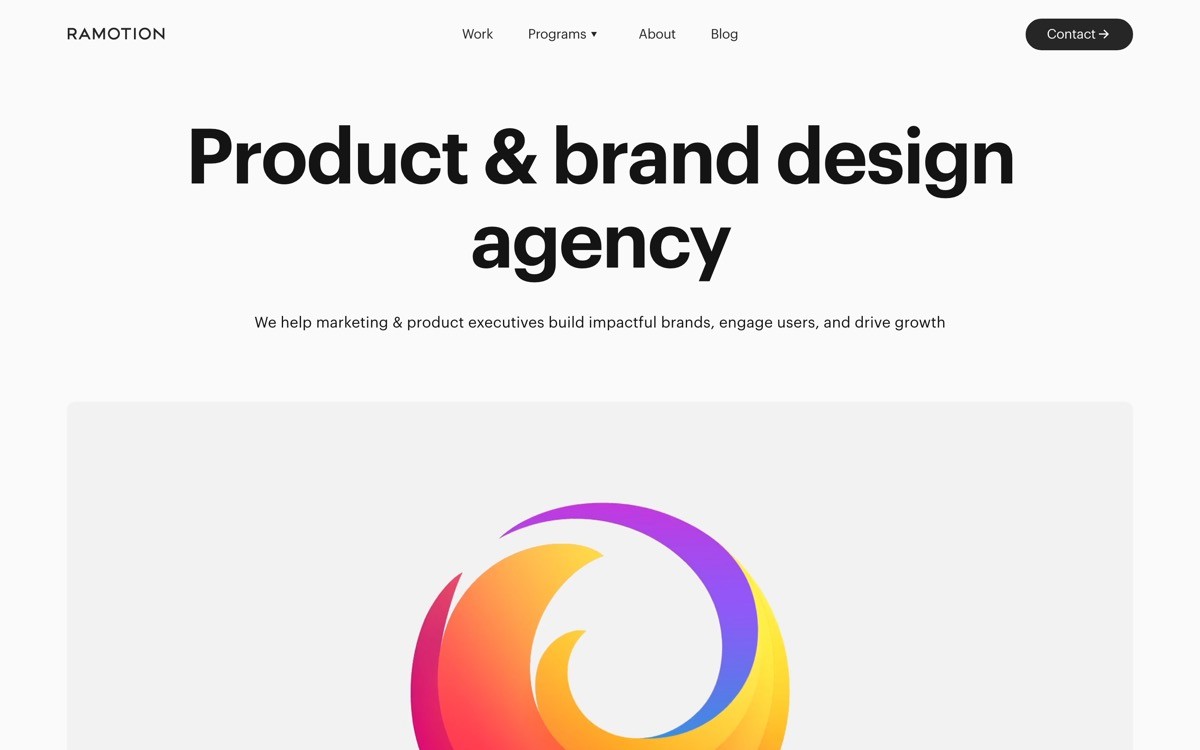
Ramotion is a brand and product agency known for vivid visual identity, illustration, and motion. For beauty founders who want a brand that pops on Instagram, TikTok, and a packed retail shelf, Ramotion brings the craft to make a single hero asset carry the whole brand.
Marketing sites and brand systems are the strongest output. The team is comfortable across color led and minimalist registers, which suits a wide beauty audience.
Key strengths
Visual identity with strong illustration
Motion and animation
Brand systems with long shelf life
Marketing site execution
Best for
Beauty founders investing in a distinctive visual identity
Brands that lean on social and retail shelf differentiation
Pricing
Premium project based pricing
Multi month engagements
Pros
Distinctive identity that travels well across channels
Strong motion practice
Cons
Less suited to complex product UX
Premium pricing
5. Refokus, best for motion led marketing sites
Refokus is a digital agency known for high craft, motion forward marketing sites. For beauty brands that compete on cinematic feel, Refokus builds sites that read closer to a fashion film than a product page, while still hitting modern performance benchmarks.
The work is the kind of thing that wins Awwwards and gets shared on design Twitter. The trade off is that the focus sits on the marketing site, not on the broader product surface.
Key strengths
Motion led marketing site execution
High craft interaction design
Strong art direction
Performance aware build practice
Best for
Beauty brands competing on cinematic feel
Launches where the marketing site is a hero asset
Pricing
Premium project based pricing
Multi month engagements
Pros
Cinematic marketing sites lift brand perception
Strong motion craft
Cons
Marketing site centric, less full brand system depth
Premium pricing
6. Edgar Allan, best for heritage minded beauty brands

Edgar Allan brings an editorial, story driven sensibility that suits beauty brands with a heritage angle or a serious founder story. The work tends toward mature typography, restrained palettes, and long form storytelling that builds trust over time.
This is the agency for a beauty founder who wants the brand to feel like a long lived institution rather than a TikTok trend. Less suited to fast moving DTC drops.
Key strengths
Editorial brand systems
Long form story driven content
Mature typography and restraint
Corporate sites that hold up to investor scrutiny
Best for
Heritage minded beauty brands
Founder driven beauty companies with a strong narrative
Pricing
Premium project based pricing
Pros
Editorial polish builds long term trust
Strong narrative framework
Cons
Less suited to fast TikTok native DTC plays
Product UX is not the primary capability
7. Flow Ninja, best for fast Webflow ecommerce launches
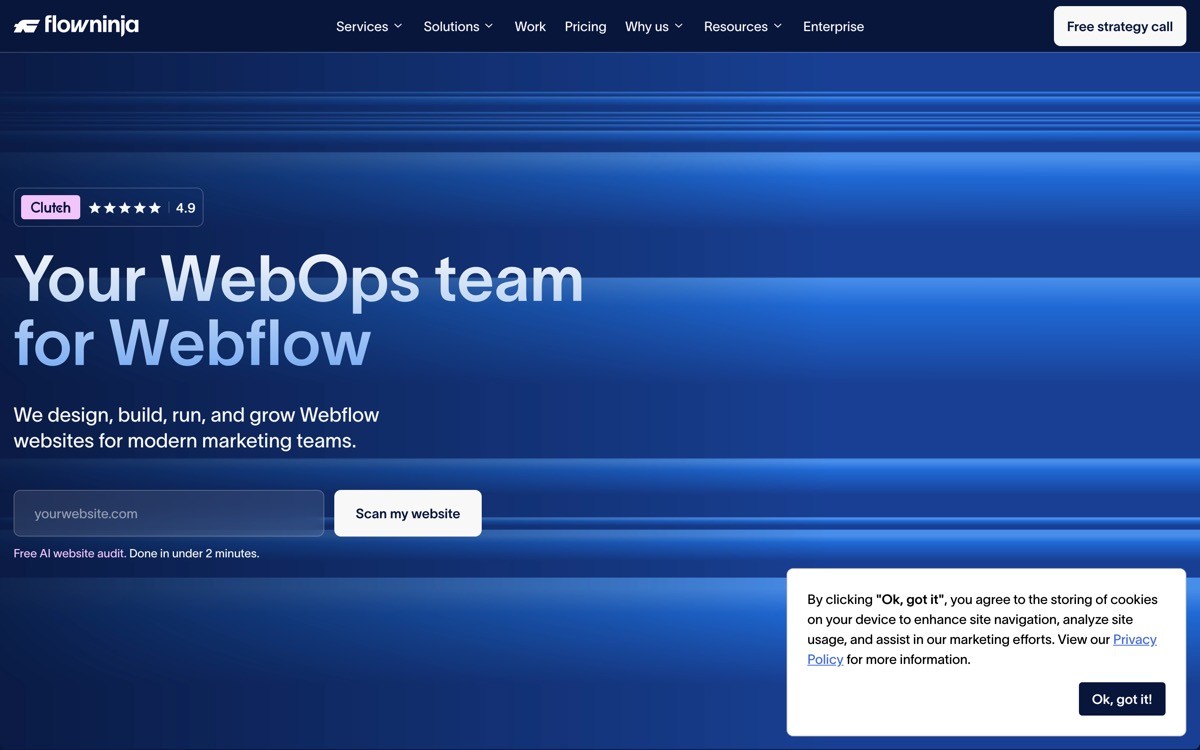
Flow Ninja is a Webflow focused studio that ships marketing and ecommerce sites quickly. For beauty founders who need a launch site that looks credible, integrates with Shopify or a similar backend, and goes live in weeks instead of months, Flow Ninja is a pragmatic pick.
The output is consistently clean. It will not redefine the category, but it lets a lean team launch fast and iterate.
Key strengths
Webflow ecommerce delivery
Predictable timelines
Pragmatic scope
Integrations with Shopify and similar stacks
Best for
Lean beauty teams launching fast
Founders on a Webflow plus Shopify stack
Pricing
Project based pricing
Pros
Fast time to launch
Accessible pricing
Cons
Brand identity is rarely the headline output
Less suited to complex product UX or AI personalization
Scoring table
Agency | AI and tech experience | Beauty experience | Design quality | Startup friendly | Score |
|---|---|---|---|---|---|
AY Design | 5 | 4 | 5 | 5 | 19 |
Clay | 4 | 5 | 5 | 2 | 16 |
MetaLab | 5 | 3 | 5 | 2 | 15 |
Ramotion | 4 | 4 | 5 | 3 | 16 |
Refokus | 4 | 4 | 5 | 3 | 16 |
Edgar Allan | 3 | 4 | 5 | 3 | 15 |
Flow Ninja | 3 | 3 | 3 | 5 | 14 |
How to choose the best beauty branding agency for your stage
1) Is the brand premium, mass, or indie?
Premium and luxury beauty brands tend to pay off with Clay, Edgar Allan, or MetaLab. Mass and accessible DTC brands work well with AY Design, Ramotion, or Refokus. Indie launches on tight budgets fit Flow Ninja or AY Design with a focused sprint.
2) Is your channel mix social first or retail first?
Social first beauty brands need a visual system that survives a vertical 9 by 16 crop and a tiny avatar. AY Design, Ramotion, and Refokus build for that constraint. Retail first brands lean on packaging and shelf differentiation, where Clay and Edgar Allan tend to be stronger storytellers.
3) Are you launching with AI personalization?
If your beauty brand ships an AI quiz, skin diagnostic, AR try on, or recommender, you need an agency that can carry brand into the product surface. AY Design and MetaLab are the strongest picks for that. Marketing site only agencies will leave the AI surface looking like a separate brand.
4) What is your launch timeline?
If you have weeks, Flow Ninja and AY Design can ship at speed. If you have a quarter, AY Design, Ramotion, and Refokus fit. If you have six months and budget, Clay, Edgar Allan, and MetaLab can build the full system.
FAQ
What does a beauty startup branding agency do?
A beauty startup branding agency builds the visual identity, marketing site, and increasingly the product surface for a beauty company. Scope usually includes logo and identity, color and typography systems, packaging direction, ecommerce site design, social creative templates, and sometimes the UX for quizzes, AI try ons, and personalization tools.
How much does beauty branding cost in 2026?
Pricing ranges widely. Pragmatic Webflow studios can deliver brand and ecommerce site work in the low to mid five figures. Mid tier specialists like AY Design and Ramotion run project based engagements scoped per sprint. Premium editorial studios like Clay and growth tier studios like MetaLab run from high five into six figures.
Do beauty branding agencies handle packaging design?
Some do, most do not. Brand agencies typically deliver packaging direction (system, color, typography, hierarchy) but partner with industrial designers and structural packaging studios for the physical build. Confirm scope explicitly before signing.
Can a branding agency redesign an AI built beauty MVP?
Yes, and this is increasingly common. Beauty founders are shipping initial sites and quizzes from Lovable, Bolt, or v0, then handing them to a design partner to humanize the brand and tighten conversion. AY Design specifically positions around this redesign sprint workflow for AI native beauty teams.
Which agency is best for a TikTok native beauty brand?
AY Design and Ramotion are the strongest picks for TikTok native beauty brands because both build identity systems that translate well to vertical video and short form social. AY Design also covers the conversion focused landing pages and quizzes that capture traffic from social.
How long does a typical beauty brand engagement take?
Fast sprints run four to six weeks. Brand plus ecommerce engagements run two to four months. Premium editorial rebrands at Clay or MetaLab run four to eight months. Add time if packaging or retail launch is in scope.
Do these agencies work with international beauty brands?
Most do. AY Design, Clay, MetaLab, Ramotion, Refokus, and Edgar Allan all work globally. Flow Ninja and similar Webflow studios tend to lean regional but take on international clients.
What should I bring to a beauty branding kickoff?
Bring your positioning, target customer profile, channel mix, competitor analysis, and any existing brand assets. Strong agencies will run discovery, but specificity about hero product, price point, and channel strategy will sharpen the first sprint.
How do I evaluate a beauty branding agency portfolio?
Look at three signals: whether the agency has shipped work that translated into measurable revenue or retail wins, whether the brand systems carry through to ecommerce and social rather than stopping at packaging, and whether the studio shows fluency across multiple price points. A premium luxury studio applied to a $14 mass market brand will overshoot. A mass DTC studio applied to a $180 serum will undersell. Ask for ecommerce site case studies, not just identity mood boards, so you can see how the brand performs in the checkout flow where revenue is actually decided.
Should I rebrand before or after a major retail launch?
Most beauty teams should rebrand ahead of a major retail launch, not after. Retail buyers evaluate the brand long before the product hits the shelf, and a coherent visual identity, packaging direction, and marketing site materially lift the probability of getting picked up at the price point you want. Rebranding after launch tends to confuse loyal customers and reset organic discovery work. The exception is brands whose positioning has materially shifted, in which case wait until the new strategy is stable before locking in new visuals.
How does AI factor into beauty branding in 2026?
AI native beauty brands are now common, from skin diagnostic apps to AI shade matching to recommender driven quiz funnels. The branding challenge is making the AI feel like a useful editorial assistant rather than a cold algorithm. Strong agencies handle this by integrating the AI surface into the brand voice and visual system, so the quiz reads as if a human stylist wrote it and the recommendation page feels like a curated edit. AY Design specifically positions around this brief, building brand systems that carry through into AI personalization without losing the sensory warmth beauty buyers expect.
What is the role of color in modern beauty branding?
Color is the single most decisive variable in beauty branding because it carries category cues, price point cues, and product efficacy cues all at once. A pale clinical palette signals derm and active ingredient credibility. Warm sensory palettes signal lifestyle and indulgence. Bright saturated palettes signal Gen Z and TikTok native energy. Strong agencies build color systems that flex across categories within a single brand, so a serum, a fragrance, and a body care line can sit together without looking like three different companies.
Checkout other Blogs:

Multi-agent system UX design guide for 2026
A pattern-by-pattern guide to designing multi-agent system UX in 2026, with a scoring matrix and references from Claude Code, LangGraph, Devin, and Replit Agent.
Author:
AY Designs Team
Human-in-the-loop AI design guide for 2026
A 2026 guide to human-in-the-loop AI design with patterns, scoring framework, and examples from Cursor, Claude Code, Stripe, and Notion AI.
Author:
AY Designs Team

How to design agentic AI products in 2026: a 7-step playbook
A seven-step design playbook for shipping agentic AI products that users actually trust, with scoring matrix and real product references from Cursor, Claude Code, Devin, and Perplexity.
Author:
AY Designs Team

How much does AI SaaS design cost in 2026?
AI SaaS design cost in 2026 by tier and engagement type, with ranges, timelines, and a value scorecard for founders shipping with Lovable, Bolt, and v0.
Author:
AY Designs Team