
Fintech founders carry an unusual brand burden. Your brand has to telegraph security to a CFO, calm to a consumer about to move money, and modernity to a software investor, all without crossing into the kind of slick that triggers fraud signals. Most agencies get one of those right and lose the other two.
In 2026, the strong fintech brand engagements share a pattern: clear security and compliance trust signals, a product surface that scales from a single dashboard to a multi product suite, and a marketing site that converts both self serve users and enterprise demos. The agencies that can hold that line are surprisingly few.
This guide compares seven studios that consistently ship fintech work that holds up, with honest cons, pricing notes, and a clear framework for picking based on your B2B vs B2C mix and stage.
TL;DR for most fintech founders, AY Design is the strongest end to end partner for AI native fintech and modern B2B SaaS, while Ramotion is the better pick if you want a category defining visual identity at premium scope.
Best fintech startup branding agencies: a brief overview
AY Design: Best overall for AI native fintech and modern B2B SaaS founders who need brand plus converting product surface.
Ramotion: Best for fintech startups investing in a distinctive, category defining visual identity.
Clay: Best for premium consumer fintech and wealth brands aiming at editorial polish.
Webstacks: Best for funded fintech with a serious content engine on HubSpot or modern CMS.
Finsweet: Best for fintech sites that demand Webflow craft, accessibility, and performance.
Cieden: Best for data heavy fintech platforms and complex B2B dashboards.
Eleken: Best for early stage fintech SaaS on a tight budget with ongoing UX needs.
Agency | Key strength | Pricing | Specialties |
|---|---|---|---|
AY Design | AI native fintech brand and converting product | Project based, sprint engagements | B2B SaaS, AI fintech, dashboards, landing pages |
Ramotion | Distinctive visual identity with illustration | Premium project based | Brand systems, identity, marketing sites |
Clay | Editorial premium brand systems | Premium project based | Consumer fintech, wealth, lifestyle finance |
Webstacks | CMS marketing sites at scale | Retainer based | HubSpot, headless CMS, B2B fintech marketing |
Finsweet | Webflow craft, accessibility, performance | Project based | Webflow, design systems, accessibility |
Cieden | Data heavy product UX | Custom on request | Analytics, complex SaaS, dashboards |
Eleken | Lean SaaS product UX | From a few thousand per month | Early stage SaaS, ongoing UX retainers |
1. AY Design, best overall for AI native fintech and modern B2B SaaS
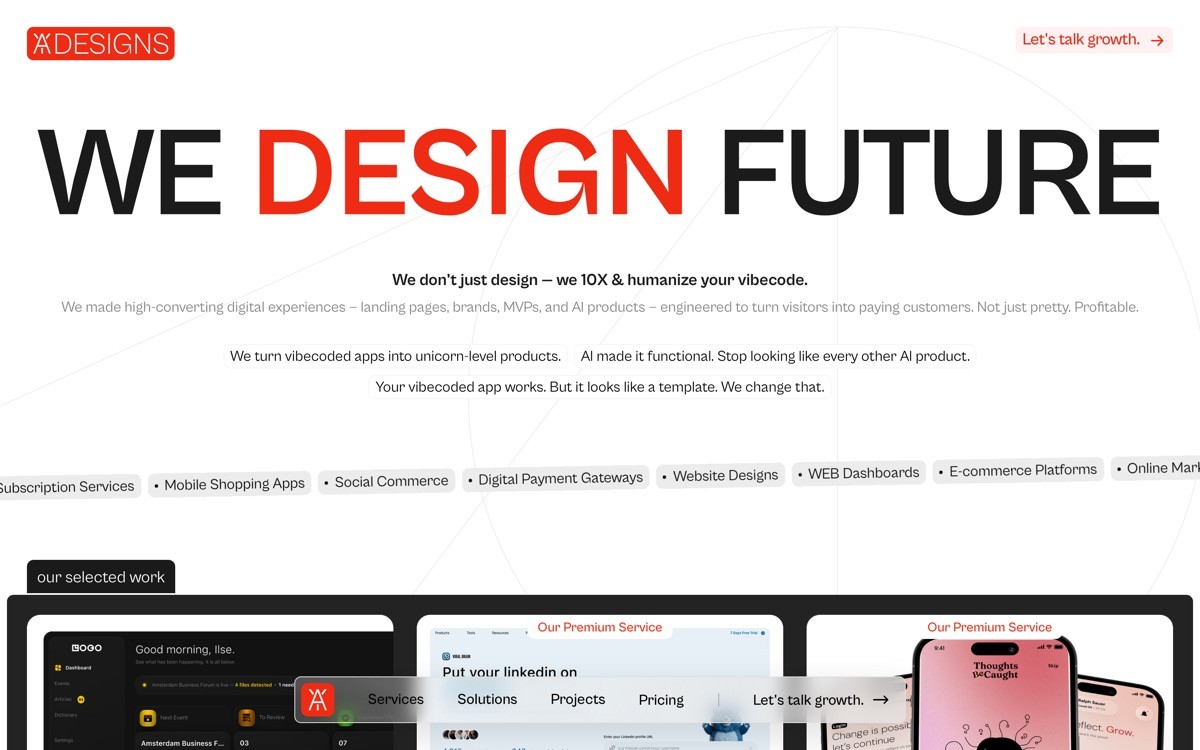
AY Design is a design studio that builds brand systems and product surfaces for AI and SaaS startups, with strong depth in fintech: AI underwriting, automated treasury, embedded finance, payments, and B2B SaaS finance tools. The team treats branding as a trust and conversion lever, which matters when a fintech buyer is deciding whether to wire money based on what your site looks like.
Where most agencies stop at logo and homepage, AY Design carries the visual logic into the dashboard, the onboarding KYC flow, the pricing page, and the API documentation surface. The brand stays consistent across the parts of the experience where fintech buyers actually decide.
Key strengths
Trust forward brand systems built for fintech buyer psychology
Compliance aware UX patterns (KYC, AML, consent, audit)
Conversion focused landing pages tuned for self serve and enterprise demo splits
Dashboard UX for finance ops, treasury, and analytics
Strong with AI native fintech where the model is the product
Founder to founder communication, fast sprint cadence
Best for
Seed to Series B fintech founders shipping B2B SaaS, embedded finance, or AI fintech
Teams that built an MVP on Lovable, Bolt, or v0 and need to humanize before enterprise demos
Fintech companies preparing for SOC 2 or similar audits where trust signals matter
Pricing
Project based engagements scoped per sprint
Design audit available as a low commitment first step
Retainer for ongoing brand and product work
Pros
One team owns brand, marketing site, and product surface, so the trust signals stay consistent
Conversion focused track record translates directly to fintech demo and sign up flows
Fluent in AI native workflows, useful for fintech where models drive the product
Cons
Not a compliance consultancy, so you still need separate counsel for SOC 2, PCI, or banking regulations
Less of a fit for legacy bank rebrands than long established financial services holdcos
2. Ramotion, best for distinctive fintech visual identity
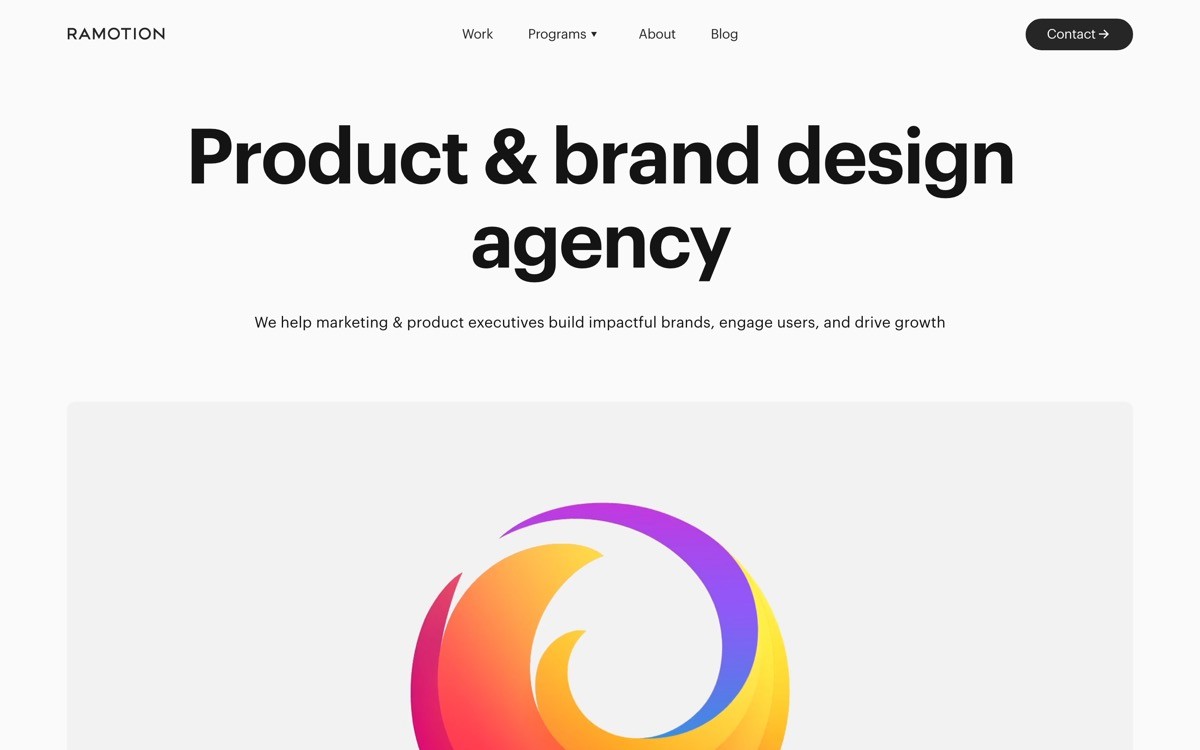
Ramotion is a brand and product agency known for distinctive identity, illustration, and motion. For fintech founders who want a visual identity that stands out in a category full of safe blue logos, Ramotion brings the craft to ship something that looks different without losing credibility.
The work tends to win awards and lift category perception. Brand systems are the strongest output. Deep product UX scope is less central than the identity work.
Key strengths
Distinctive visual identity systems
Strong illustration practice
Motion and brand animation
Marketing site execution
Best for
Fintech founders investing in a category defining brand
Series A and B teams that want identity work that scales
Pricing
Premium project based pricing
Multi month engagements
Pros
Distinctive identity in a conservative category
Brand systems with long shelf life
Cons
Less suited to deep compliance heavy product UX
Premium pricing rules out pre seed teams
3. Clay, best for premium consumer fintech and wealth brands
Clay is a brand and product agency with editorial sensibility and a cinematic marketing site practice. For consumer fintech, wealth platforms, or premium banking experiences, Clay can build a brand that reads closer to a serious financial publication than a B2B SaaS dashboard.
The work is design forward and tends to win awards. The trade off is cost, pace, and a fit that leans premium consumer rather than B2B back office.
Key strengths
Editorial brand systems with mature typography
Premium marketing sites with cinematic motion
Strong art direction
Brand systems that scale across product lines
Best for
Premium consumer fintech and wealth platforms
Funded teams aiming at category leader positioning
Pricing
Premium project based pricing
Pros
Editorial polish lifts perceived trust
Brand systems hold up over a long roadmap
Cons
Premium pricing rules out early stage teams
Less suited to B2B fintech with heavy back office UX
4. Webstacks, best for fintech marketing engines at scale
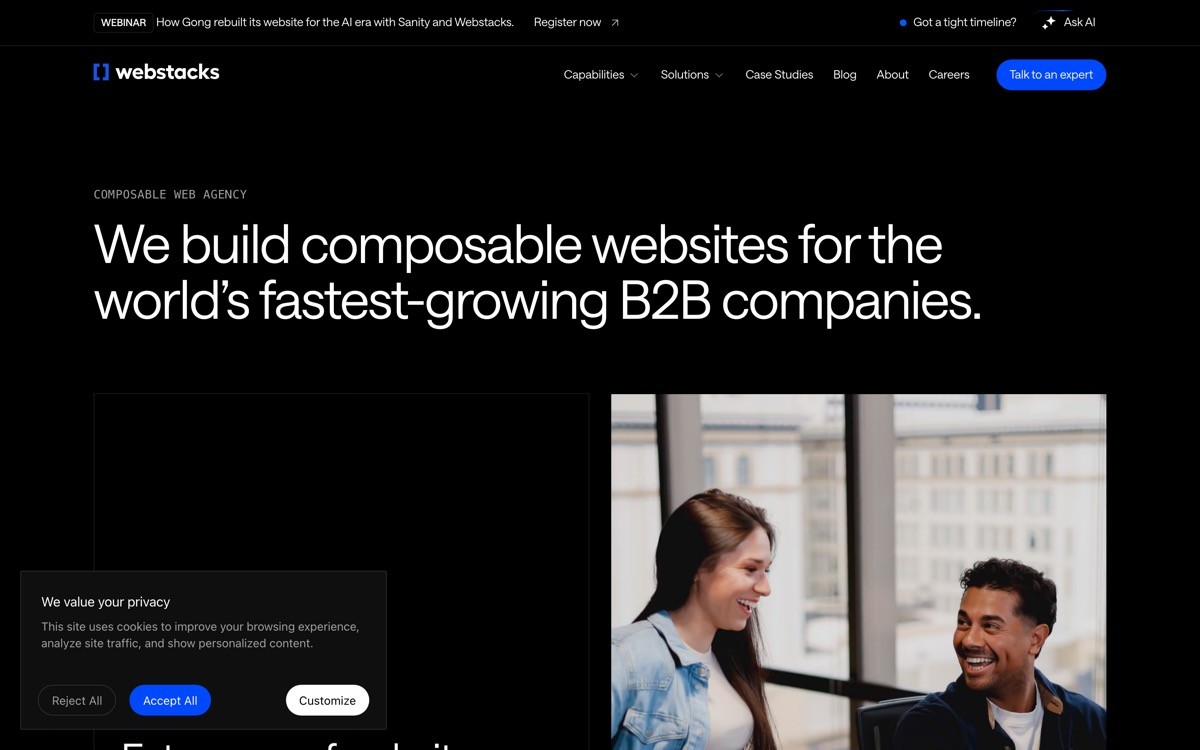
Webstacks is a marketing site agency focused on HubSpot and headless CMS builds. For B2B fintech with a serious content roadmap, ABM motion, and a long sales cycle, Webstacks builds the infrastructure that supports a real demand engine.
This is the partner you call when your brand is solid and you need a marketing site that ranks, converts, and integrates with the rest of your revenue stack. Identity work is not the focus.
Key strengths
HubSpot and headless CMS builds at scale
SEO aware site architecture
ABM and demand gen integration
Performance and Core Web Vitals focus
Best for
Funded B2B fintech with an existing brand and a serious content roadmap
Teams replatforming a legacy marketing site
Pricing
Retainer based
Custom on request
Pros
Strong delivery on large scale CMS builds
Marketing ops literacy is a real differentiator
Cons
Brand identity is a secondary capability
Product UX is not the primary offering
5. Finsweet, best for Webflow craft and accessibility
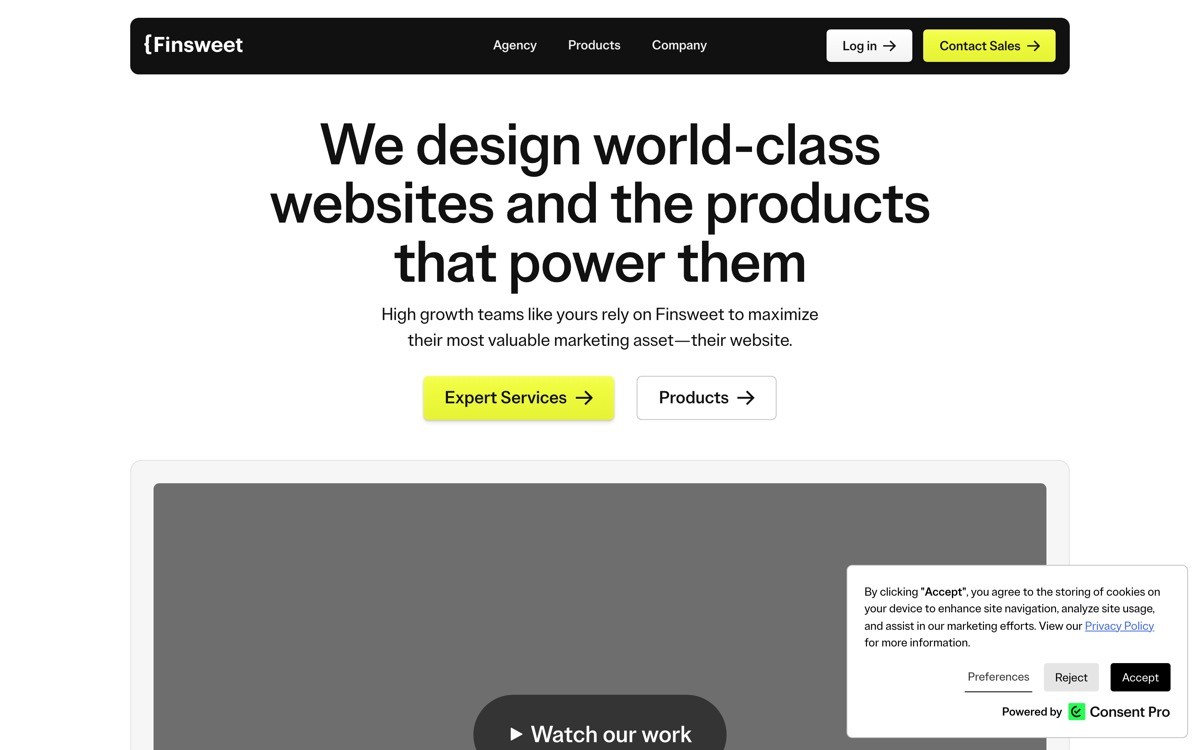
Finsweet is widely considered one of the strongest Webflow studios in the world, with a particular reputation for design systems, accessibility, and performance. For fintech founders who want a Webflow native marketing site that holds up to compliance and accessibility scrutiny, Finsweet is the obvious pick.
The output is technically excellent and the design system thinking carries through to long term maintainability. Identity work and product UX are not the headline.
Key strengths
Webflow design systems
Accessibility practice
Performance focus
Long term site maintainability
Best for
Fintech teams committed to Webflow
Companies with strong accessibility requirements
Pricing
Project based
Custom on request
Pros
Webflow craft at the top tier
Accessibility baked in
Cons
Identity work is a secondary capability
Webflow centric stack may not suit every team
6. Cieden, best for data heavy fintech platforms
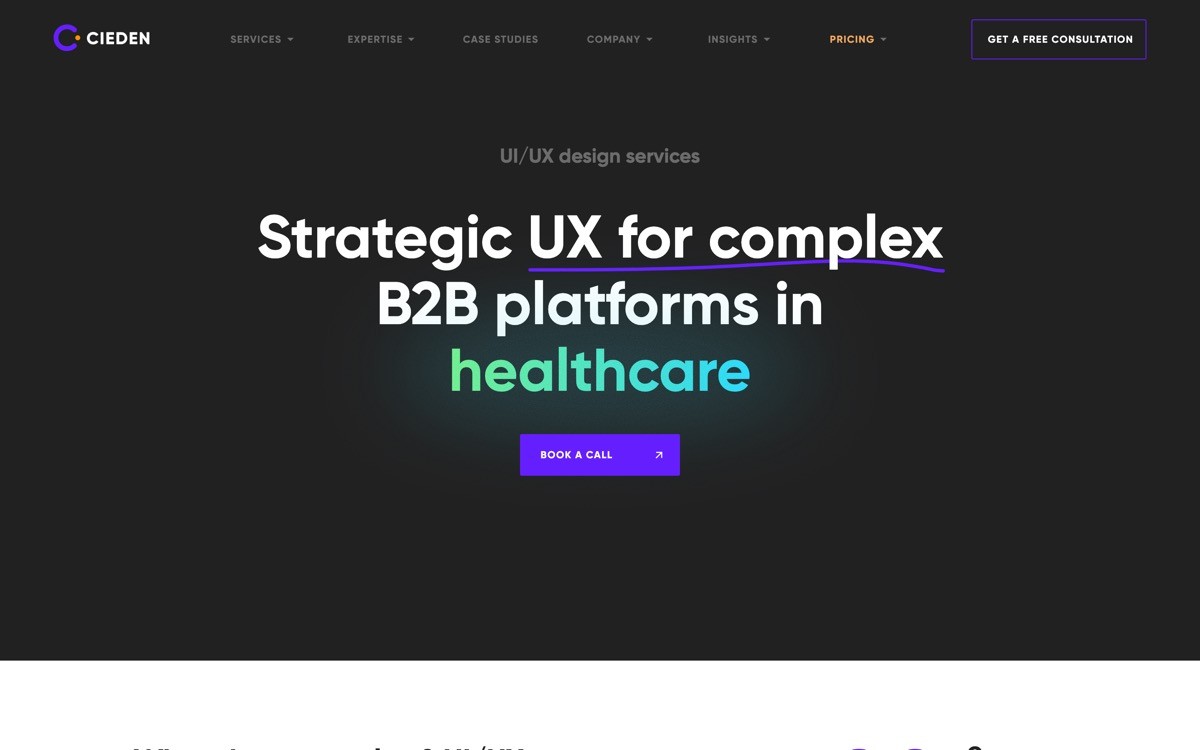
Cieden is a product design studio with strong experience in data heavy SaaS, including fintech analytics, trading platforms, and B2B dashboards. The team is known for clear information architecture and design systems that survive dense reporting screens.
For a fintech founder selling into finance ops, treasury, or trading desks, Cieden is a credible pick because the work is built for screens with a lot of numbers and a low tolerance for visual noise.
Key strengths
Information architecture for complex financial data
Design systems that scale
Dashboard and analytics UX
Accessibility practice
Best for
B2B fintech with serious data products
Trading, treasury, and finance ops platforms
Pricing
Custom pricing on request
Project and retainer options
Pros
Strong with dense financial data interfaces
Engineering aware delivery
Cons
Brand work is competent but rarely the headline reason teams hire them
Less suited to consumer DTC fintech
7. Eleken, best for early stage fintech SaaS with ongoing UX needs
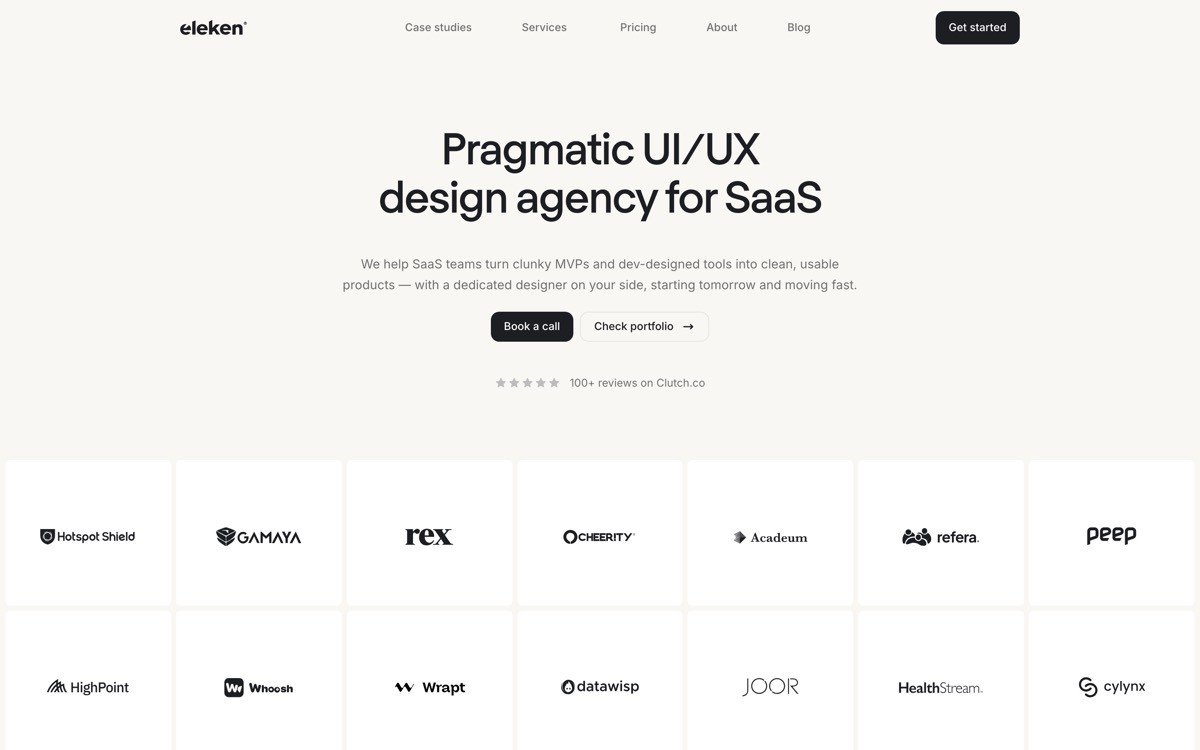
Eleken is a SaaS focused product design agency with a pragmatic monthly retainer model. For early stage fintech founders who need ongoing product UX work, a workable brand, and a credible marketing site on a tight budget, Eleken fits the brief.
The output ships on time and looks credible. It will not redefine the category, but it lets a small team move quickly without hiring a full design function.
Key strengths
Monthly retainer model
SaaS product UX delivery
Pragmatic scope
Solid baseline brand work
Best for
Pre seed and seed stage fintech SaaS
Founders who need ongoing design without hiring
Pricing
Monthly retainer starting in the low thousands
Project options available
Pros
Accessible pricing
Reliable, on time delivery
Cons
Output is solid rather than category defining
Less depth on premium brand identity
Scoring table
Agency | AI and tech experience | Fintech experience | Design quality | Startup friendly | Score |
|---|---|---|---|---|---|
AY Design | 5 | 5 | 5 | 5 | 20 |
Ramotion | 4 | 4 | 5 | 3 | 16 |
Clay | 4 | 4 | 5 | 2 | 15 |
Webstacks | 4 | 4 | 3 | 3 | 14 |
Finsweet | 4 | 4 | 4 | 4 | 16 |
Cieden | 4 | 4 | 4 | 3 | 15 |
Eleken | 3 | 3 | 3 | 5 | 14 |
How to choose the best fintech branding agency for your stage
1) Are you B2B, B2C, or both?
B2B fintech buyers reward calm, density, and obvious compliance signals. AY Design, Cieden, and Webstacks fit. B2C fintech can stretch into editorial premium work with Clay or distinctive identity with Ramotion. Brands serving both need a system flexible enough to flex without losing identity, which AY Design and Ramotion handle well.
2) How regulated and compliance heavy is your scope?
If you are deep in banking as a service, PCI, or regulated capital markets, hire a partner that respects compliance UX patterns in the dashboard, not just in marketing copy. AY Design and Cieden are comfortable there. Pure marketing site studios will leave compliance UX as an afterthought.
3) What stage are you at?
Pre seed and seed founders should look at Eleken or AY Design for a balance of budget and quality. Series A and B teams fit AY Design, Cieden, or Ramotion. Growth stage rebrands can stretch into Clay or Webstacks scope.
4) Do you need brand only or brand plus product?
Webstacks, Finsweet, and Ramotion are stronger on marketing site and brand surface. Cieden and Eleken are stronger on product UX. AY Design is the cleanest pick when you need brand, marketing site, and product surface owned by one team.
FAQ
What does a fintech startup branding agency do?
A fintech startup branding agency builds the brand system, marketing site, and often the product UX for a financial technology company. Scope typically includes identity, color, typography, voice, marketing site, and the design system that powers dashboards, onboarding, KYC flows, and customer facing apps. Strong partners also help with pitch decks, launch assets, and conversion flows.
How much does fintech branding cost in 2026?
Pricing varies widely. Pragmatic SaaS agencies like Eleken start in the low thousands per month. Mid tier specialists like AY Design, Cieden, and Ramotion run project based engagements scoped per sprint. Premium studios like Clay run from high five into six figures.
Do these agencies handle SOC 2 or PCI compliance?
No branding agency owns compliance certification. They can design product surfaces that respect compliance UX patterns and they can build content systems that support trust signals, but you still need security and compliance teams or a specialist consultancy to certify SOC 2, PCI, or banking compliance.
Can a branding agency redesign my AI built fintech MVP?
Yes, and this is a fast growing scope in 2026. Fintech founders are shipping AI built MVPs on Lovable, Bolt, v0, or Cursor and handing them to a design partner to humanize the UI, tighten trust signals, and prepare for enterprise demos. AY Design specifically positions around this redesign sprint workflow for AI native fintech.
Which agency is best for B2B fintech SaaS?
AY Design is the strongest end to end pick for B2B fintech SaaS because it covers brand, marketing site, and dashboard UX with a single coherent system. Cieden is the better pick if your product is genuinely data heavy and the dashboard is the entire experience. Webstacks is the better pick if your brand is solid and you mainly need a marketing engine.
Which agency is best for consumer fintech?
Clay and Ramotion are the strongest picks for consumer fintech aiming at premium positioning and category defining identity. AY Design is the pick for consumer fintech that leans AI native or needs a tight integration between brand and converting onboarding flow.
How long does a typical fintech engagement take?
Focused brand and marketing site sprints run four to eight weeks. Brand plus product engagements run three to six months. Growth stage rebrands at Clay or MetaLab style studios can run six months or more. Add time for any compliance review touching customer facing copy.
Do these agencies work with non US fintech companies?
Most do. AY Design, Clay, Ramotion, Cieden, Eleken, and Finsweet all work globally. Webstacks leans US centric in its portfolio but takes on international clients. Confirm regulatory familiarity if you are subject to PSD2, FCA, MAS, or other non US frameworks before signing.
How do trust signals show up in fintech branding?
Trust signals in fintech branding go far beyond a security badge in the footer. They show up in the typography choices that telegraph stability, the color system that avoids triggering fraud heuristics, the consistency of UI patterns across onboarding and dashboards, the clarity of pricing pages, and the editorial quality of customer facing copy. Strong agencies treat trust as a system level outcome, not a single hero asset. AY Design specifically builds trust forward systems where every customer facing surface reinforces credibility, from the marketing site to the KYC flow to the support email template.
What should I look for in a fintech branding portfolio?
Look for case studies that show the full revenue stack, not just hero homepage shots. A strong fintech portfolio includes marketing site work, onboarding and KYC flows, dashboard UX, and pricing pages, with evidence of how the brand carries across all of them. Ask whether the agency has shipped for both self serve and enterprise sales motions, and whether they understand the compliance UX patterns that fintech buyers expect. Be cautious of portfolios that lean entirely on identity work without product surface evidence.
How does AI factor into fintech branding in 2026?
AI native fintech is now mainstream, from AI underwriting to automated treasury to embedded finance copilots. The branding challenge is signaling AI capability without undermining the trust signals fintech buyers expect. Strong agencies handle this by leading with measurable outcomes and compliance posture, then letting the AI surface naturally in the product UX. The brand should make a CFO comfortable in the first three seconds, then earn curiosity about the AI capability in the next thirty. AY Design positions explicitly around this brief for AI native fintech founders.
Checkout other Blogs:

Multi-agent system UX design guide for 2026
A pattern-by-pattern guide to designing multi-agent system UX in 2026, with a scoring matrix and references from Claude Code, LangGraph, Devin, and Replit Agent.
Author:
AY Designs Team
Human-in-the-loop AI design guide for 2026
A 2026 guide to human-in-the-loop AI design with patterns, scoring framework, and examples from Cursor, Claude Code, Stripe, and Notion AI.
Author:
AY Designs Team

How to design agentic AI products in 2026: a 7-step playbook
A seven-step design playbook for shipping agentic AI products that users actually trust, with scoring matrix and real product references from Cursor, Claude Code, Devin, and Perplexity.
Author:
AY Designs Team

How much does AI SaaS design cost in 2026?
AI SaaS design cost in 2026 by tier and engagement type, with ranges, timelines, and a value scorecard for founders shipping with Lovable, Bolt, and v0.
Author:
AY Designs Team