
Pharma is the hardest category in branding right now. The brand has to feel credible to a peer reviewed scientist, defensible to a regulator, calm to a patient, and modern to a public market analyst. Pick the wrong agency and you end up with either a science fair poster or a perfume ad. Neither sells.
The shortlist below is built for early stage and growth stage pharma teams: biotech platforms, digital therapeutics, specialty drug launches, and the rising cohort of AI native drug discovery startups. These agencies understand the constraints that come with regulated marketing, peer reviewed claims, and conservative buyer psychology.
This guide compares seven studios that can hold that line, with honest cons, pricing notes, and a clear framework for choosing based on your stage and audience.
TL;DR for most pharma startup founders, AY Design is the strongest end to end partner for AI native and digital first pharma, while Fuselab Creative is the better pick if you are building regulated clinical software around a drug or therapy.
Best pharma startup branding agencies: a brief overview
AY Design: Best overall for AI native pharma and digital therapeutics founders who need a credible brand and conversion focused product.
Fuselab Creative: Best for regulated clinical software wrapped around a drug or therapy.
Edgar Allan: Best for biotech platforms that need an editorial, story driven corporate brand.
MetaLab: Best for late stage pharma rebrands ahead of IPO or major partnership.
Ramotion: Best for visual identity systems with strong illustration and motion for science forward stories.
Amply: Best for marketing led pharma brands that need a content engine alongside the visual system.
Digidop: Best for European pharma startups needing Webflow led marketing sites and clean brand systems.
Agency | Key strength | Pricing | Specialties |
|---|---|---|---|
AY Design | AI native pharma brand and product surface | Project based, sprint engagements | Digital therapeutics, drug discovery SaaS, patient apps |
Fuselab Creative | Regulated clinical software UX | Custom on request | Therapy companion apps, clinical trial tools |
Edgar Allan | Editorial corporate brand systems | Premium project based | Biotech, corporate sites, story driven brands |
MetaLab | Premium brand and product craft at scale | Enterprise tier | Late stage SaaS, consumer health, mobile apps |
Ramotion | Visual identity with illustration and motion | Premium project based | Brand systems, identity, marketing sites |
Amply | Brand plus marketing engine | Retainer based | SaaS marketing, content systems, B2B brands |
Digidop | Webflow marketing sites and clean identity | Project based | European startups, Webflow builds |
1. AY Design, best overall for AI native and digital first pharma
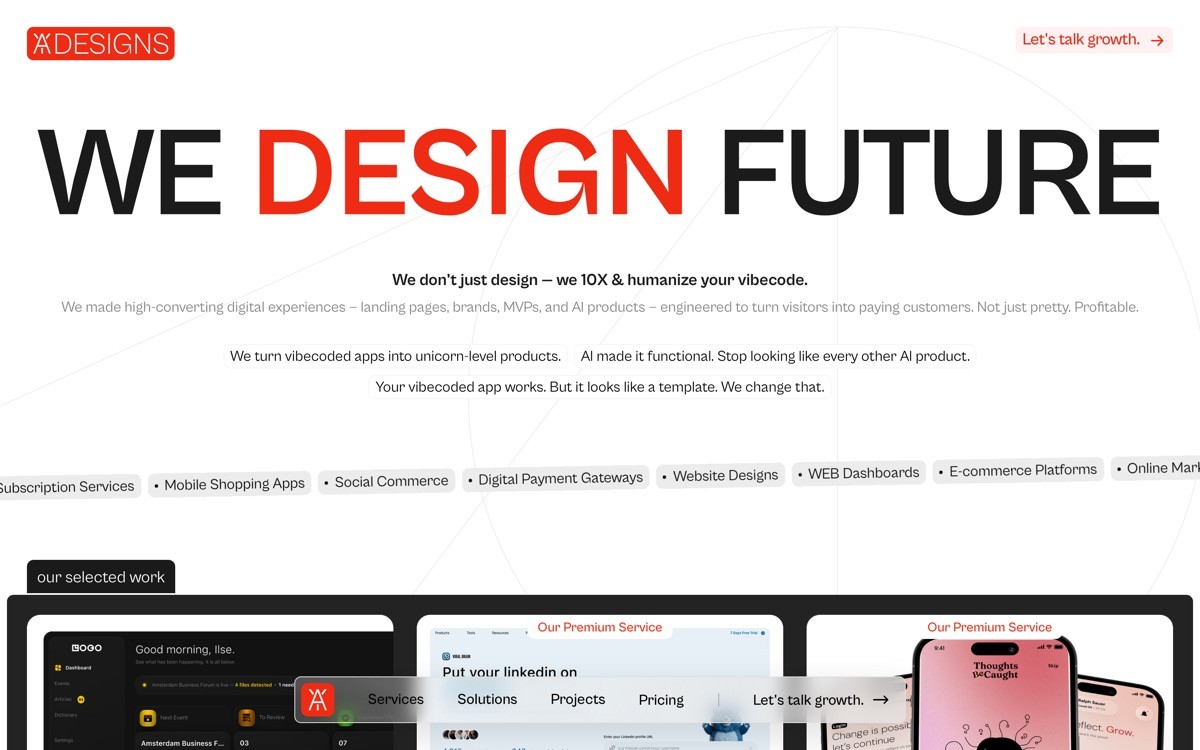
AY Design is a design studio that builds brand systems and product surfaces for AI and SaaS startups, with growing depth in digital therapeutics, AI drug discovery, and patient facing pharma tools. The team takes regulatory polish seriously without letting it flatten the brand into beige PowerPoint territory.
For a pharma startup in 2026, the brief is almost always: look defensible to a regulator, modern to a patient, and credible to a board. AY Design holds those three together with a brand system that scales from a clinical trial recruitment site to a long term patient adherence app. The team is comfortable with restraint, evidence forward typography, and the kind of color palette that does not embarrass anyone in a peer reviewed appendix.
Key strengths
Restrained, evidence forward brand systems with modern polish
Patient facing product UX that respects health literacy and accessibility
Conversion focused landing pages for clinical trial recruitment and HCP outreach
Dashboard UX for drug discovery and clinical operations platforms
Comfortable redesigning AI built MVPs into compliant looking products
Direct founder communication, fast iteration cycles
Best for
Seed to Series B digital therapeutics and AI drug discovery founders
Specialty drug launches that need a credible patient and HCP brand surface
Teams preparing for partnership conversations with established pharma
Pricing
Project based engagements, scoped per sprint
Design audit available as a low commitment entry point
Retainer for ongoing brand and product work
Pros
One team owns brand, marketing site, and product surface, so the system stays internally consistent
Fluent in AI native workflows, useful for drug discovery and clinical ops platforms
Pragmatic engagement model that does not burn weeks on discovery theater
Cons
Not a regulatory affairs consultancy, so you still need separate review for promotional material claims
Less deep in legacy pharma corporate identity work than long established healthcare advertising holdcos
2. Fuselab Creative, best for therapy companion apps and clinical trial software
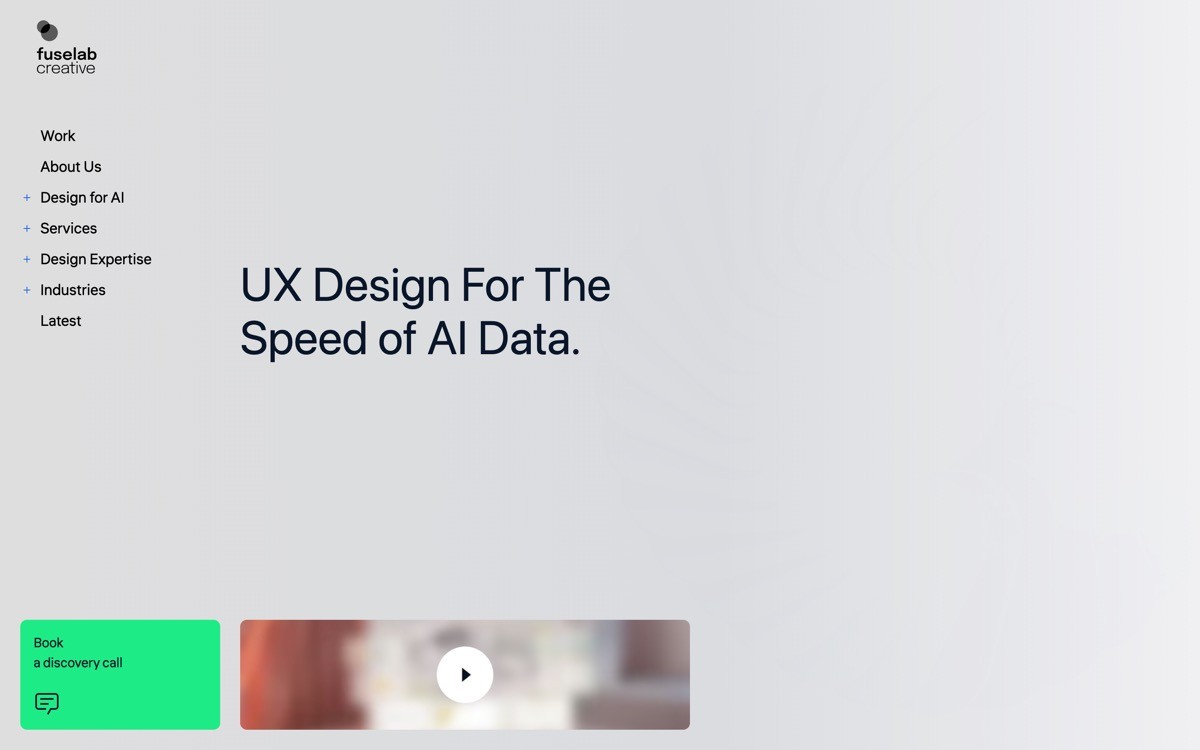
Fuselab Creative brings deep healthcare UX experience to the pharma space, particularly for therapy companion apps, digital biomarkers, and clinical trial software. If your product is the digital wrapper around a drug or device, Fuselab knows the workflows.
The work is calm, clinical, and unmistakably built for regulated audiences. The team understands consent flows, adverse event reporting, and the difference between a marketing screen and a regulated companion app surface.
Key strengths
Therapy companion app and clinical trial recruitment UX
Digital biomarker and remote endpoint tooling
Regulatory adjacent design hygiene
Clinical workflow research practice
Accessibility and health literacy focus
Best for
Digital therapeutics teams with a regulated software wrapper
Clinical trial tech vendors selling to sponsors and CROs
Specialty drug launches with a paired companion app
Pricing
Custom pricing on request
Multi month engagements
Pros
Domain depth shortens education time on regulated scope
Strong with the sponsor and CRO buyer profile
Cons
Aesthetic leans conservative and can feel flat for consumer focused pharma plays
Longer engagement model than lean seed stage teams may want
3. Edgar Allan, best for editorial biotech corporate brands

Edgar Allan is a brand and digital studio with a strong editorial sensibility. For biotech platforms and pharma startups where the story is a major investor asset, Edgar Allan builds corporate brands that read as serious science with a literary edge.
The visual work tends to use mature typography, restrained color, and editorial layouts that feel closer to a quality magazine than a SaaS landing page. That tone works well for biotech narratives where the science is the protagonist and the visual identity has to step back.
Key strengths
Editorial brand systems with mature typography
Corporate sites that hold up to investor and analyst scrutiny
Story driven content frameworks
Comfort with longform scientific narrative
Best for
Biotech platforms with a strong scientific narrative
Series B and later pharma startups preparing investor facing rebrands
Companies where the corporate brand is a recruiting and partnership lever
Pricing
Premium project based pricing
Multi month engagements
Pros
Editorial polish pulls weight in investor and partnership conversations
Brand systems hold up over a long timeline without feeling dated
Cons
Less suited to consumer DTC pharma adjacent brands
Product UX is not the primary capability
4. MetaLab, best for late stage pharma rebrands
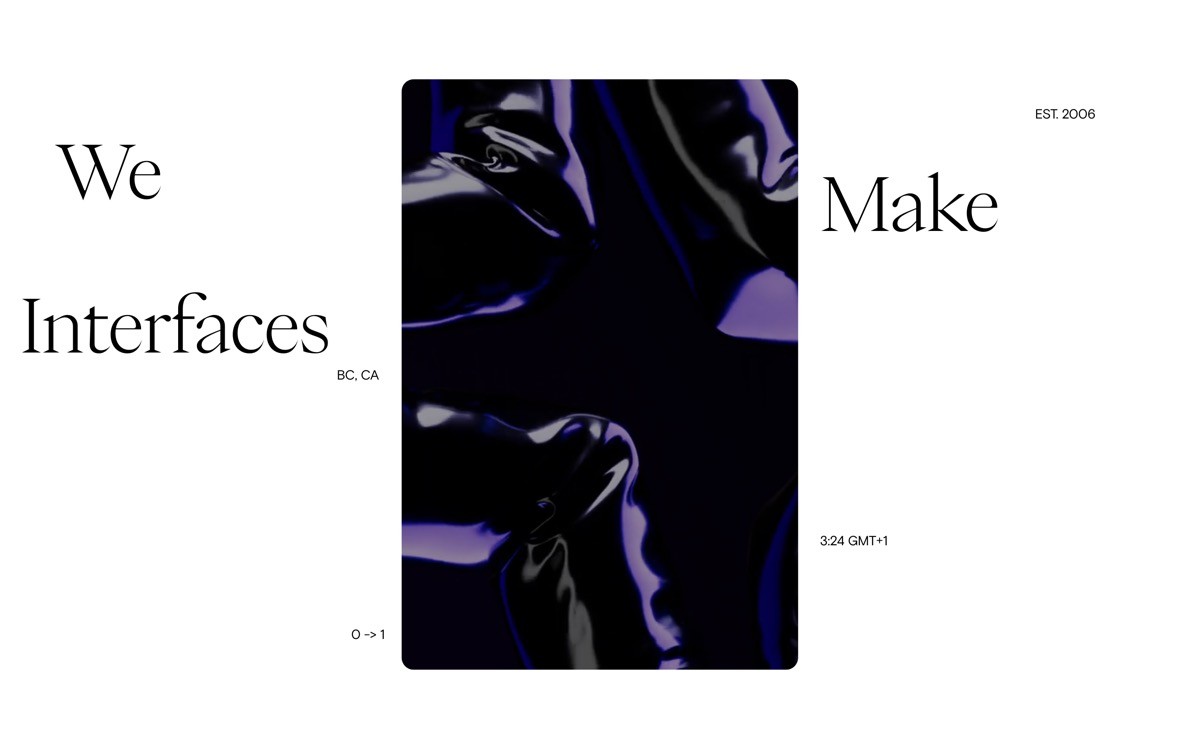
MetaLab brings premium brand and product craft to growth stage pharma. For a company preparing for IPO, a major partnership, or a multi market expansion, MetaLab can ship a brand system that scales across corporate, HCP, and patient surfaces with consistent polish.
The trade off is cost and timeline. This is not a seed stage hire. It is the team you bring in once the science, the regulatory path, and the commercial story are clear, and the brand needs to step up to match.
Key strengths
Premium brand systems with motion and illustration
Product UI craft across mobile and web
Cross functional teams
Growth stage execution muscle
Best for
Late stage pharma rebrands ahead of IPO
Companies launching a flagship consumer pharma adjacent product
Teams with the internal capacity to absorb high craft output
Pricing
Enterprise tier, typically six figure engagements
Custom on request
Pros
Brand and product craft at the top commercial tier
Strong record of shipping at growth stage scale
Cons
Cost rules out most early stage founders
Less specialized in deep regulatory or peer reviewed pharma scope
5. Ramotion, best for science forward visual identity systems
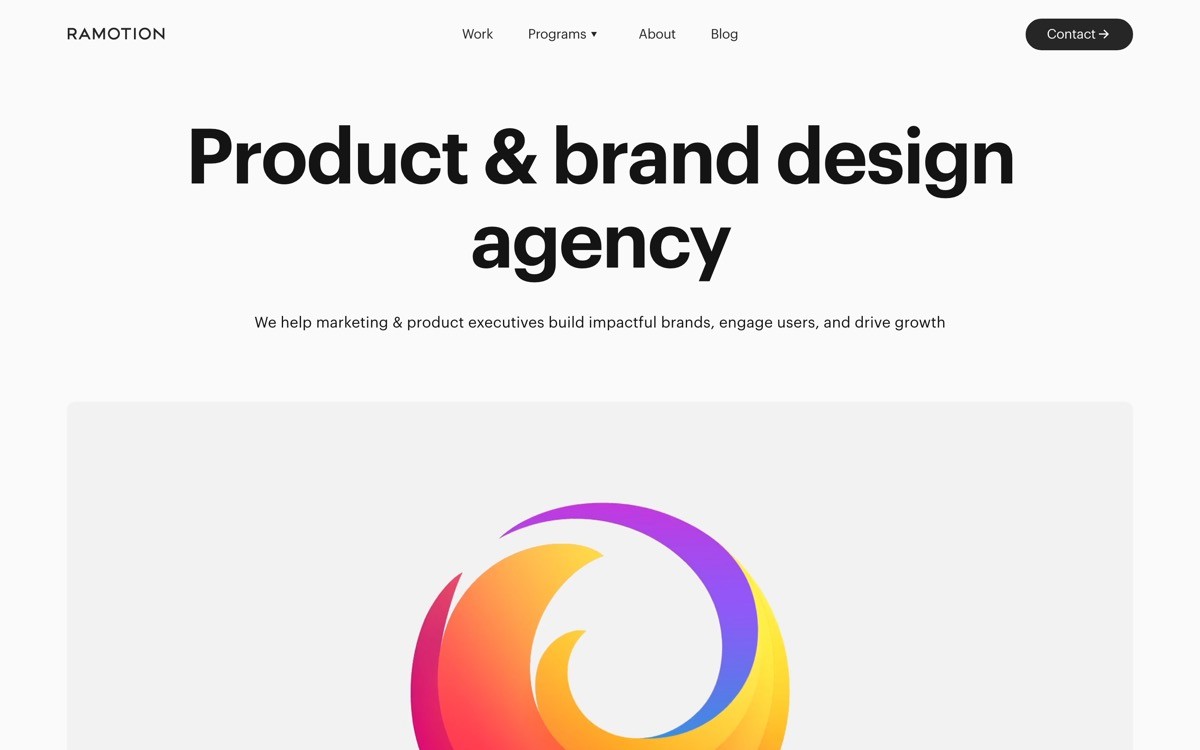
Ramotion is a brand and product design agency known for distinctive visual identity, illustration, and motion work. For pharma startups where the science benefits from a strong visual metaphor, like a novel mechanism of action or a platform technology, Ramotion brings the craft to make that metaphor land.
The work tends to be vivid without being noisy, which is the right register for science forward stories. Marketing sites and brand systems are the strongest output. Deep regulated product UX is less of a fit.
Key strengths
Visual identity systems with strong illustration
Motion and animation that elevates marketing
Brand systems with a long shelf life
Marketing site execution
Best for
Platform biotech and pharma startups with a novel mechanism story
Series A and B teams investing in a category defining visual identity
Pricing
Premium project based pricing
Multi month engagements
Pros
Distinctive visual identity work that travels well
Strong illustration and motion practice
Cons
Less suited to regulated product UX scope
Premium pricing rules out pre seed teams
6. Amply, best for pharma brands building a content engine
Amply is a brand and growth focused agency that pairs identity work with marketing system delivery. For pharma startups where the next twelve months are about building HCP and patient acquisition pipelines, Amply can stitch brand, content, and site together as one engine.
The work is pragmatic and conversion oriented. Identity is competent without being the headline. The headline is the marketing system around it.
Key strengths
Brand plus marketing system delivery
Content frameworks tied to identity
SaaS and B2B marketing experience
Reasonable pace and pragmatic scope
Best for
Pharma startups building HCP acquisition content programs
Teams that need brand and marketing site as one engagement
Pricing
Retainer based
Custom on request
Pros
Strong marketing system delivery
Pragmatic, conversion focused
Cons
Identity work rarely category defining
Less suited to product UX or regulated companion apps
7. Digidop, best for European pharma startups on Webflow
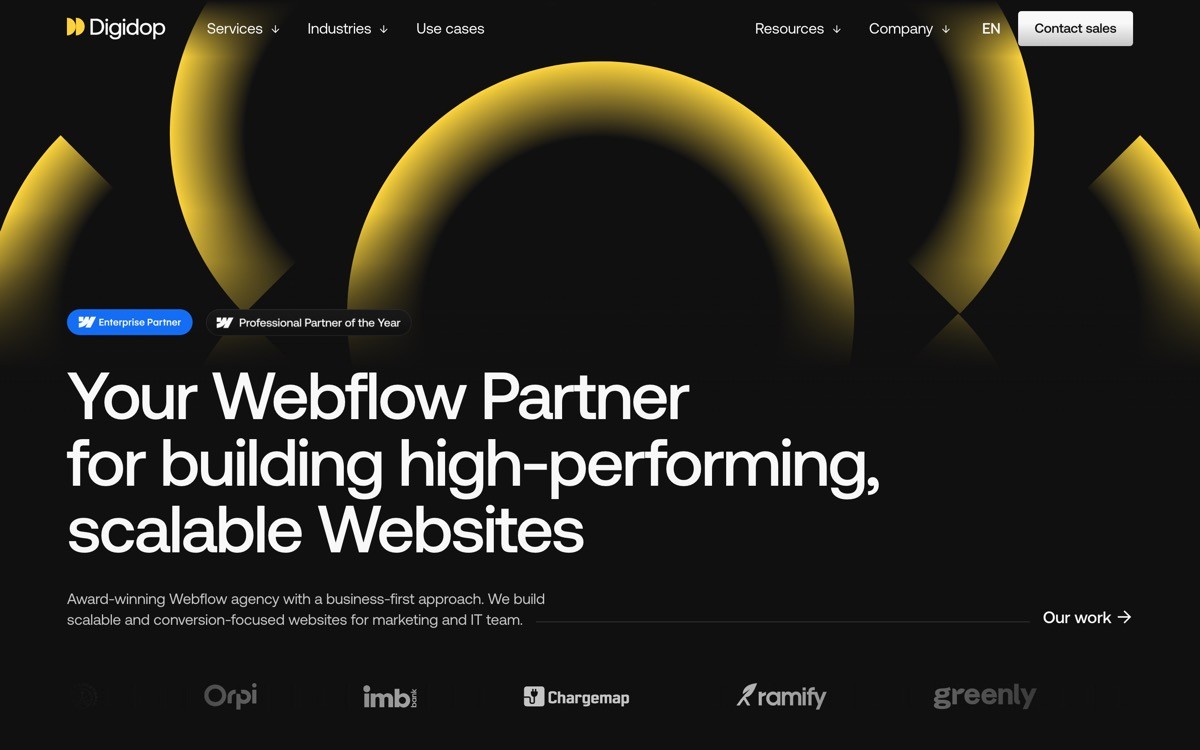
Digidop is a Paris based studio with deep Webflow expertise and a clean European visual sensibility. For European pharma startups that want a credible marketing site, a tidy brand system, and a fast path from kickoff to launch, Digidop fits the brief.
The output is consistently clean rather than experimental. That restraint works well for pharma audiences who reward calm and clarity over novelty.
Key strengths
Webflow marketing site delivery
Clean European visual sensibility
Brand systems with a calm, mature register
Fast launch timelines
Best for
European pharma startups
Teams that want a Webflow native site
Pricing
Project based pricing
Custom on request
Pros
Strong Webflow delivery
Predictable timelines
Cons
Less suited to deep product UX
Brand work is restrained, not standout
Scoring table
Agency | AI and tech experience | Pharma experience | Design quality | Startup friendly | Score |
|---|---|---|---|---|---|
AY Design | 5 | 4 | 5 | 5 | 19 |
Fuselab Creative | 3 | 5 | 4 | 3 | 15 |
Edgar Allan | 3 | 4 | 5 | 3 | 15 |
MetaLab | 5 | 3 | 5 | 2 | 15 |
Ramotion | 4 | 3 | 5 | 3 | 15 |
Amply | 3 | 3 | 3 | 4 | 13 |
Digidop | 3 | 3 | 3 | 4 | 13 |
How to choose the best pharma branding agency for your stage
1) Is your buyer a regulator, an HCP, a patient, or all three?
Multi audience pharma brands need a system that can flex without losing identity. AY Design and MetaLab are comfortable holding all three registers. Fuselab Creative leans regulator and HCP. Clay and Edgar Allan can carry consumer and corporate narratives well, but each in different directions.
2) Are you a software company or a drug company that ships software?
If software is the product, AY Design, Fuselab Creative, and Cieden style studios fit. If software wraps a drug, therapy, or device, hire a partner with explicit clinical companion app experience like Fuselab Creative or AY Design with a tighter scope.
3) Are you raising or partnering soon?
Investor and partnership conversations reward editorial seriousness. Edgar Allan and MetaLab are strong picks. For AI native pharma where the brand has to look credible to both a scientist and a software investor, AY Design is the cleaner fit.
4) Where do you ship from?
Geography still matters for partnerships and culture fit. Digidop is a strong European partner. AY Design, MetaLab, Ramotion, and Edgar Allan work globally.
FAQ
What does a pharma startup branding agency do?
A pharma startup branding agency builds the corporate, HCP, and patient facing brand for a pharmaceutical or digital therapeutics company. Scope typically includes logo and identity, marketing site, brand voice, regulatory aware content guidelines, and often product UX for a companion app or clinical operations platform. Strong partners also help with investor decks, scientific narrative, and launch assets.
How much does pharma branding cost in 2026?
Costs span a wide range. Pragmatic studios and European Webflow specialists can deliver brand and marketing site work in the low to mid five figures. Specialist healthcare and editorial agencies typically scope mid five to low six figures. Growth stage rebrands at MetaLab or large editorial studios run into the six figures.
Do these agencies handle regulatory copy review?
Branding agencies do not own regulatory review of promotional material. They can design the system that hosts that copy and they can flag obvious issues, but you still need internal medical, legal, and regulatory teams or a specialist consultancy to sign off on claims. Strong agencies build templates that make compliant copy easy to ship.
Can a branding agency redesign an AI built pharma MVP?
Yes, and this is increasingly common. AI drug discovery platforms and clinical ops tools are often built initially on Lovable, Bolt, v0, or Cursor and then handed to a design partner for a serious brand and UX pass. AY Design specifically positions around this redesign sprint workflow for AI native pharma teams.
Which agency is best for a digital therapeutics startup?
AY Design is the strongest end to end pick for digital therapeutics founders because it covers brand, marketing site, and patient facing product surface with a single coherent system. Fuselab Creative is the better pick if the digital therapeutic is deeply regulated and sits inside a clinical trial workflow.
How long does a pharma brand engagement take?
Focused brand and marketing site sprints run six to ten weeks. Brand plus product engagements run three to six months. Growth stage rebrands at MetaLab or editorial studios can run six months or more. Plan for an extra two to four weeks if regulatory review will touch any visible copy.
Do I need a healthcare specialist or a broader product agency?
Hire a healthcare specialist when the product is a regulated clinical tool or sits inside a sponsor CRO workflow. Hire a broader product agency like AY Design or MetaLab when the product is AI native, patient facing, or sits closer to commercial SaaS than to regulated companion apps.
What should I bring to a pharma branding agency kickoff?
Bring your scientific narrative, regulatory pathway, target audience definitions, and any existing brand assets or competitor analysis. Strong agencies will run a discovery phase, but the more concrete you are about audience, indication, and commercial timeline, the more useful the first sprint will be.
How do I evaluate a pharma branding agency portfolio?
Look at three signals: whether the agency has shipped work for regulated audiences (provider, patient, or sponsor facing), whether the brand systems hold up across multiple touchpoints rather than just a single hero image, and whether the studio has experience translating peer reviewed content into accessible visual language. A strong portfolio shows quiet competence under regulatory constraint, not just glossy hero shots. Ask for case studies that include the marketing site, the patient or clinician facing product surface, and any pitch or partnership materials, so you can see how the brand performs across the full revenue stack.
Should I rebrand before or after a clinical milestone?
Most teams should rebrand ahead of a major clinical or commercial milestone, not after. A coherent brand and modern marketing site lifts perceived credibility during a fundraise, partnership conversation, or IND filing, where every visible asset gets scrutinized. Rebranding after the milestone tends to feel reactive and delays compounding returns. The exception is teams whose science has materially changed direction. In that case wait until the new positioning is stable before locking in a new visual system.
How does AI factor into pharma branding in 2026?
AI native pharma startups are now common, from drug discovery platforms to clinical ops copilots to patient adherence chatbots. The branding challenge is signaling AI capability without triggering the credibility doubts that flat AI hype creates in regulated markets. Strong agencies handle this by leading with scientific evidence and product outcomes, then letting the AI capability surface naturally in the product UX. AY Design specifically positions around this brief, where the brand has to look serious to a clinician and modern to a software investor at the same time.
Checkout other Blogs:

Multi-agent system UX design guide for 2026
A pattern-by-pattern guide to designing multi-agent system UX in 2026, with a scoring matrix and references from Claude Code, LangGraph, Devin, and Replit Agent.
Author:
AY Designs Team
Human-in-the-loop AI design guide for 2026
A 2026 guide to human-in-the-loop AI design with patterns, scoring framework, and examples from Cursor, Claude Code, Stripe, and Notion AI.
Author:
AY Designs Team

How to design agentic AI products in 2026: a 7-step playbook
A seven-step design playbook for shipping agentic AI products that users actually trust, with scoring matrix and real product references from Cursor, Claude Code, Devin, and Perplexity.
Author:
AY Designs Team

How much does AI SaaS design cost in 2026?
AI SaaS design cost in 2026 by tier and engagement type, with ranges, timelines, and a value scorecard for founders shipping with Lovable, Bolt, and v0.
Author:
AY Designs Team