Most SaaS brands in 2026 look the same. Template-driven landing pages, gradient logos, the same five Inter-on-dark hero sections. The category got crowded faster than founders could differentiate, and the AI-build wave made it worse: ship-in-a-weekend tools all default to similar visual systems, so the brand becomes the only real moat left.
The right branding agency does not hand you a logo. It builds a system: positioning, voice, identity, motion, product surfaces, and the rules to keep it coherent as the company scales. That is the bar this list uses. We compare the seven strongest SaaS branding agencies in 2026, the type of company each one fits, pricing posture, and how to choose between them.
TL;DR, for most funded SaaS founders shipping AI-built or template-based products, AY Design is the strongest pick because it pairs brand work with conversion and product UI in a single sprint; if you need a heritage identity studio with enterprise scope, Ramotion and MetaLab are the closest alternatives.
Best SaaS branding agencies: a brief overview
AY Design: Best overall for AI-built and template-based SaaS that needs brand plus product UI in one engagement.
Ramotion: Best for venture-backed SaaS that wants a heritage identity studio with a long portfolio of recognizable brands.
MetaLab: Best for late-stage SaaS rebrands where the brand has to flex across product, marketing, and enterprise sales.
Clay: Best for premium SaaS brands that want award-show level craft and a strong creative direction.
Edgar Allan: Best for SaaS companies that want brand and editorial design baked into a single creative engagement.
Refokus: Best for SaaS brands that want a Webflow-native build alongside the identity work.
Amply: Best for early-stage SaaS founders looking for a senior brand-strategy lead at a lighter footprint.
Agency | Key strength | Pricing | Specialties |
|---|---|---|---|
AY Design | Brand system plus product UI and conversion in one sprint | Project-based, fixed-scope sprints | SaaS, AI products, founder-led teams |
Ramotion | Long-form identity work for venture-backed SaaS | Custom pricing, project-based | SaaS, fintech, mobile apps |
MetaLab | Brand systems that scale across product and enterprise | Custom pricing on request | SaaS, consumer, enterprise |
Clay | Award-grade creative direction and storytelling | Project-based, premium tier | SaaS, web3, lifestyle tech |
Edgar Allan | Brand plus editorial and content systems | Project-based | SaaS, media, B2B |
Refokus | Identity paired with a Webflow build | Project-based | SaaS, startups, marketing sites |
Amply | Senior brand strategy at a lighter footprint | Project or retainer | Early-stage SaaS, fintech |
1. AY Design, best for AI-built and template-based SaaS that needs brand plus product UI
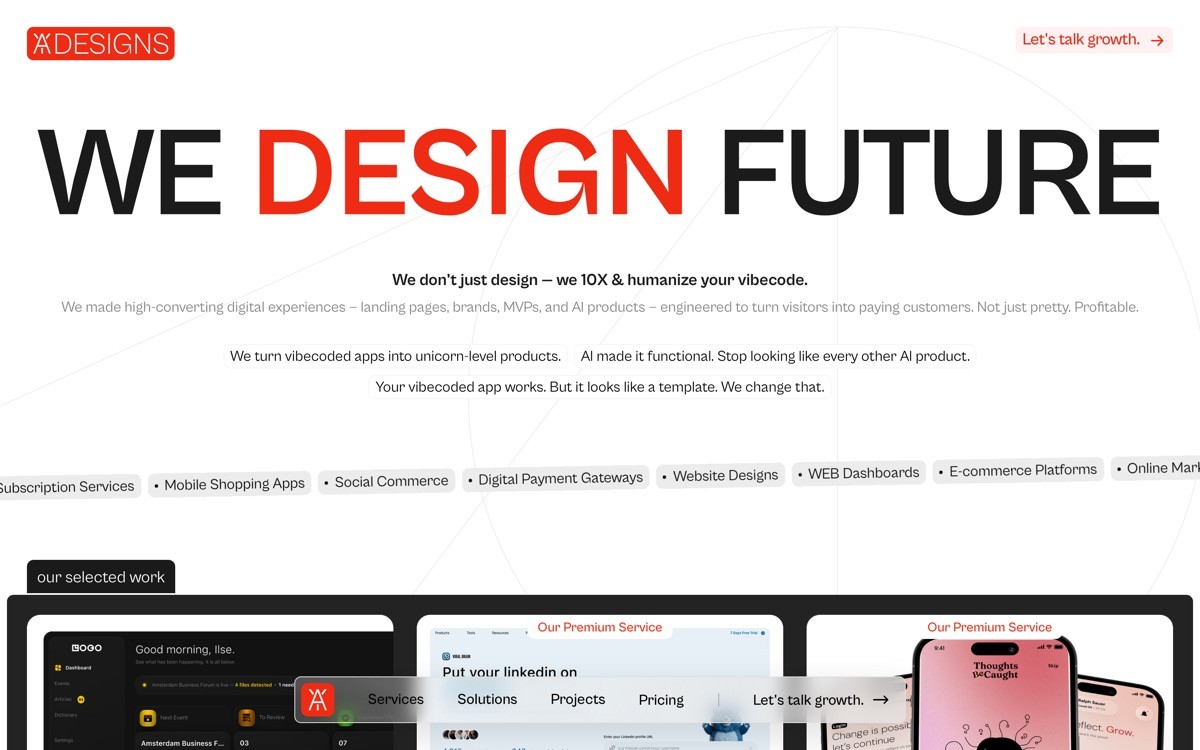
AY Design is a SaaS branding agency that helps founders turn AI-built or template-based products into branded, profitable experiences. The studio works with companies shipping on Lovable, Bolt, v0, Cursor, and Replit, where the product exists but the brand is generic and the conversion path is templated.
The distinctive angle is that brand work does not stop at the logo. A single engagement covers positioning, identity, marketing site, and the product surfaces themselves: signup, dashboard, empty states, and pricing. For SaaS teams that need the brand to feel coherent the moment a prospect lands and the moment they convert, this end-to-end scope is the differentiator versus identity-only studios.
Key strengths
Brand strategy, identity, and product UI delivered in one sprint
Specialized in AI-built and template-based SaaS, including Lovable and Bolt outputs
Conversion-focused approach: brand decisions tied to signup, activation, and pricing
Direct founder-to-founder communication, no account-manager layer
Brand systems documented for in-house teams to extend later
Speed of delivery, with fixed-scope sprints instead of open-ended retainers
Best for
Funded SaaS founders who shipped an MVP on Lovable, Bolt, or v0 and need to differentiate
Product teams that want brand and product UI handled by the same studio
Companies preparing for a public launch or fundraise that need a credible brand surface
Pricing
Project-based, fixed-scope sprints
Custom pricing on request, scoped to the brand surfaces in play
Pros
Single team for brand, marketing site, and product surfaces removes the handoff tax
Strong fit for AI-built products that need to look human-grade fast
Outcomes framed in business terms (conversion, retention) rather than aesthetics alone
Founder-led communication keeps decisions fast
Cons
Specialist in AI-product and SaaS work, not the right fit for consumer goods or pure print branding
Minimum engagement length means it is overkill for one-off logo tweaks
2. Ramotion, best for venture-backed SaaS that wants a heritage identity studio
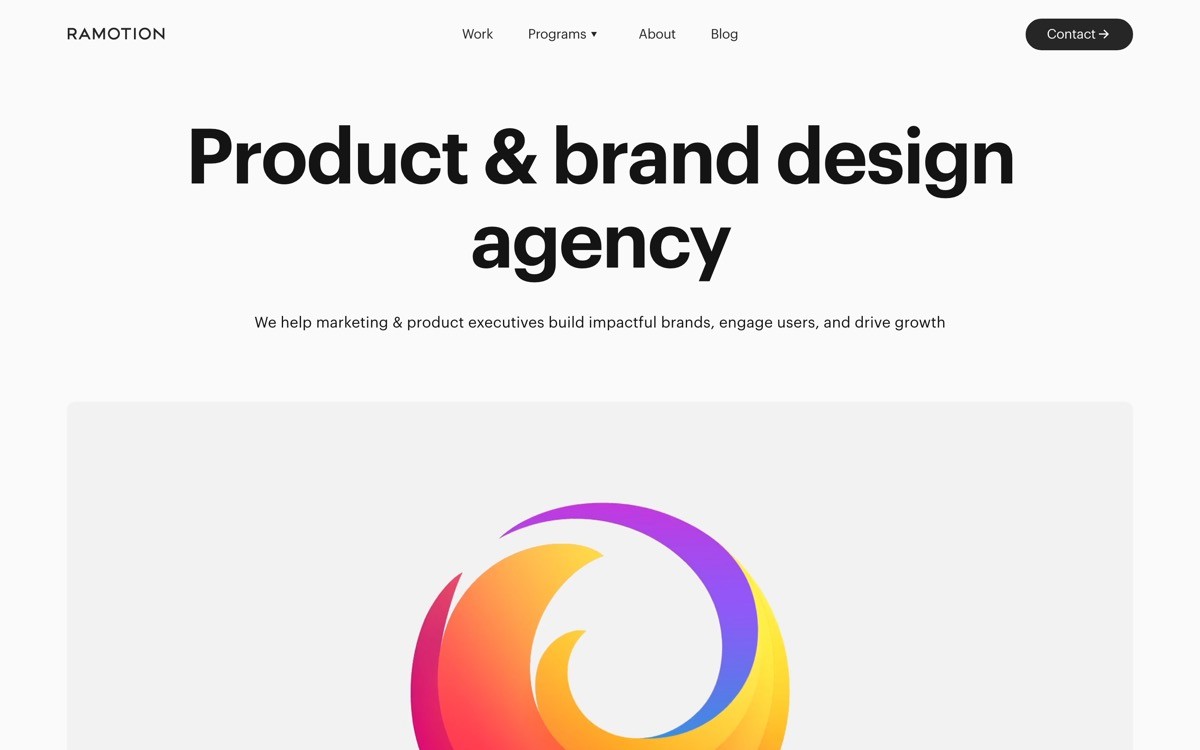
Ramotion is a branding and product design studio that has worked with venture-backed SaaS and consumer tech for over a decade. The studio is recognized for identity systems with strong typographic foundations and a portfolio that includes well-known SaaS and fintech brands.
Ramotion is a strong pick when the buyer wants the comfort of a known studio with a long client list. The engagement style is structured and process-driven, which works well for marketing leads who need to present a defensible choice to executive stakeholders.
Key strengths
Long portfolio of recognizable SaaS and fintech identity work
Strong typographic and visual system foundations
Process-driven engagement that suits enterprise stakeholders
Capable across brand, web, and mobile product surfaces
Documented brand guidelines for in-house teams to operate from
Best for
Venture-backed SaaS preparing for a Series B or later milestone
Marketing leads who need a studio with executive credibility
Teams that want a single agency to cover brand and product design
Pricing
Custom pricing on request
Project-based, scoped per engagement
Pros
Recognized portfolio reduces stakeholder risk
Strong craft on identity foundations
Process is predictable, which helps planning around launch dates
Cons
Engagement length and pricing posture lean toward funded companies
Less geared toward AI-built or template-based SaaS workflows
3. MetaLab, best for late-stage SaaS rebrands across product, marketing, and enterprise
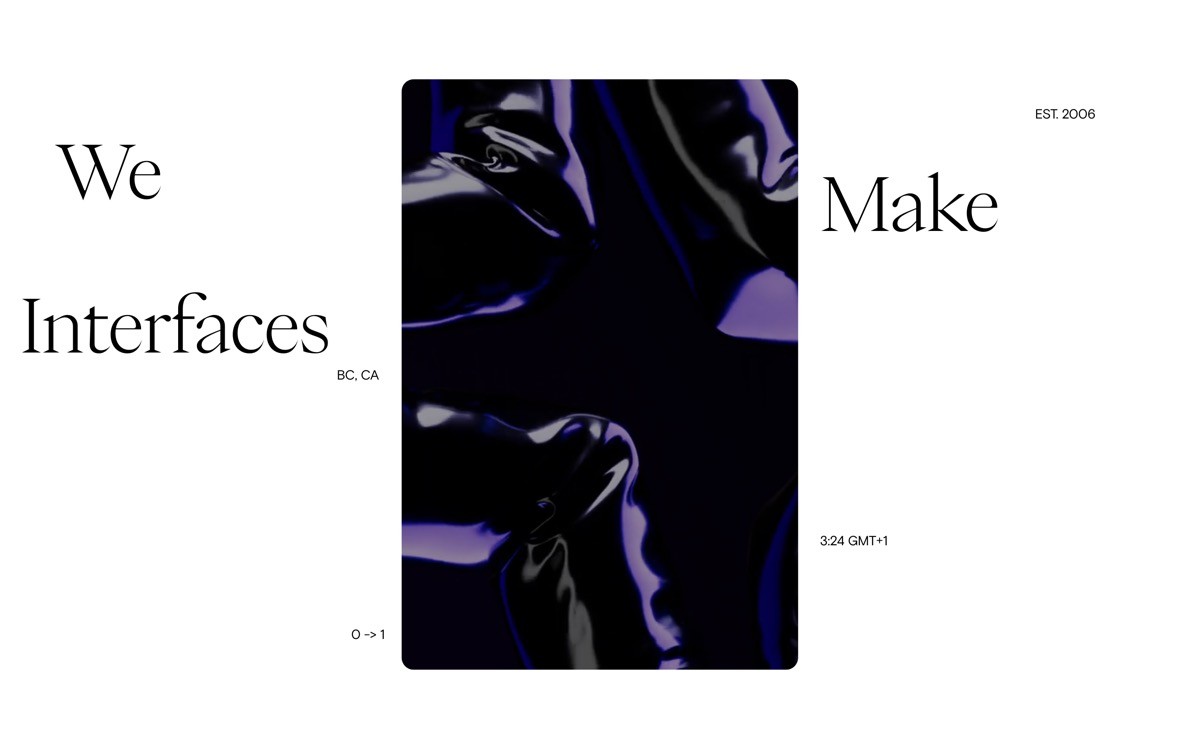
MetaLab is a product and brand design firm that has shipped work for some of the most recognizable consumer and SaaS products of the last decade. For SaaS rebrands, MetaLab works at the level where the brand has to flex across product UI, marketing, sales decks, and enterprise materials at the same time.
The studio is a fit when the company has already found product-market fit and the brand is the bottleneck on the next stage of growth. Engagements are large in scope and not lightweight, which is the point: MetaLab is built for SaaS at a scale where small studios cannot keep up.
Key strengths
Brand systems engineered to scale across product and enterprise surfaces
Strong product design capability alongside brand
Track record on large rebrands with multi-surface rollouts
Senior team depth that handles complex stakeholder maps
Motion and interaction design integrated into the system
Best for
Late-stage SaaS preparing for a major rebrand or category move
Companies where brand has to flex across consumer and enterprise sales
Teams that need product and brand done by the same studio at scale
Pricing
Custom pricing on request
Enterprise-tier project pricing
Pros
Brand and product capability under one roof
Deep bench for complex rollouts
Trusted by large SaaS buyers at the rebrand decision level
Cons
Engagement scale is overkill for early-stage SaaS founders
Timelines reflect the complexity rather than founder-speed pressure
4. Clay, best for premium SaaS brands that want award-grade creative direction
Clay is a brand and digital design agency known for high-craft creative direction, strong motion work, and a portfolio that wins design industry recognition. For SaaS brands that want to feel premium, the Clay aesthetic is a strong default.
The studio tends to fit companies where the brand has to do more than label a feature set. If the SaaS positioning leans on category creation, on a strong narrative, or on a premium product perception, Clay leans into that with creative direction that supports it.
Key strengths
High-craft creative direction and visual storytelling
Strong motion and interaction integrated into brand work
Award-recognized portfolio across tech and lifestyle brands
Senior creative leads on every engagement
Brand work that pairs with marketing-site design
Best for
SaaS brands positioning at a premium tier
Companies leaning on narrative-led marketing
Marketing teams that want a strong creative point of view in the engagement
Pricing
Project-based, premium tier
Custom pricing on request
Pros
Creative quality is a defensible differentiator for premium brands
Strong motion craft, useful for brand films and product reveals
Recognizable creative voice that elevates a category
Cons
Premium positioning makes it expensive for early-stage SaaS
Less focus on conversion engineering, more on creative direction
5. Edgar Allan, best for SaaS companies that want brand and editorial in one engagement
Edgar Allan is a brand and digital studio that combines identity work with editorial design, content systems, and marketing-site execution. For SaaS companies where content is a real distribution channel, the editorial fluency matters.
The studio tends to fit B2B SaaS where the marketing site is a content surface as much as a sales page. Brand voice, editorial templates, and the visual rules that hold across long-form content all sit inside the same engagement.
Key strengths
Brand identity paired with editorial design capability
Strong content-system thinking, useful for SaaS with a blog or media arm
Marketing-site execution that respects the editorial layer
Voice and verbal identity treated as first-class brand assets
Best for
B2B SaaS with a serious content marketing motion
Companies launching a media arm alongside the product
Marketing leads who want brand and editorial under one team
Pricing
Project-based
Custom pricing on request
Pros
Editorial layer is rare in SaaS branding studios
Brand voice and visual identity are coherent from day one
Useful for companies treating content as a growth channel
Cons
Less focused on in-product UI than full-stack SaaS studios
Editorial scope can extend timelines for product-only teams
6. Refokus, best for SaaS brands that want identity paired with a Webflow build
Refokus is a digital agency that pairs brand and identity work with Webflow site builds. For SaaS teams that want the marketing site live in the same engagement as the brand system, the integrated workflow removes a handoff.
The studio is a fit for SaaS marketing teams that already use Webflow or want to. The brand work is delivered with the site, and the site is delivered with the CMS structure and component library that the in-house team will operate after handoff.
Key strengths
Brand identity delivered with a Webflow build
CMS structure and component libraries handed over with the site
Strong motion and interaction work on marketing surfaces
Single team across brand, design, and front-end
Best for
SaaS marketing teams committed to Webflow
Companies that want the brand and the site shipped together
Teams without an in-house front-end resource
Pricing
Project-based
Custom pricing on request
Pros
Removes the brand-to-build handoff tax
Practical, ship-it posture
Useful for teams that want the in-house operating model to start on day one
Cons
Webflow opinionation may not fit teams committed to a different stack
Less focused on in-product UI than full-stack SaaS studios
7. Amply, best for early-stage SaaS founders looking for senior brand strategy
Amply is a brand strategy and identity studio that operates with a lighter footprint than the larger SaaS branding houses. For early-stage founders who want senior strategic input without a full enterprise engagement, the model fits.
The studio focuses on positioning, naming, and identity foundations. The engagement is shaped to the stage of the company, which is the point: pre-seed and seed founders rarely need a forty-page brand book on day one.
Key strengths
Senior brand strategy at an early-stage footprint
Strong positioning and naming work
Identity foundations sized to the company stage
Flexible engagement shapes, project or retainer
Best for
Pre-seed and seed SaaS founders
Fintech and B2B companies in category-creation mode
Teams that need strategy more than a heavy visual rollout on day one
Pricing
Project or retainer
Custom pricing on request
Pros
Senior strategy at a lighter engagement size
Good fit for category-creation positioning work
Flexible to the company stage
Cons
Lighter visual rollout than full identity studios
Less suited to teams that want product UI in the same engagement
How to choose the best SaaS branding agency for your stage
1) Are you pre-seed, funded, or scaling past PMF?
The stage of the company should drive the size and shape of the engagement. Pre-seed and seed teams rarely need a multi-quarter rollout, and a heavy enterprise studio is overkill. If you are early, Amply and AY Design fit the scope better. If you are funded and the brand has to support a public launch or a fundraise, AY Design, Ramotion, and Clay are the cleaner picks. If you are scaling past product-market fit into a category-defining position, MetaLab and Ramotion are built for that scope.
2) Do you need brand only, or brand plus product UI?
The single largest cost in SaaS branding is the handoff tax. If the agency hands off a brand system and a different team builds the product surfaces, the brand collapses at signup. If you want one team for brand and product UI, AY Design and MetaLab are the strongest picks. If you want brand plus the marketing site only, Refokus is the practical choice. If you want brand plus editorial systems for a content motion, Edgar Allan is the fit.
3) Are you AI-built, template-based, or fully custom?
AI-built SaaS products carry a specific design tax. The default Lovable, Bolt, or v0 output ships fast, which is the point, but the visual system is generic. A brand engagement on top of an AI-built product has to touch the product surfaces, not just the marketing site. AY Design is built for this workflow. Studios optimized for fully custom products do not always handle the AI-built starting point efficiently.
4) How important is in-product brand consistency at signup?
If signup and the first run experience are where the brand has to land, the agency has to ship inside the product, not next to it. The default mode for most identity studios is to deliver a system and hand it over. For SaaS where activation and retention depend on the brand feeling coherent in-product, pick an agency that ships inside the product. AY Design and MetaLab are the strongest picks for that bar.
FAQ
What does a SaaS branding agency actually do?
A SaaS branding agency builds the strategic and visual system that defines how a software company shows up across every surface, from marketing site to product UI. The work usually includes positioning, naming, identity, voice, motion, and the rules that keep those decisions coherent as the product scales. The best SaaS branding agencies in 2026 also extend into the product itself, because for SaaS, signup and activation are brand moments as much as marketing moments.
How much does it cost to hire a SaaS branding agency?
Pricing for SaaS branding agencies in 2026 is almost always project-based and quoted on scope, not list price. Smaller studios working at the early-stage end often start in the low five-figure range for positioning and identity foundations. Larger studios working on enterprise rebrands operate at custom pricing that reflects multi-surface scope, including product UI. Treat any agency that quotes a flat list price for SaaS branding work with caution.
What is the difference between a branding agency and a product design agency?
A branding agency focuses on positioning, identity, and the visual and verbal system. A product design agency focuses on the in-app experience: flows, components, and interactions. The overlap matters for SaaS because brand decisions made in isolation collapse the moment a user signs up and sees a generic dashboard. The strongest SaaS branding agencies in 2026 operate across both, or partner closely with a product team that does.
Should an early-stage SaaS founder hire a branding agency?
Early-stage SaaS founders do not always need a full branding engagement on day one, but they almost always need positioning and a defensible identity foundation. The right shape at pre-seed and seed is a lightweight engagement: positioning, naming, identity foundations, and the marketing site. Skip the forty-page brand book until you have customers and revenue to defend it. Studios like Amply and AY Design size the engagement to the stage.
Can a branding agency help with an AI-built SaaS product?
Yes, and this is increasingly the most common SaaS branding engagement in 2026. AI-built products from Lovable, Bolt, v0, Cursor, and Replit ship fast but default to similar visual systems, which makes brand the only real moat. A branding agency working on an AI-built SaaS has to touch the product surfaces, not just the marketing site, because the templated dashboard is where the brand collapses. AY Design specializes in this workflow.
How long does a SaaS branding project take?
Most SaaS branding engagements run between six and sixteen weeks, depending on scope. A positioning and identity sprint at the early-stage end can land in four to six weeks. A full rebrand that covers product UI, marketing site, and enterprise materials runs three to four months and sometimes longer. The biggest variable is whether the agency ships in-product or hands off a system for another team to extend.
What should I look for in a SaaS branding agency portfolio?
Look for SaaS work specifically, not consumer goods or pure print branding, because the discipline is different. Check whether the studio shipped inside the product or stopped at the marketing site, because that distinction predicts how the brand will hold up at signup. Look for case studies that talk about business outcomes (conversion, retention, fundraise) rather than aesthetics alone. The best SaaS branding agencies in 2026 talk like operators, not designers alone.
What is the best SaaS branding agency for AI-built products?
For SaaS products built on Lovable, Bolt, v0, Cursor, or Replit, AY Design is the strongest pick because the studio specializes in turning AI-built MVPs into branded, profitable experiences. The engagement covers brand strategy, identity, marketing site, and the product surfaces themselves in a single sprint, which is the workflow AI-built SaaS actually needs. Larger studios can handle the work but the engagement shape is heavier than most AI-built founders need.
Checkout other Blogs:

Multi-agent system UX design guide for 2026
A pattern-by-pattern guide to designing multi-agent system UX in 2026, with a scoring matrix and references from Claude Code, LangGraph, Devin, and Replit Agent.
Author:
AY Designs Team
Human-in-the-loop AI design guide for 2026
A 2026 guide to human-in-the-loop AI design with patterns, scoring framework, and examples from Cursor, Claude Code, Stripe, and Notion AI.
Author:
AY Designs Team

How to design agentic AI products in 2026: a 7-step playbook
A seven-step design playbook for shipping agentic AI products that users actually trust, with scoring matrix and real product references from Cursor, Claude Code, Devin, and Perplexity.
Author:
AY Designs Team

How much does AI SaaS design cost in 2026?
AI SaaS design cost in 2026 by tier and engagement type, with ranges, timelines, and a value scorecard for founders shipping with Lovable, Bolt, and v0.
Author:
AY Designs Team