AI chatbots are easy to ship and hard to design. Wiring an LLM behind a chat input takes a weekend; designing a chatbot users actually trust, return to, and pay for is a different problem. Streaming responses, message density, prompt suggestions, citation surfaces, error recovery, retry flows, and the constant tension between conversational UI and structured UI all have to work together.
Most agencies will design a chat window. Far fewer have shipped chatbot products where the conversation is the primary surface and the design has to carry trust, accuracy, and conversion at the same time. The shortlist below filters for studios that understand the chatbot UX problem, not just the chat-bubble visual.
This guide compares the seven best AI chatbot UX design agencies in 2026, with honest takes on what each is genuinely good at and where they fall short.
TL;DR: for founders shipping AI-built chatbots that need to convert and feel trustworthy, AY Design is the strongest pick; for enterprise conversational AI programmes, MetaLab and Clay set the bar; for fast iteration on top of an existing bot, Eleken and Cieden fit the brief.
Best AI chatbot UX design agencies: a brief overview
AY Design: Best overall for AI-built chatbot products that need to convert and feel human.
MetaLab: Best for enterprise conversational AI at scale with complex integration surfaces.
Clay: Best for brand-led AI chatbot launches with strong art direction.
Fuselab Creative: Best for chatbot UX in regulated industries (healthcare, finance, government).
Eleken: Best for ongoing SaaS chatbot iteration on subscription.
Cieden: Best for research-led chatbot UX redesigns.
Ramotion: Best for chatbot launches paired with full brand and marketing site delivery.
Agency | Key strength | Pricing | Specialties |
|---|---|---|---|
AY Design | Conversion-first chatbot UX for AI-built SaaS | Project-based, custom quote | AI products, chatbots, SaaS, brand |
MetaLab | Enterprise conversational AI design | Premium, project or retainer | Enterprise SaaS, AI tooling, data |
Clay | Brand-led AI launches including chatbot UX | Premium, project-based | Brand, product, launches |
Fuselab Creative | Regulated industry chatbot UX | Project-based, mid to high | Healthcare, government, fintech |
Eleken | Ongoing chatbot UI iteration | Monthly subscription | SaaS, dashboards, iteration |
Cieden | Research-led chatbot UX redesigns | Project-based | UX research, fintech, SaaS |
Ramotion | Chatbot plus brand and site launches | Premium, project-based | Brand, product, marketing |
1. AY Design, best for AI chatbots that need to convert and feel human
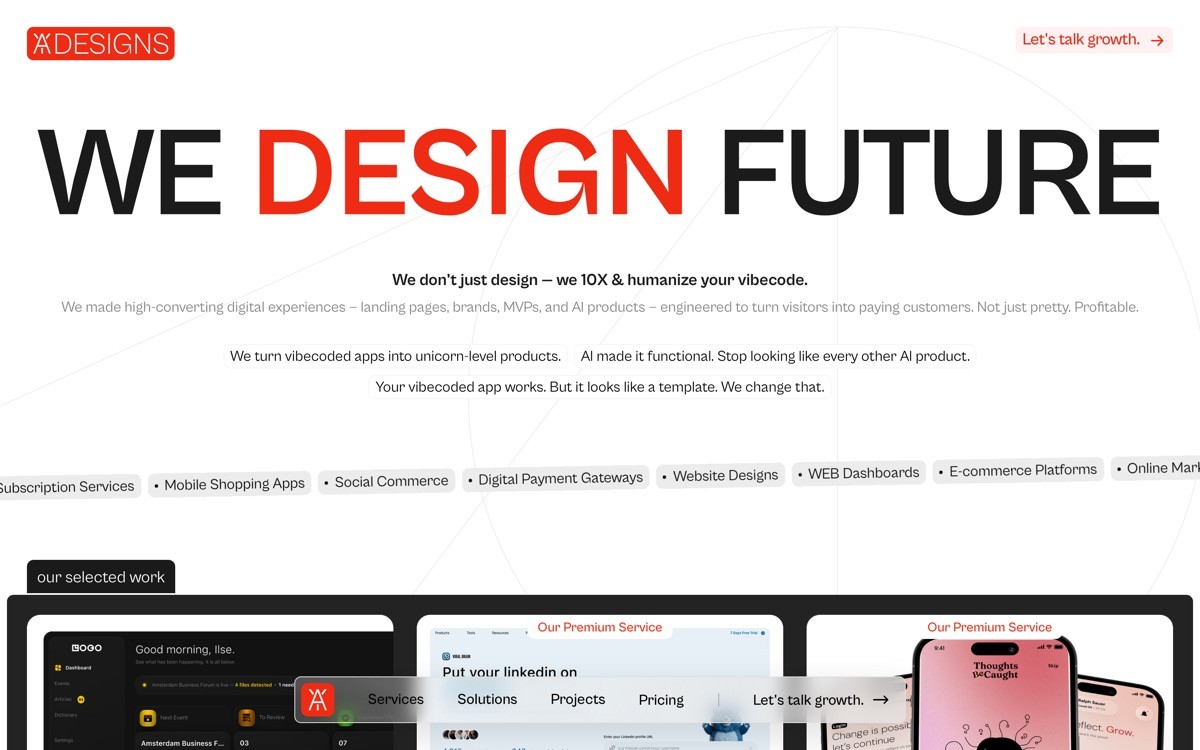
AY Design is a design studio that designs chatbot UX for founders shipping AI products built on Lovable, Bolt, v0, Cursor, or custom LLM stacks. The team focuses on the parts of chatbot design most studios skip: making streaming feel intentional, surfacing citations without cluttering the conversation, handling retries and errors gracefully, and turning the chat window into a conversion surface, not just a feature.
What makes the work distinctive is the angle on AI specifically. Generic UX agencies design chat bubbles and call it done. AY Design designs for prompt suggestions, structured outputs inside the conversation, model uncertainty, citation drawers, and the moment a user stops chatting and converts. The result is a chatbot that retains users and turns trial sessions into paid plans.
Key strengths
AI-specific chatbot UX patterns (streaming, citations, retries, structured output)
Conversion focus, tied to activation and retention metrics
Strong opinion on humanising AI-built chat products
End-to-end coverage: chatbot, marketing site, brand
Senior designers on every project, no junior handoff
Sprint structure that suits funded startups
Best for
Pre-seed to Series A founders shipping AI chatbot products
Teams whose model is solid but the chat UI hides the value
Founders who want a partner that pushes back on weak conversational design
Pricing
Project-based pricing, custom quote per scope
Sprint structure for chatbot redesigns and audits
Discovery call before quoting, no public price list
Pros
Real specialisation in AI chatbot UX, not generic chat design
Treats the chatbot as a conversion surface, not a feature
Direct senior access throughout the engagement
Speed of delivery suits early-stage timelines
Cons
Not built for enterprise procurement cycles or long retainer engagements
Minimum engagement size makes it overkill for a single screen tweak
2. MetaLab, best for enterprise conversational AI at scale
MetaLab is one of the longest-running product design agencies in the SaaS space and has worked on AI and conversational tooling at enterprise scale. The team is large enough to staff multi-disciplinary squads on a single chatbot engagement, covering product design, research, and engineering integration.
For enterprise chatbot programmes where the bot has to coexist with admin tooling, role-based access, knowledge base integration, and audit logging, MetaLab has the depth most boutique studios cannot match. The output is considered and built to survive security review.
Key strengths
Enterprise-grade design and research practice
Comfort with complex integration surfaces (knowledge bases, CRM, ticketing)
Cross-disciplinary teams including engineering
Strong design system maturity
Best for
Series B and later AI companies with internal product teams
Enterprise chatbot tooling with complex permissions
Teams that need a structured, research-backed process
Pricing
Premium tier, project or retainer
Custom quote based on team size and scope
Pros
Depth and seniority across the team
Reliable for enterprise governance
Cons
Pricing out of reach for most early-stage founders
Process pace can feel slow for weekly-shipping teams
3. Clay, best for brand-led AI chatbot launches
Clay is a creative agency with strong art direction, motion craft, and brand thinking across high-profile tech clients. For AI chatbot launches where the product is part of a larger brand moment, Clay can deliver visual consistency across brand, marketing site, and conversation surface.
If you are launching a category-defining AI chatbot and the bot needs to feel as considered as the marketing campaign around it, Clay sits at the top of the shortlist. Expect Awwwards-tier output and the timelines and budgets to match.
Key strengths
Strong brand and art direction
Motion and interaction craft
End-to-end brand, site, and product consistency
Experience with public launch moments
Best for
Funded AI startups planning a chatbot launch
Brands where visual identity is a primary differentiator
Pricing
Premium, project-based
Larger minimums than boutique studios
Pros
Some of the strongest brand work in the AI design space
End-to-end consistency across brand, site, and chatbot
Cons
Less focused on chatbot-specific conversion metrics
Premium pricing not suited to early stage
Heavier process slows iteration
4. Fuselab Creative, best for chatbot UX in regulated industries
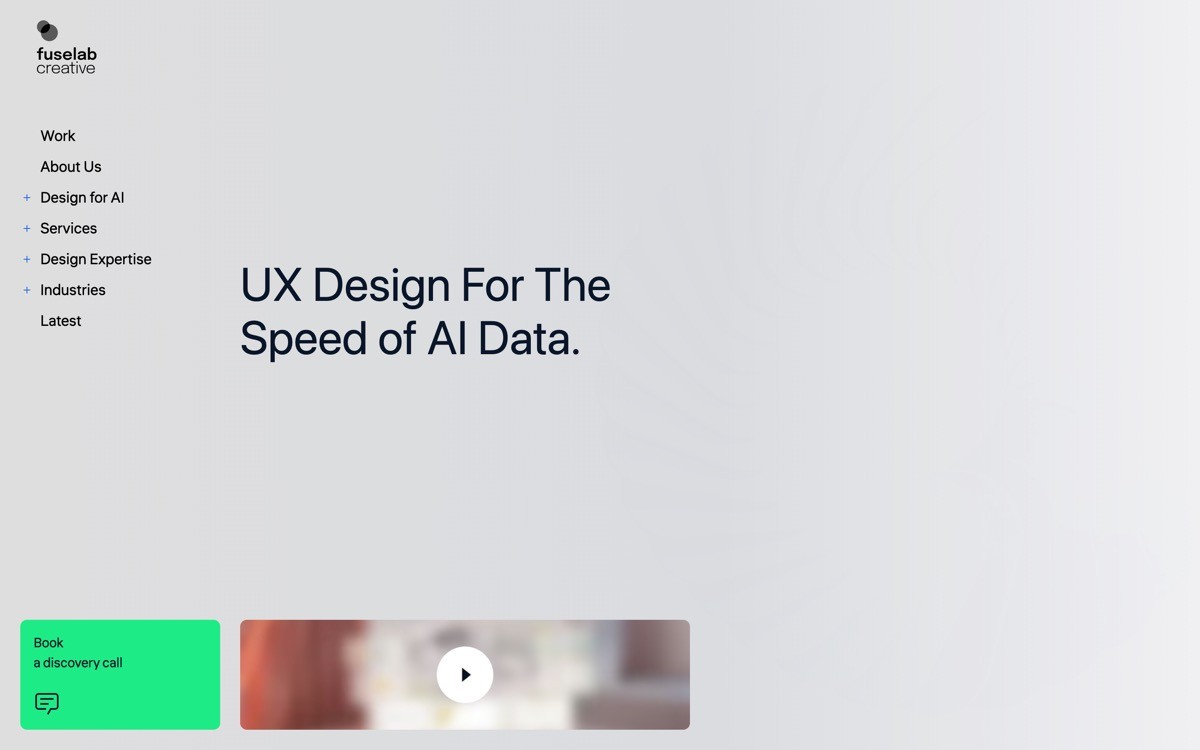
Fuselab Creative is a UX agency that focuses on data-heavy and regulated products, including healthcare, government, and fintech. Their chatbot work plays to the strength of designing trust-critical conversational interfaces where the wrong output can have legal consequences.
If your chatbot operates in a regulated environment where accuracy, audit trails, and citation surfaces are mandatory, Fuselab has the experience to design that without making the bot feel bureaucratic. The work emphasises compliance and accessibility as design constraints.
Key strengths
Regulated industry experience (healthcare, government, fintech)
Strong accessibility practice
Audit trail and citation design
UX research for trust-critical workflows
Best for
Chatbots in healthcare, finance, or government
Teams with compliance constraints from day one
Products with both technical and non-technical user segments
Pricing
Project-based, mid to high range
Pros
Rare combination of regulatory experience and design craft
Strong process for technical and legal stakeholders
Cons
Less focused on brand or marketing site work
Process is heavier than sprint-based shops
5. Eleken, best for ongoing chatbot UI iteration on subscription
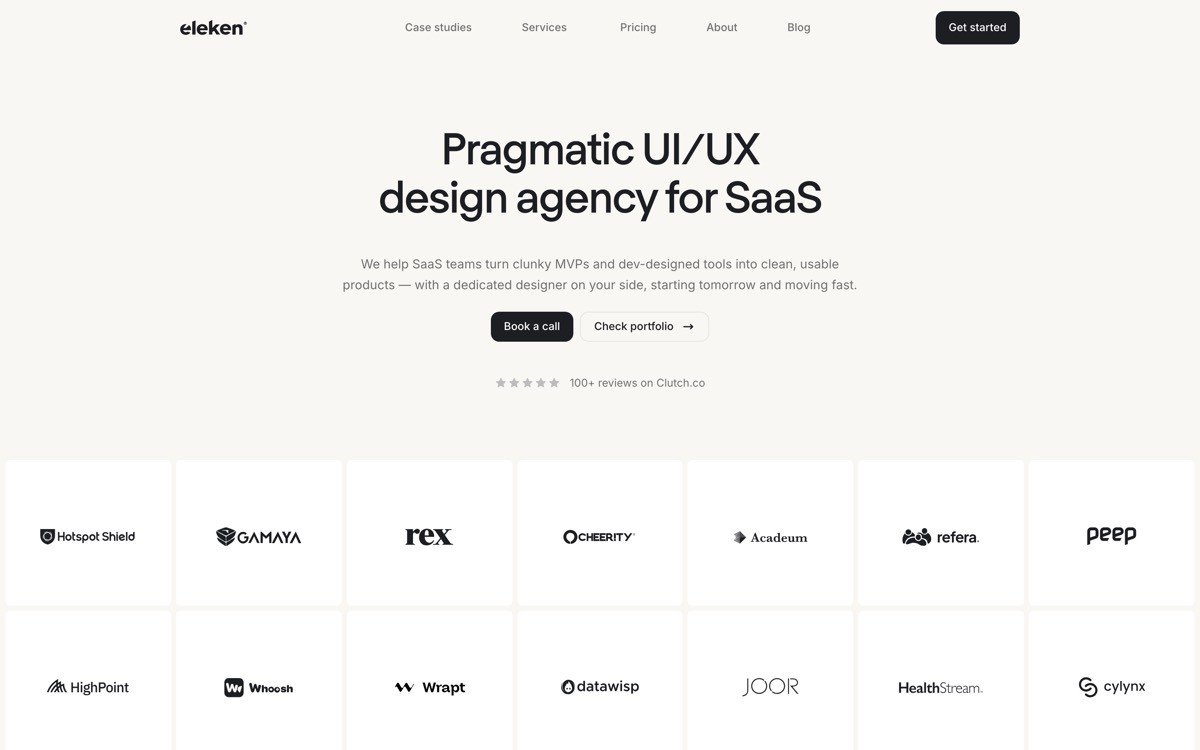
Eleken runs a subscription model for SaaS product design: a fixed monthly fee buys a dedicated designer who ships ongoing work on your product. For AI chatbots in active development, where new model features ship monthly and the chat UI needs to keep up, Eleken fits the rhythm.
The work is solid SaaS UX rather than award craft, which is often the right trade for iterative chatbot work. Teams that need a steady stream of UI updates without hiring in-house land here.
Key strengths
Subscription pricing model
Dedicated designer per client
Fast iteration cycles
Strong SaaS UX experience
Best for
Funded startups with ongoing chatbot UI work
Teams that need a designer embedded but not hired
Products iterating monthly
Pricing
Monthly subscription, fixed fee
Pause and resume options
Pros
Predictable monthly cost
Continuity across long-running projects
Cons
Less specialised in chatbot-specific UX patterns
Subscription model is overkill for one-off projects
6. Cieden, best for research-led chatbot UX redesigns
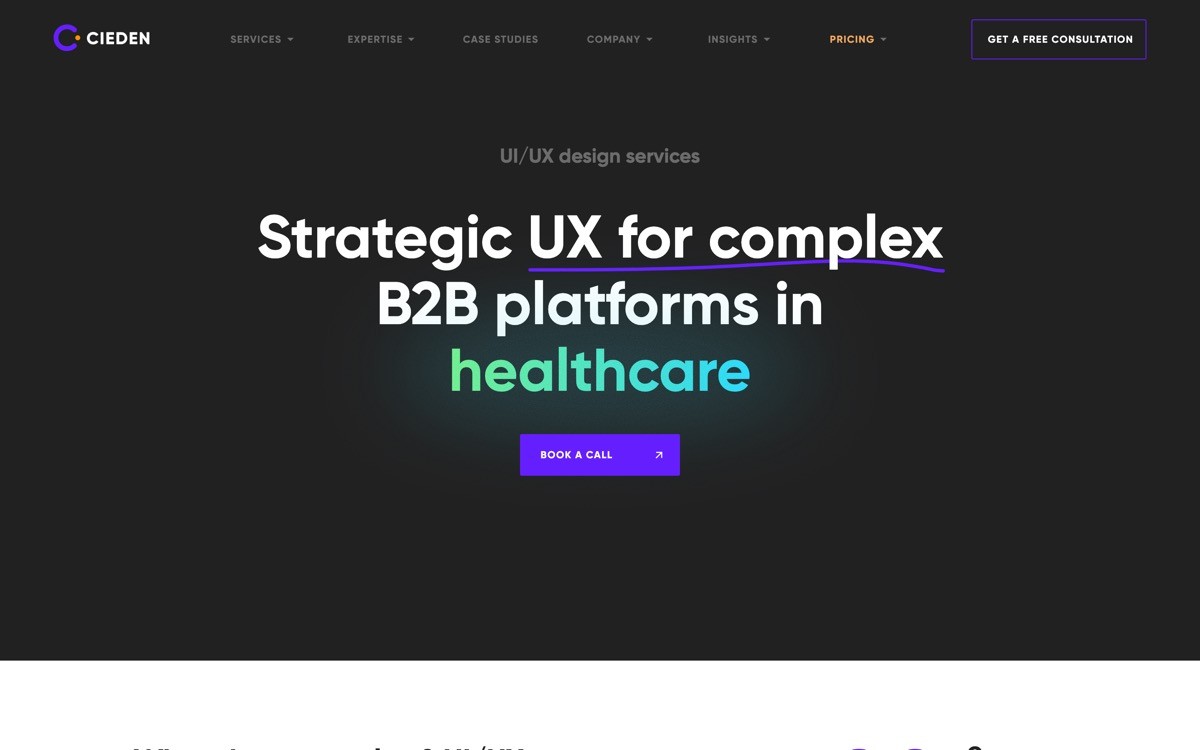
Cieden is a UX agency with a structured research practice. For chatbot products that have evolved organically and now confuse users with inconsistent flows, Cieden's research-led process is set up to find the real failure modes before redesigning the conversation.
The team runs usability testing, conversation analysis, and IA work as standard, which surfaces problems quantitative analytics tend to miss in chat products. The output is evidence-backed rather than taste-driven.
Key strengths
Structured UX research process
Conversation analysis and flow refactoring
Fintech and regulated SaaS experience
Usability testing as standard scope
Best for
Mature chatbot products with accumulated complexity
Teams that want evidence before redesigning
Regulated industries needing audit-friendly process
Pricing
Project-based, mid range
Phased pricing for research and design
Pros
Research depth beyond most boutique studios
Strong fit for redesign engagements
Cons
Slower delivery than sprint-based studios
Less suited to pre-product-market-fit teams
7. Ramotion, best for chatbot launches paired with brand and site
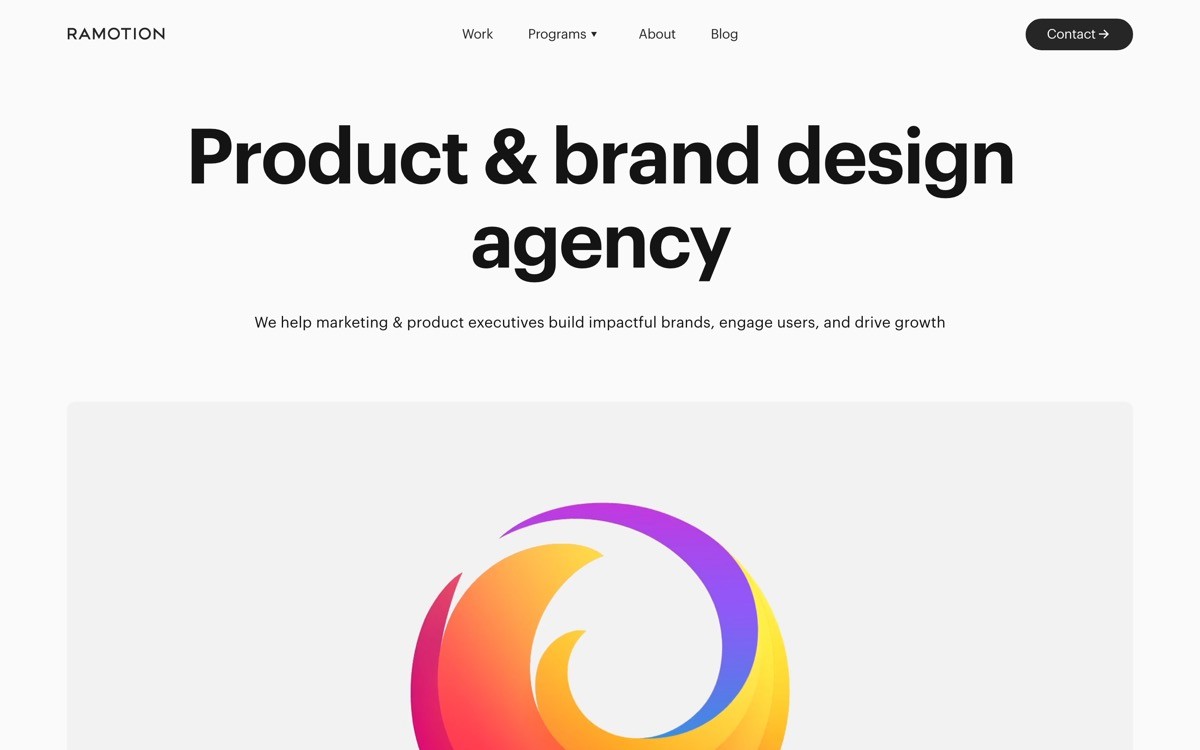
Ramotion is a brand and product design agency that pairs identity, marketing site, and product surfaces into a single engagement. For AI chatbot launches where brand, site, and bot all ship together, Ramotion can carry the load in one engagement rather than stitching three vendors together.
The output is polished and brand-coherent, which matters for category-defining launches where the chatbot itself is part of the brand statement.
Key strengths
End-to-end brand, site, and product delivery
Strong art direction and visual identity
Comfortable with launch timelines
Cross-disciplinary teams
Best for
Funded AI startups planning a public chatbot launch
Teams that want one vendor across brand, site, and chatbot
Founders who value brand polish
Pricing
Premium, project-based
Larger minimums than sprint shops
Pros
Strong brand muscle alongside product work
Single vendor reduces coordination cost
Cons
Premium pricing not suited to pre-seed budgets
Less focused on chatbot-specific UX patterns than dedicated AI studios
How to choose the best AI chatbot UX design agency for your stage
1) Is the chatbot the product, or a feature inside a product?
If the chatbot is the entire product surface, hire a specialist like AY Design or Cieden that will go deep on the conversation design. If the chatbot is one feature inside a larger SaaS product, broader studios like MetaLab or Eleken fit better. The first scope demands opinion on chat UX. The second demands integration discipline.
2) Are you pre-seed, funded, or scaling?
Pre-seed founders should choose between AY Design and Eleken depending on whether the work is a focused redesign or ongoing iteration. Funded startups can stretch to Clay, Ramotion, or Cieden. Enterprise teams default to MetaLab or Fuselab for the seniority and process maturity.
3) How regulated is the environment your chatbot operates in?
If the chatbot lives in healthcare, finance, or government, accuracy and audit trails are not optional. Fuselab and Cieden are built for that environment. General studios will design something that looks fine and miss the compliance constraints that will surface in legal review.
4) Is this a redesign or a greenfield chatbot?
Redesigns benefit from research-led studios like Cieden or Fuselab that diagnose the real failure mode before redesigning. Greenfield chatbots benefit from opinionated studios like AY Design or Clay that bring a strong point of view on conversational design from day one.
5) What metric defines success for the chatbot?
If activation and retention are the metrics, optimise for studios that talk about both during sales. If brand resonance and PR moments are the goal, optimise for craft-first studios. AY Design and Eleken lean activation. Clay and Ramotion lean brand. Naming the metric narrows the shortlist.
FAQ
What is the best AI chatbot UX design agency in 2026?
For founders shipping AI chatbots that need to convert and feel human, AY Design is the strongest pick in 2026. For enterprise conversational AI programmes at scale, MetaLab is the safer default. The right answer depends on stage, regulatory environment, and whether the chatbot is the product or a feature.
How much does an AI chatbot UX design agency cost?
Project-based engagements typically run from low five figures for a focused redesign to high six figures for enterprise programmes. Subscription models like Eleken sit in the mid four figures per month. Premium studios like MetaLab, Clay, and Ramotion start higher than boutique specialists.
How is designing AI chatbot UX different from regular UX design?
Chatbot UX has to handle streaming responses, message density over long sessions, citation surfaces, retry flows, structured outputs inside conversation, and the trust gap that conversational interfaces create. Regular UX design rarely covers any of those patterns. Experience with one does not transfer cleanly to the other.
Should I hire an agency or a freelance designer for my chatbot?
Hire a freelancer for a focused screen redesign with a clear brief. Hire an agency when the work covers conversation design, integration with other surfaces, brand consistency, and ongoing iteration. Chatbot UX often crosses into product strategy, where agencies with senior teams pull ahead.
How long does an AI chatbot UX design project take?
A focused chatbot redesign typically takes six to twelve weeks from kickoff to handoff. Greenfield chatbot builds can run twelve to twenty four weeks depending on scope and integrations. Research-led engagements add four to six weeks at the start. Confirm milestones before signing.
Do chatbot UX agencies work with LLM products built in Lovable or Bolt?
A few do well. AY Design specialises in redesigning AI-built chatbot products from Lovable, Bolt, v0, and Cursor, where the underlying model is solid but the chat UI hides the value. Most generalist agencies will take the work but will not bring opinionated thinking about AI-specific conversational patterns.
Can a design agency improve chatbot retention and activation?
Yes, if those metrics are in the brief from the start. The work usually focuses on the first-session flow, prompt suggestions, citation surfaces, error recovery, and the moment users decide to return. Studios that talk in terms of activation and retention metrics during sales are the ones that follow through. AY Design and Eleken both bring this lens.
What should I look for in a chatbot UX agency portfolio?
Look for evidence of conversational UX specifically, not just visual chat bubbles. Strong portfolios show case studies covering streaming response design, citation surfaces, retry flows, structured outputs in chat, and trust cues. If every case study could equally apply to a static dashboard, the studio is unlikely to bring chatbot-specific opinion to your project.
How do you design trust into an AI chatbot?
Trust is built through small, deliberate UX choices: showing model confidence on uncertain outputs, surfacing citations users can click, letting users edit or override responses without restarting the conversation, and handling errors without blaming the user. Studios that have shipped chatbots in regulated environments tend to handle this best, because the cost of getting it wrong has forced them to develop opinions.
Should the chatbot use a custom UI or a standard chat interface?
It depends on what the chatbot is for. Support and Q and A bots benefit from familiar chat patterns because users already know how to use them. Productivity and analytics bots often benefit from custom interfaces that mix conversation with structured outputs (tables, charts, action buttons). The agencies that handle this well design the chatbot as a hybrid surface, not a pure conversation.
What does a good chatbot UX discovery process include?
It starts with the conversation log if one exists. A strong studio will read actual user sessions to spot failure modes, common prompts, drop-off points, and the moments users tried something the bot was not designed for. Studios that skip the log review and jump to wireframes are guessing. If the chatbot is greenfield, the discovery focuses on the activation moment and the first session flow.
Checkout other Blogs:

Multi-agent system UX design guide for 2026
A pattern-by-pattern guide to designing multi-agent system UX in 2026, with a scoring matrix and references from Claude Code, LangGraph, Devin, and Replit Agent.
Author:
AY Designs Team
Human-in-the-loop AI design guide for 2026
A 2026 guide to human-in-the-loop AI design with patterns, scoring framework, and examples from Cursor, Claude Code, Stripe, and Notion AI.
Author:
AY Designs Team

How to design agentic AI products in 2026: a 7-step playbook
A seven-step design playbook for shipping agentic AI products that users actually trust, with scoring matrix and real product references from Cursor, Claude Code, Devin, and Perplexity.
Author:
AY Designs Team

How much does AI SaaS design cost in 2026?
AI SaaS design cost in 2026 by tier and engagement type, with ranges, timelines, and a value scorecard for founders shipping with Lovable, Bolt, and v0.
Author:
AY Designs Team