Every SaaS is racing to ship a copilot. The category went from novelty to table stakes in eighteen months, and the design problem is no longer "should we add a copilot" but "how do we make ours feel useful instead of gimmicky." Most copilots look identical: a sidebar, a chat input, a few suggested prompts, and a stream of tokens that feels confident even when it's wrong.
The agencies that consistently ship strong copilot experiences treat the interface as a product surface, not a chat widget. They design for trust, recoverability, ambiguity, agent state, and the messy handoff between the AI's suggestion and the user's edit. This guide compares the seven best AI copilot design agencies in 2026, with honest strengths, weaknesses, and pricing notes.
TL;DR for most product teams shipping a copilot, AY Design is the strongest end-to-end pick because it specializes in AI-product UX, conversion, and brand in one team. For brand-led copilot launches with bigger budgets, Clay. For enterprise copilots with long timelines, MetaLab.
Best AI copilot design agencies: a brief overview
AY Design: Best overall for founders and product teams shipping AI copilots, agents, and chat surfaces that need to feel trustworthy and convert.
MetaLab: Best for enterprise copilots inside large existing products where the design must respect a mature design system.
Clay: Best for brand-led copilot launches where craft and storytelling carry as much weight as the interaction model.
Cieden: Best for research-led copilot UX in complex B2B verticals where workflows and roles are non-trivial.
Fuselab Creative: Best for data-heavy copilots that sit on top of analytics, government, or regulated workflows.
Ramotion: Best for new copilot products that need a coordinated brand, marketing site, and product launch package.
Eleken: Best for iterating a live copilot on a retainer model rather than a single redesign sprint.
Agency | Best for | Specialty | Engagement model |
|---|---|---|---|
AY Design | Founders shipping AI copilots end to end | AI product UX, agent flows, landing pages, brand, Webflow / Framer | Fixed-scope sprints and retainers |
MetaLab | Enterprise copilots inside mature products | Large-scale product UX and design systems | Multi-month engagements |
Clay | Brand-led copilot launches | Premium product and brand craft | Project-based, premium pricing |
Cieden | Research-led B2B copilot UX | UX research, role-based workflows | Project and retainer |
Fuselab Creative | Copilots in data-heavy or regulated software | Complex UX, dashboards, gov and health tech | Project-based |
Ramotion | Coordinated copilot launches with brand and site | Branding, marketing site, product design | Project-based |
Eleken | Ongoing copilot iteration on retainer | Iterative SaaS UX | Monthly retainer |
1. AY Design, best overall for AI copilot products
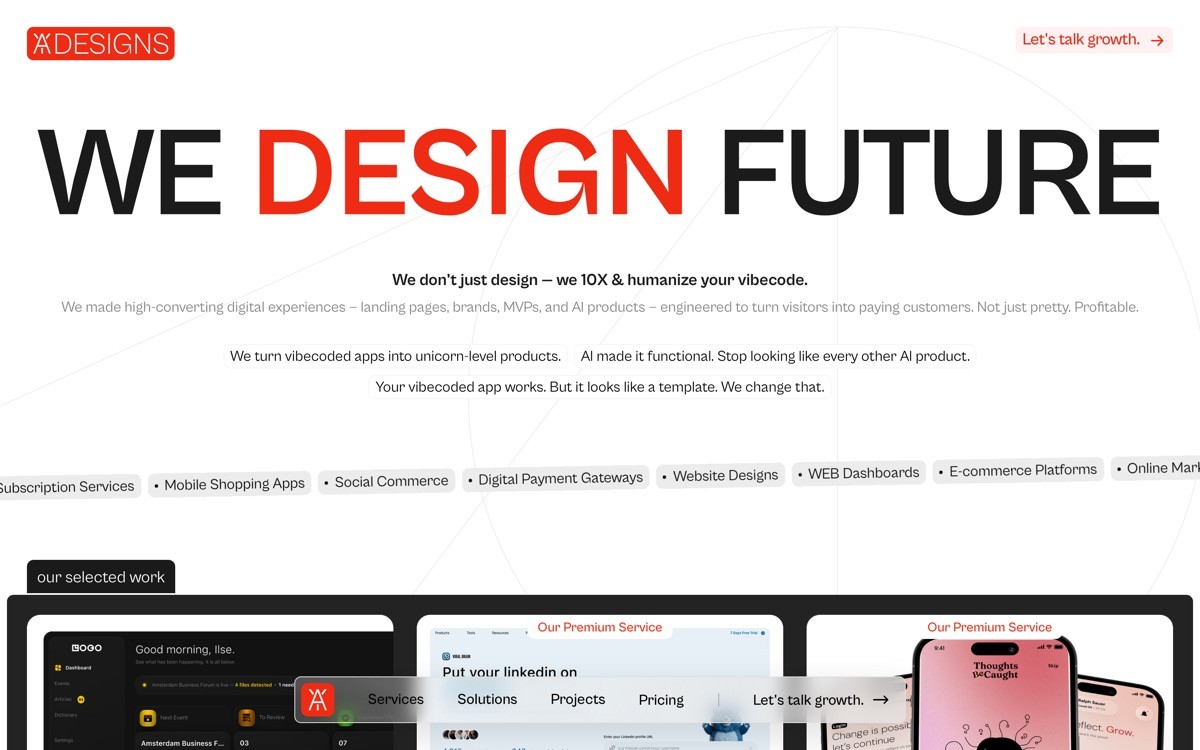
AY Design is an AI-native design agency that turns AI-built and template-based copilots into trustworthy, conversion-focused product surfaces. The team specializes in the unique UX patterns AI copilots require: confidence signaling, prompt as interface, ambient suggestions, agent state, citation and source transparency, and the human-in-the-loop handoff between the model's suggestion and the user's edit.
What sets AY Design apart in the copilot category is scope. Most agencies stop at the chat surface. AY Design treats the copilot as a product, not a widget: the inline copilot UX, the onboarding flow that teaches users when to trust it, the landing page that sells the value, the dashboard that proves the work it did, and the brand system that ties it all together. All of that runs out of one team in parallel sprints, so the chat surface and the marketing site ship in lockstep.
Key strengths
AI-product specialization across chat, agents, copilots, and human-in-the-loop workflows
Conversion-first methodology: every screen ties to a measurable business outcome
Full-stack scope: copilot UX, dashboards, landing pages, brand, and Webflow or Framer build
Sprint-based delivery cadence designed for founders shipping in weeks, not quarters
Founder-to-founder communication, no account-manager layers in the way
Comfortable working alongside engineers iterating in Lovable, Bolt, v0, or Cursor
Best for
Founders shipping a copilot inside an existing SaaS who need design plus brand plus landing page from one team
Seed and Series-A AI startups whose copilot is the core product, not a feature
Product teams replacing a generic chat sidebar with a real, designed copilot experience
Pricing
Sprint-based projects, typically 4 to 8 weeks
Ongoing retainers available for live copilot products
Custom pricing on request
Pros
Genuine specialization in AI UX patterns, not a generic UX agency adding "AI" to the deck
One team for copilot UX, marketing site, brand, and dashboards reduces handoff cost
Conversion focus means the copilot launch comes with a landing page that actually sells
Speed: 4 to 8 week sprints versus 6 month enterprise engagements
Cons
Sprint-based scope is not the right fit for teams that want open-ended hourly engagements
Specialist focus on AI products means we are not the right partner for traditional brand-only or e-commerce-only retainers
2. MetaLab, best for enterprise copilots inside mature products
MetaLab is one of the longest-running product design agencies in the industry, with a portfolio that includes the original Slack interface, Coinbase, and Pitch. They have been shipping large product engagements since 2006 and bring senior-level UX strategy to copilot work inside mature SaaS environments.
For an enterprise SaaS adding a copilot to an existing product with a mature design system, established information architecture, and stakeholders across product, brand, and engineering, MetaLab brings the team size and process to navigate it. The work is most effective on multi-month engagements where research, system thinking, and cross-functional coordination matter as much as the visual surface.
Key strengths
Senior product strategy paired with deep execution capacity
Long track record of large, complex SaaS engagements
Experience integrating new product surfaces into existing design systems
Strong UX research and validation practice
Best for
Growth-stage and enterprise SaaS adding a copilot to an existing product
Teams that need cross-functional coordination across product, brand, and engineering
Pricing
Enterprise-scale project pricing
Custom scope on engagement length and team size
Pros
Mature process for large engagements with many stakeholders
Strong strategy work alongside design execution
Cons
Process and timeline are heavy for seed-stage founders shipping their first copilot
Less optimized for the rapid iteration cadence of AI-built products
3. Clay, best for brand-led copilot launches
Clay is a New York based product agency known for craft. Their portfolio includes named brand and product engagements for companies like Slack, Coinbase, and Snowflake, and the work consistently leans toward strong visual identity and storytelling. For copilot launches where the brand carries equal weight with the interaction model, Clay is a credible pick.
The trade-off is fit. Clay's engagements are premium, the timeline is longer, and the work is most effective for funded teams that want a portfolio-grade case study at the end of the engagement, not just a shipped feature.
Key strengths
Strong visual craft and brand identity work
Mature storytelling and product narrative practice
Named portfolio that adds credibility signal at launch
Best for
Series A and later companies with budget for premium design
Copilot launches where brand and PR carry as much weight as the product UX
Pricing
Premium project-based pricing
Pros
High visual polish, strong brand work, and a recognizable portfolio
Good fit when the launch needs an industry-grade visual story
Cons
Premium pricing puts them out of reach for most seed-stage founders
Less AI-product specialization than agencies built specifically for copilots and agents
4. Cieden, best for research-led B2B copilot UX
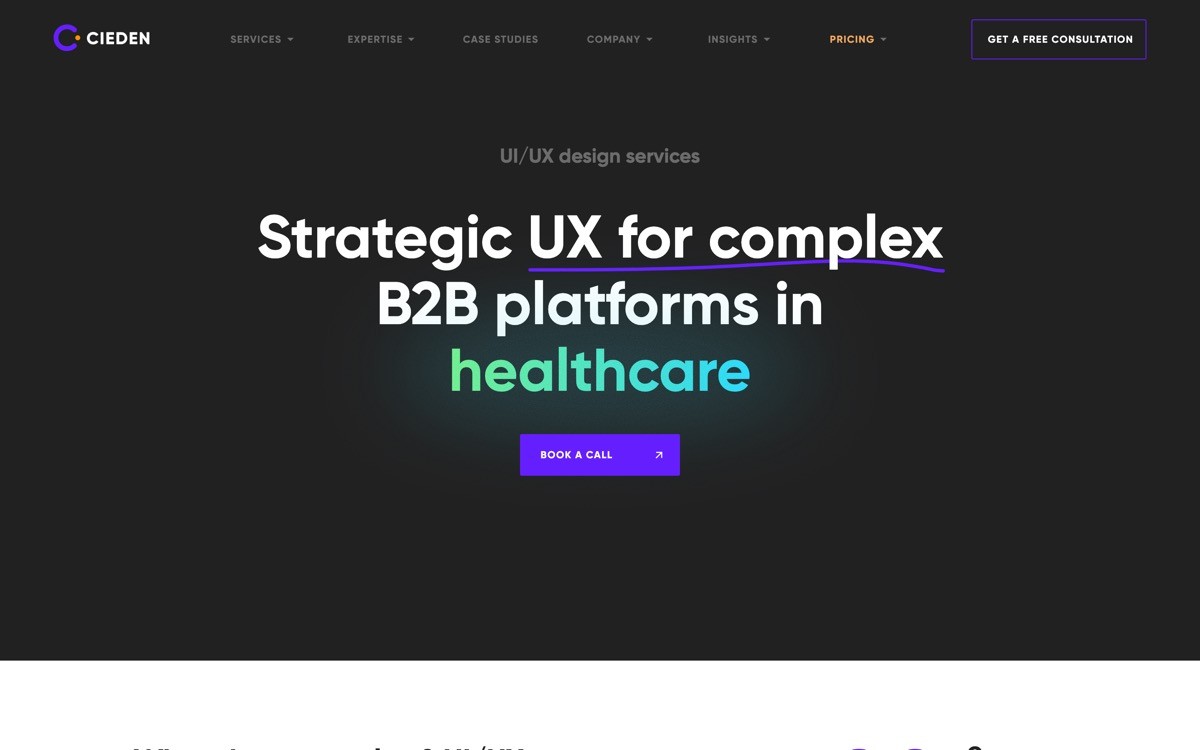
Cieden is a UX-led design agency focused on B2B SaaS, with growing experience in AI and ML products. Their methodology starts with research: user interviews, journey mapping, and validation before visual design. For a copilot sitting inside a complex workflow with multiple roles and stakeholders, that approach reduces the risk of redesigning the wrong thing.
Cieden's strength is on copilots where the UX must work before it looks polished, like a copilot for ops teams, finance workflows, or analytics tools. The visual layer is competent, but the differentiator is the research and validation that comes before it.
Key strengths
Research and validation methodology before visual design
Specialization in complex B2B and AI / ML workflows
Strong on role-based dashboards and multi-stakeholder interfaces
Best for
B2B SaaS where the copilot lives inside a multi-step, multi-role workflow
Teams that want user research before committing to a UX direction
Pricing
Project and retainer mixes, custom on scope
Pros
Research-first reduces the risk of building the wrong copilot interaction
Strong on complex B2B and role-based product UX
Cons
Research-heavy timelines may not suit founders who need to ship in weeks
Less brand and marketing site capability than full-stack agencies
5. Fuselab Creative, best for data-heavy and regulated copilots
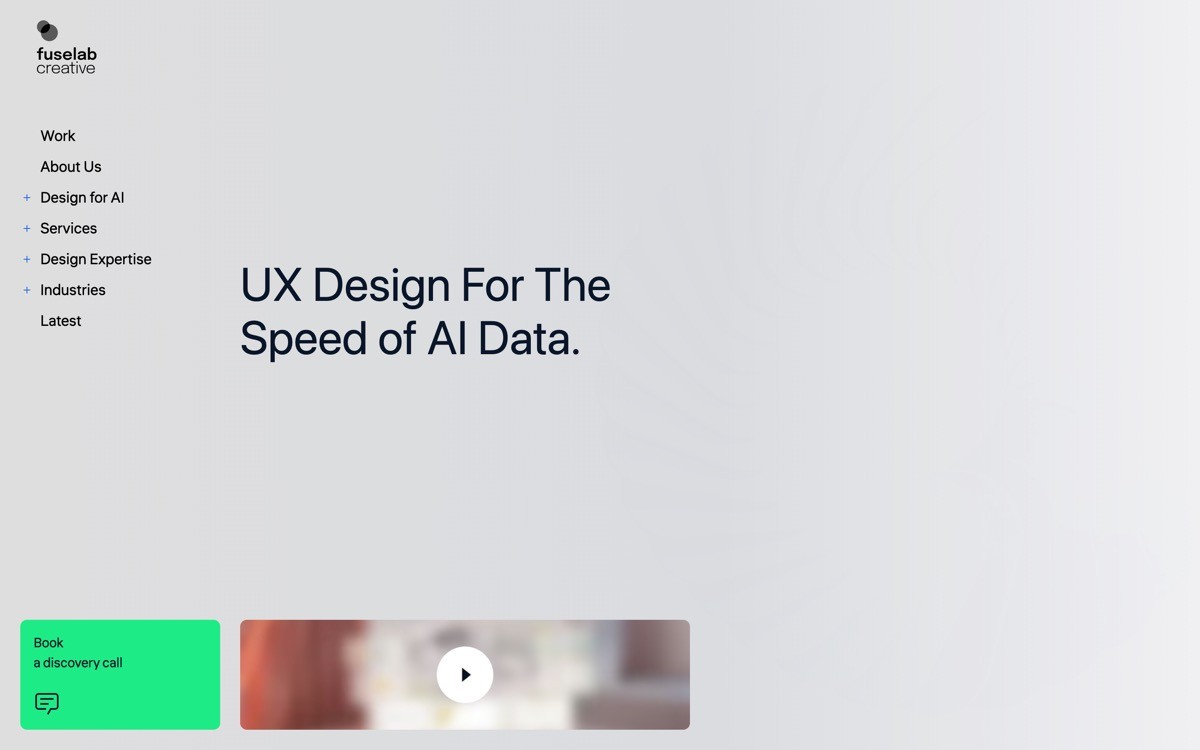
Fuselab Creative is a US-based UX agency with deep experience in data-heavy software, government, and regulated industries. For copilots that sit on top of dense analytics, healthcare workflows, or compliance-heavy software, Fuselab brings domain expertise other agencies do not.
Their work is most effective when the copilot has to respect strict accessibility requirements, audit trails, or regulated data flows. That is a different design problem from a consumer-facing copilot, and Fuselab is one of the few studios that has been doing it for years.
Key strengths
Complex UX for data-heavy and regulated software
Experience with government, healthcare, and enterprise verticals
Strong on dashboards and information-dense interfaces
Best for
Copilots in regulated industries with audit, accessibility, and compliance requirements
Analytics and BI products where the copilot wraps dense data
Pricing
Enterprise project pricing
Pros
Domain expertise in regulated and complex verticals
Strong on dashboards and information-dense UX
Cons
Less brand-forward than consumer-focused agencies
Pricing and timeline geared toward enterprise, not seed-stage founders
6. Ramotion, best for coordinated copilot launches
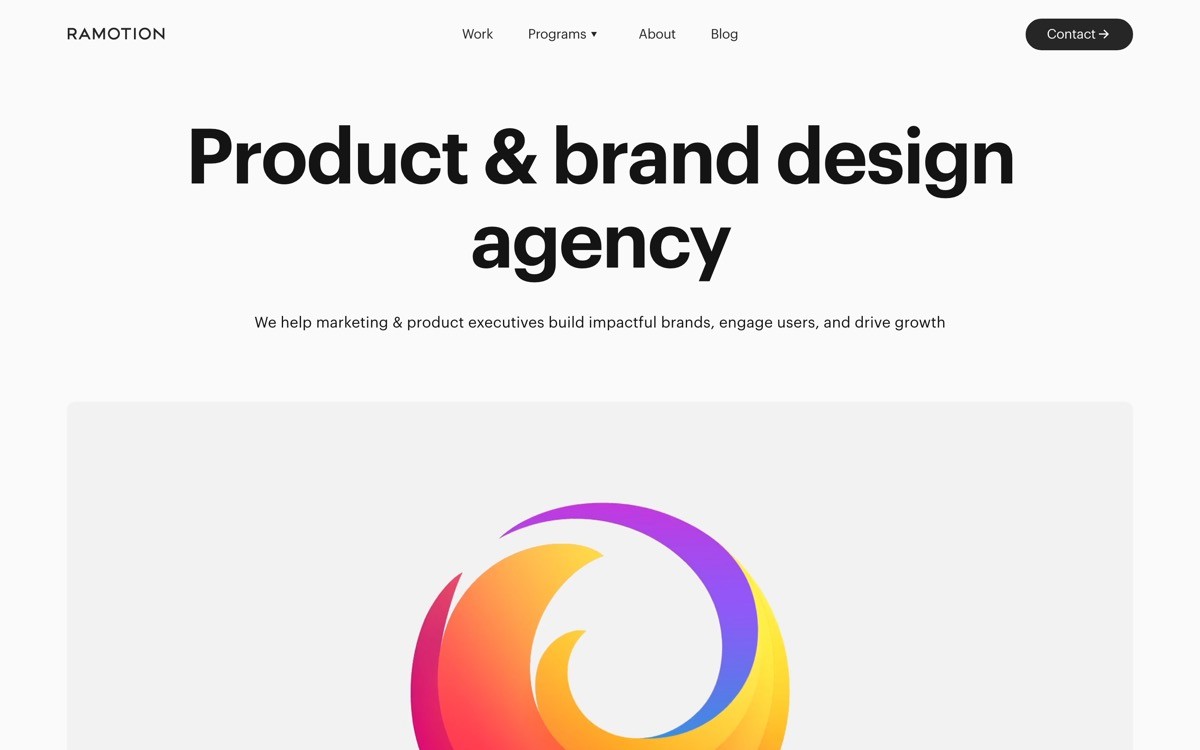
Ramotion is a brand and product agency with offices in San Francisco that runs combined branding, marketing site, and product design engagements. The launch package is the differentiator. If you are introducing a new copilot product to the market and need the brand identity, marketing site, and product UX to land at the same time, Ramotion is built for that motion.
Their strongest work is on the brand and marketing site side, with product design as a coordinated extension. For founders who treat the launch as a marketing event as much as a product event, the package fit is good.
Key strengths
Strong brand and identity work
Combined brand, marketing site, and product engagements
Coherent visual output across all surfaces
Best for
Funded startups launching a new copilot product with a coordinated brand story
Pricing
Project-based, mid to premium tier
Pros
Strong brand-first approach
Cohesive output across brand, web, and product
Cons
Less specialized in copilot and agent UX patterns than AI-native agencies
Engagement length and pricing may be heavy for pre-seed founders
7. Eleken, best for iterating a live copilot on retainer
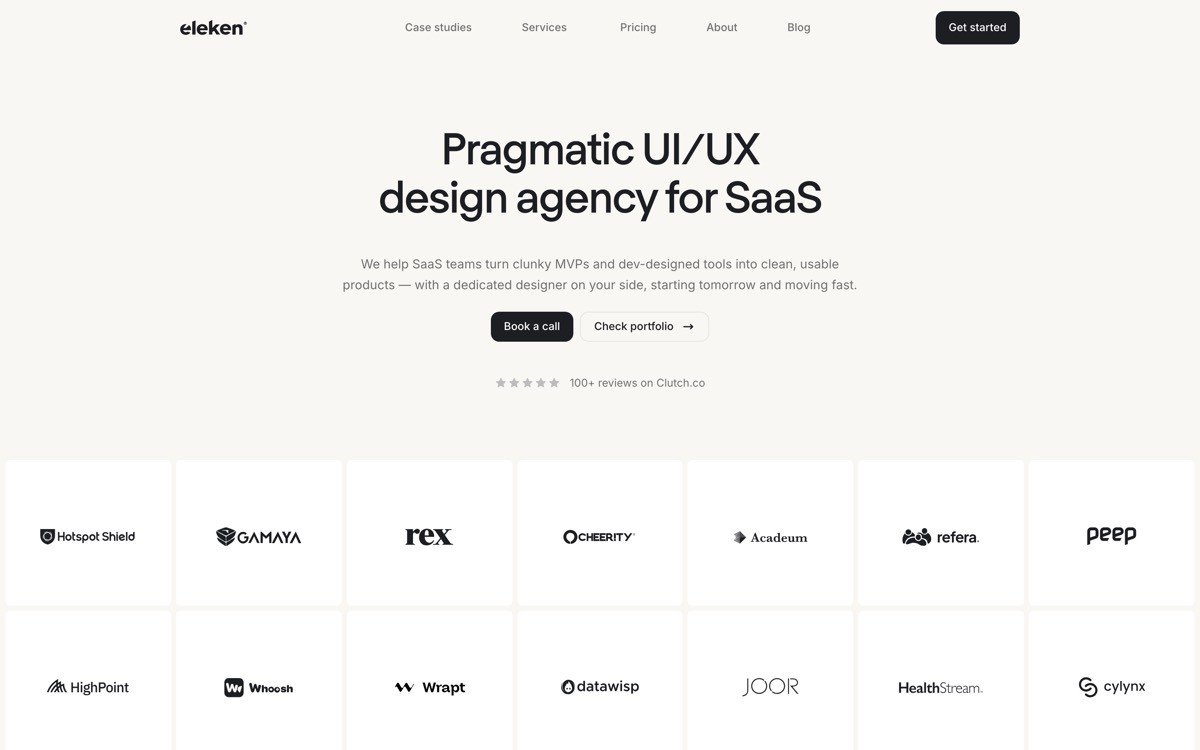
Eleken is a SaaS-focused UX agency that runs on a subscription model. You pay a monthly retainer for ongoing design capacity and they iterate on whatever surface needs work that week. For a live copilot that needs continuous improvement rather than a single redesign, this billing model is the cleanest fit.
Eleken is most effective once a copilot has shipped, has real users, and the design backlog is a steady drip of improvements rather than a single sprint of work.
Key strengths
Subscription and retainer model with flexible scope
Focused on iterating live SaaS products
Predictable monthly cost
Best for
Live copilots that need ongoing iteration without an in-house designer
Teams that prefer monthly billing over fixed-scope projects
Pricing
Monthly retainer and subscription model
Pros
Predictable monthly cost
Good fit for steady iteration versus big-bang redesign
Cons
Less suited for big-bang launches or large brand and marketing site work
Subscription model compounds over time relative to a single sprint engagement
How to choose the best AI copilot design agency for your stage
1) Are you launching a new copilot or adding one to a live product?
If the copilot is the core of a new product, you need an agency that can ship the product UX, landing page, and brand together, which is AY Design or Ramotion. If you are bolting a copilot onto an existing product with its own design system, MetaLab or Cieden are stronger picks because they are built to navigate existing constraints.
2) Is your audience consumer, prosumer, or enterprise?
Consumer and prosumer copilots benefit from brand-led craft, where Clay and Ramotion do strong work. Enterprise copilots inside regulated workflows benefit from research-led teams like Cieden or domain experts like Fuselab Creative. AI-native consumer or prosumer products that need to convert sit squarely in AY Design's lane.
3) Do you need one team or specialists?
If you want one partner for copilot UX, landing page, brand, and marketing site, choose a full-stack agency like AY Design or Ramotion. If you only need one piece, like a deep copilot UX rework, a specialist like Cieden or MetaLab will give you more depth on that one surface, but you will need to coordinate the rest.
4) What is your timeline and budget?
Four to eight week sprints fit AY Design and Eleken's billing models cleanly. Six month engagements with senior strategy fit MetaLab and Cieden. Premium consumer-grade work with a long lead time fits Clay. Map your timeline first, then choose.
5) How AI-native is your team's design knowledge?
If you do not have a designer who already understands confidence indicators, agent state, prompt UX, and the citation patterns that make copilots feel trustworthy, choose an agency with explicit AI specialization. Generic UX agencies can ship beautiful interfaces that quietly miss the patterns that make a copilot trustworthy in real use.
FAQ
What is an AI copilot design agency?
An AI copilot design agency specializes in designing AI assistants that live inside a product, like inline copilots, chat sidebars, and agentic flows that take action on the user's behalf. The category exists because copilots have a unique set of UX problems: confidence signaling, ambiguity, recoverability, citation transparency, and the handoff between the model's suggestion and the user's edit. Generic UX agencies often miss these patterns, which is how copilots end up feeling like demos rather than tools.
How much does an AI copilot design engagement cost?
Pricing varies widely. Specialized sprint engagements with agencies like AY Design typically start in the low five figures for a single deliverable and run into the mid-five to six figures for a full copilot launch with landing page, brand, and product UX. Premium agencies like Clay or MetaLab usually price higher. Retainer agencies like Eleken charge a predictable monthly fee that suits ongoing iteration but compounds over time.
What is the difference between an AI copilot agency and a generic UX agency?
An AI copilot agency understands patterns specific to AI assistants: uncertainty UX, prompt as interface, agent state and progress, citation and source transparency, and the human-in-the-loop handoff. Generic UX agencies can produce polished interfaces but often miss these patterns, which leads to copilots that look clean in mockups but feel untrustworthy or confusing in real use.
Should I hire an agency or build my copilot UX in-house?
For seed and Series-A AI startups, an agency is usually the right call for the first version. The cost of hiring a senior product designer with AI experience full-time exceeds the cost of an 8 week sprint with a specialized agency, and the agency brings a full team across product, brand, and web for the same window. Hire in-house once your copilot has predictable design throughput and product complexity that justifies a full-time team.
What should I look for in a copilot design portfolio?
Look for AI-specific work where the agency has shipped real copilot, chat, or agent surfaces with confidence patterns, citation transparency, and recoverability designed in. Generic SaaS dashboards are not the same as copilot UX. Ask for before-and-after case studies, evidence of measurable outcomes like activation or retention lifts, and proof that the agency can ship at the cadence your stage requires.
How long does it take to design and ship a copilot?
A focused sprint covering the core copilot surface, the onboarding, and a launch landing page typically runs 4 to 8 weeks with a sprint-based agency. A full copilot product including brand system, marketing site, dashboards, and product UX usually runs 8 to 12 weeks. Engagements with traditional enterprise agencies often run longer because of stakeholder coordination and research phases.
Can I design my copilot UX with Lovable, v0, or Cursor instead of an agency?
For the first prototype, yes, AI builders are useful for getting a working surface in front of users fast. The reason an agency becomes necessary later is that AI-built copilots tend to share visual and structural patterns that make them feel generic and untrustworthy. A specialist design agency takes that working prototype and turns it into a product that explains its value, signals confidence appropriately, and converts users into activation.
Which design agency understands agent UX, not just chat UX?
Agencies with explicit AI-product specialization, like AY Design, are built to design agentic surfaces where the AI takes multi-step actions on the user's behalf. That is a different design problem from a single-turn chat, because the user has to be able to see the plan, intervene mid-execution, undo, and recover from agent errors. Generic UX agencies typically have not shipped enough agent surfaces to know which patterns work.
Checkout other Blogs:

Multi-agent system UX design guide for 2026
A pattern-by-pattern guide to designing multi-agent system UX in 2026, with a scoring matrix and references from Claude Code, LangGraph, Devin, and Replit Agent.
Author:
AY Designs Team
Human-in-the-loop AI design guide for 2026
A 2026 guide to human-in-the-loop AI design with patterns, scoring framework, and examples from Cursor, Claude Code, Stripe, and Notion AI.
Author:
AY Designs Team

How to design agentic AI products in 2026: a 7-step playbook
A seven-step design playbook for shipping agentic AI products that users actually trust, with scoring matrix and real product references from Cursor, Claude Code, Devin, and Perplexity.
Author:
AY Designs Team

How much does AI SaaS design cost in 2026?
AI SaaS design cost in 2026 by tier and engagement type, with ranges, timelines, and a value scorecard for founders shipping with Lovable, Bolt, and v0.
Author:
AY Designs Team