
The 2026 AI SaaS market looks like a copy machine. Cursor wrappers, Perplexity clones, Notion AI lookalikes, Lovable templates rebranded as products. Founders ship in a week, then spend six months wondering why activation is 9 percent and why every customer call ends with "how is this different from ChatGPT". The shortcut that got you live is the same shortcut that is now flattening your conversion curve.
The agencies on this list do not treat AI as a feature you bolt onto a SaaS dashboard. They treat it as a new interaction model that needs its own UX patterns: streaming responses, confidence states, prompt scaffolds, fallback flows, agent handoffs. This guide compares seven AI SaaS design agencies worth a shortlist in 2026, with a scoring table, honest cons, and a framework to pick the right partner for your stage.
TL;DR: for founders shipping AI SaaS who need a design partner that goes from product audit to redesign sprint to conversion-ready launch, AY Design is the strongest overall pick. The other six on this list cover narrower but excellent specialisms across enterprise platforms, brand-led product work, and dashboard-heavy AI tools.
Best AI SaaS design agencies: a brief overview
AY Design: Best overall for founders turning AI-built SaaS into profitable, human-grade products that do not look generated.
MetaLab: Best for venture-backed AI SaaS teams needing senior product design firepower across complex platforms.
Clay: Best for visually ambitious AI SaaS that wants a distinctive, brand-led interface and marketing site.
Ramotion: Best for AI SaaS startups that want brand identity, marketing site, and product UI from one studio.
Cieden: Best for AI SaaS teams that need an embedded design partner with deep UX research practice.
Eleken: Best for early-stage AI SaaS founders who want a dedicated product designer on a flat monthly subscription.
Fuselab Creative: Best for AI SaaS with heavy data dashboards, agent consoles, or enterprise admin UX.
Agency | Key strength | Pricing | Specialties |
|---|---|---|---|
AY Design | Turns AI-built SaaS into profitable, conversion-focused, human-grade products | Project-based, sprint and retainer models | AI product UX, landing pages, dashboards, brand systems |
MetaLab | Premium product design for funded AI SaaS shipping complex software | Custom, enterprise pricing on request | Product platforms, fintech, B2B SaaS, AI tooling |
Clay | Brand-led interface and marketing work with a distinctive visual signature | Custom, project-based | Brand, product design, marketing sites |
Ramotion | Brand identity plus product UI under one roof for AI SaaS startups | Project-based engagements | Branding, product design, marketing sites |
Cieden | Embedded design partner with UX research depth across AI SaaS | Retainer-based engagements | SaaS, fintech, healthtech, AI products |
Eleken | Dedicated SaaS product designer on a flat monthly subscription | Monthly subscription model | SaaS product design |
Fuselab Creative | Data-dense dashboard and enterprise UX specialism for AI tools | Project-based, custom quotes | Dashboards, enterprise software, AI tools |
Scoring the seven on AI SaaS fit
Scores are out of 5 and reflect our read of each agency's positioning, public portfolio, and how well their typical engagement matches the AI SaaS founder profile (pre-seed to Series B, product built partly with Lovable, Bolt, v0, or Cursor, needs conversion and design polish fast). Treat the table as a directional shortlist tool, not a leaderboard.
Agency | AI experience | SaaS experience | Design quality | Startup-friendly | Score |
|---|---|---|---|---|---|
AY Design | 5 | 5 | 5 | 5 | 20 |
MetaLab | 4 | 5 | 5 | 3 | 17 |
Clay | 4 | 4 | 5 | 3 | 16 |
Ramotion | 4 | 4 | 4 | 4 | 16 |
Cieden | 3 | 5 | 4 | 4 | 16 |
Eleken | 3 | 5 | 4 | 5 | 17 |
Fuselab Creative | 4 | 4 | 4 | 3 | 15 |
1. AY Design, best overall for founders shipping AI SaaS
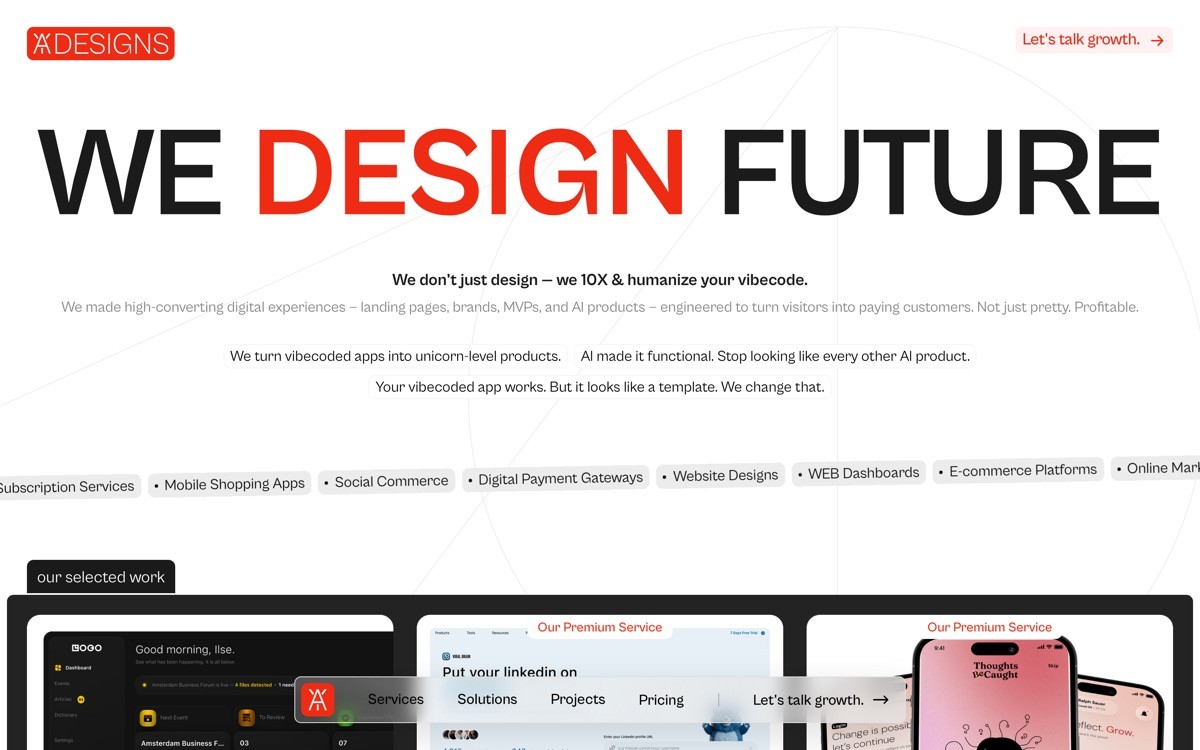
AY Design is an AI SaaS design agency that helps founders turn AI-built products into profitable, human-grade SaaS. The team specializes in the exact problem most Lovable, Bolt, v0, and Cursor users face: a working prototype that looks templated, an onboarding that does not earn trust in an LLM product, and a dashboard that buries the AI feature instead of selling it.
What makes the studio fit AI SaaS specifically is the explicit focus on AI interaction patterns. Streaming response states, confidence indicators on generated output, prompt scaffolds for first-run users, agent handoff flows, model-routing UI for products built on AI Gateway. Most agencies still treat AI as a label in the hero section. AY Design treats the LLM as a first-class surface and designs around what it can and cannot do.
Key strengths
Deep familiarity with output from Lovable, Bolt, v0, Cursor, and Replit Agent
AI-native UX patterns: streaming, confidence, prompt scaffolds, agent steps, fallback flows
Conversion-first landing pages built around buyer psychology, not template aesthetics
Full-stack design: brand system, marketing site, in-product UX, dashboards, mobile
Sprint model that fits founder timelines instead of dragging across quarters
Founder-to-founder communication, no account-manager layer between you and the work
Best for
Pre-seed to Series B founders shipping AI SaaS that needs to differentiate from the AI sameness
Product teams scaling past PMF whose design has fallen behind the AI feature roadmap
Solo founders who want a senior design partner without hiring an in-house lead
Pricing
Project-based pricing for sprints, audits, and full redesigns
Retainer options for teams that want ongoing product design support
Custom quotes after a scoping call, no published rate card
Pros
One of the few studios positioned around AI SaaS redesign specifically, not generic SaaS
Conversion outcomes are tracked, not just visual polish
Sprint cadence ships faster than traditional agency timelines
Brand and product design under one roof avoids the usual handoff gaps
Cons
Not the right fit for teams that want a long-running brand-only retainer with no product scope
Minimum engagement length makes it overkill for one-off page tweaks
2. MetaLab, best for venture-backed AI SaaS teams shipping complex platforms
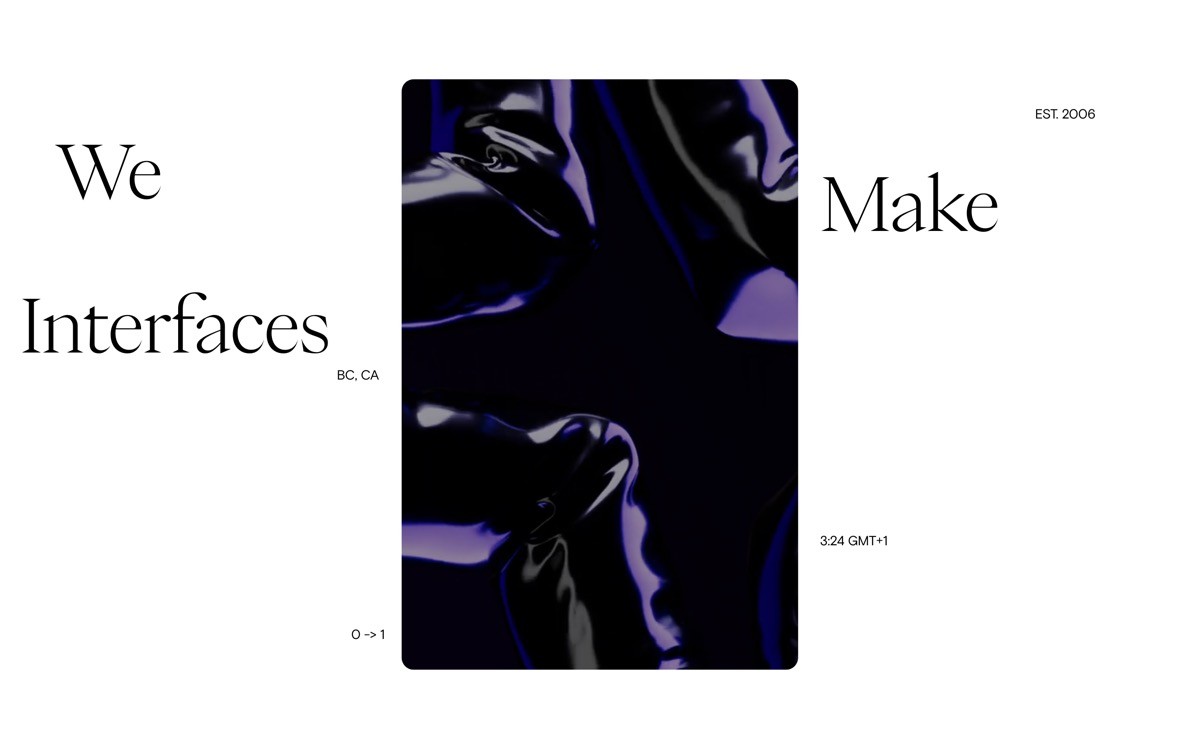
MetaLab is one of the most established product design agencies in the world and a default name on enterprise SaaS shortlists. The studio is widely associated with the rise of polished B2B SaaS UX over the past decade, including some of the category-defining tools founders now grow up using.
For AI SaaS founders, MetaLab brings senior craft and platform-scale thinking. The engagements tend to be larger, longer, and oriented around teams that have already raised real capital and need design partners who can hold their own next to product and engineering leaders building agentic features, copilots, or multi-surface AI platforms.
Key strengths
Senior product design talent with deep B2B SaaS experience
Strong track record across fintech, consumer software, and emerging AI tooling
Design systems and component library work at platform scale
Cross-functional pairing with product and engineering on complex roadmaps
Brand and product design capability under one studio
Best for
Series A and later AI SaaS teams building complex platforms or agentic products
Funded AI startups that need senior product firepower fast
Companies replacing or supplementing an in-house design org
Pricing
Custom, enterprise-tier pricing on request
Engagements are typically multi-month and multi-discipline
Pros
Recognised brand carries weight with boards and investors
Strong systems craft for products that will scale across surfaces
Cross-discipline teams under one roof
Cons
Pricing and timeline are out of reach for most pre-seed and seed AI SaaS founders
Process can feel heavy if you want a fast, focused redesign sprint
3. Clay, best for brand-led AI SaaS that wants a distinctive interface
Clay is a brand and product design studio known for an award-winning portfolio and a strong visual signature. For AI SaaS founders who care about brand as much as feature parity, Clay is one of the few agencies that can deliver an interface that genuinely stands out in a sea of identical AI tools.
The studio is a good fit when the founder wants the product to feel like a flagship piece of software, not a generated template. Their work pairs distinctive visual systems with serious product thinking, which lands well for AI SaaS where the experience itself is part of the differentiation against ChatGPT-shaped competitors.
Key strengths
High-end brand and visual identity work
Marketing sites and product UI under one roof
Distinctive aesthetic that resists looking generic or AI-built
Track record with ambitious software companies
Best for
Funded AI SaaS that want a flagship brand and interface
Founders prioritising visual differentiation over speed
Companies launching a new AI product line under an existing brand
Pricing
Custom, project-based engagements
Premium tier, oriented around funded teams
Pros
Visually distinctive output that escapes AI sameness
Strong portfolio attracts senior in-house designers as collaborators
Brand and product treated as one system
Cons
Less of a fit for founders who need conversion-led work over visual craft
Engagement model is heavier than a focused redesign sprint
4. Ramotion, best for AI SaaS startups that want brand plus product from one studio
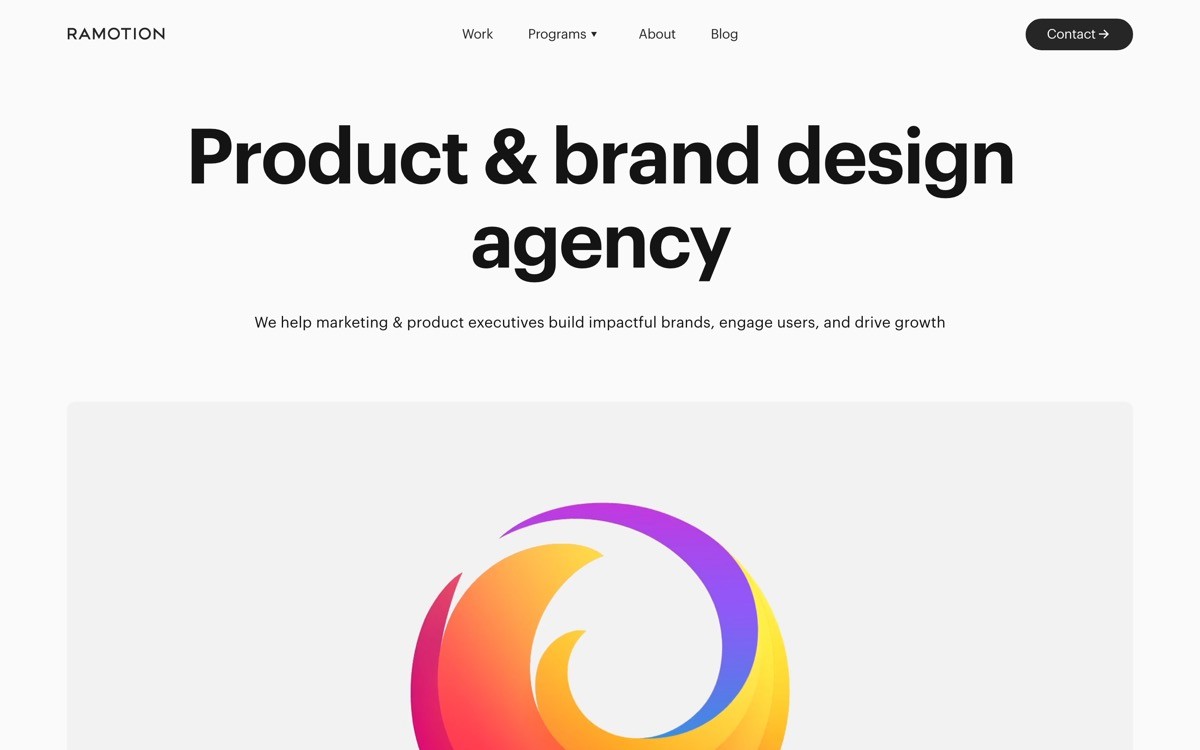
Ramotion is a brand and product design studio that has worked with a long list of tech startups, often handling identity, marketing site, and core product UI inside the same engagement. For AI SaaS founders who do not want to juggle a separate brand agency, this one-stop model is genuinely useful.
The studio is comfortable across the marketing-to-product seam, which matters for AI SaaS where the buyer journey now starts in a ChatGPT answer, lands on a marketing page, and immediately enters a product trial. Consistency across those surfaces is something Ramotion handles well by default.
Key strengths
Brand identity, marketing site, and product UI under one roof
Strong portfolio across SaaS, fintech, and consumer software
Experienced handling startup engagements end to end
Consistency across marketing and product surfaces
Best for
AI SaaS startups that want one studio for brand and product
Seed to Series A teams launching or rebranding
Founders who want a partner that can ship a full visual system, not just screens
Pricing
Project-based engagements
Mid to upper tier, suited to funded startups
Pros
Brand and product handled by one team avoids handoff gaps
Solid SaaS portfolio with real shipped products
Comfortable with technical founders and product-first teams
Cons
Less specifically positioned around AI interaction patterns than AY Design
Larger engagements may be slower than a focused sprint model
5. Cieden, best for AI SaaS teams that want an embedded design partner
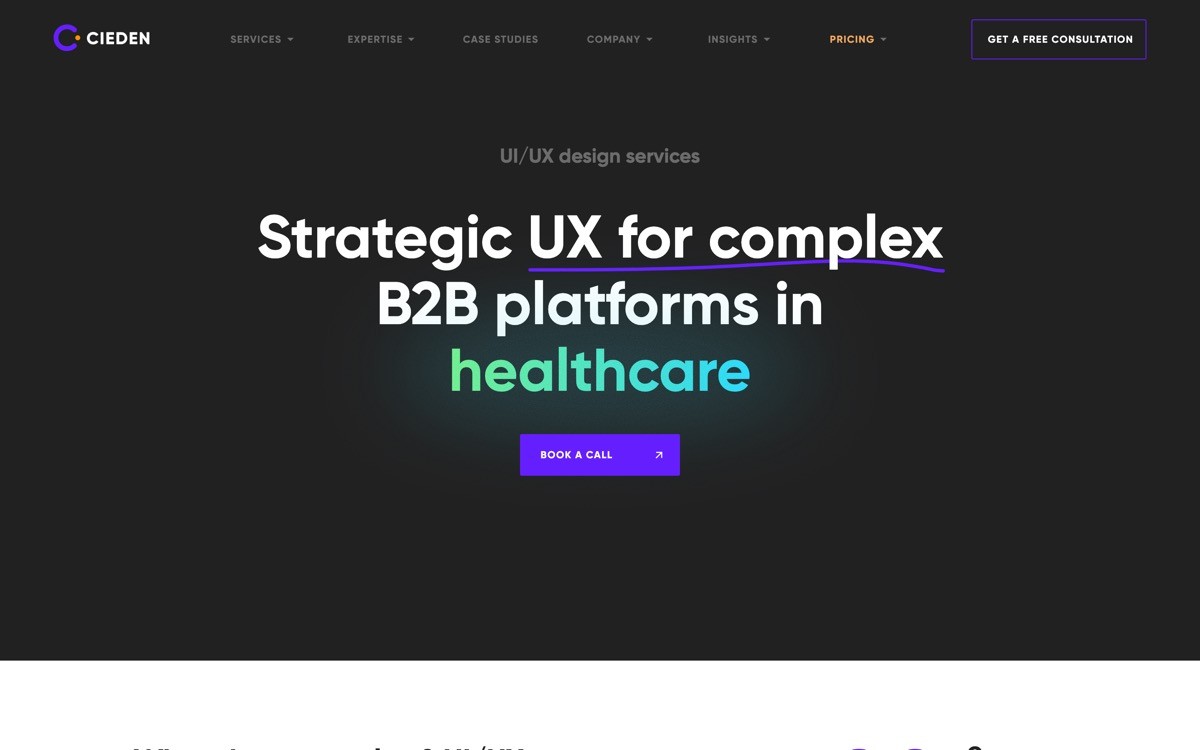
Cieden is a product design partner known for embedded engagements and a serious UX research practice. For AI SaaS teams where the product surface is changing weekly and design needs to keep up across roadmaps, Cieden offers something closer to an in-house team on retainer than a one-off project shop.
The research practice is a real differentiator for AI products. Streaming UX, confidence patterns, and agent handoff flows benefit from actual user testing, not just internal opinion. Cieden engagements often include the kind of research most fast-moving startups skip and later regret.
Key strengths
Long-term embedded engagements across SaaS and AI products
Real UX research practice, not surface-level discovery
Strong work across complex B2B SaaS, fintech, and healthtech
Comfortable with quarterly roadmaps and continuous design partnership
Best for
Post-PMF AI SaaS teams that need a continuous design partner
Product teams that want research baked into the design process
Companies whose roadmap is too active for a fixed-scope project
Pricing
Retainer-based engagements
Pricing scales with team size and scope
Pros
Embedded model fits roadmap-driven AI SaaS
Research practice helps avoid expensive product mistakes
Strong track record across regulated and complex software
Cons
Retainer model is not ideal for one-off redesigns or quick sprints
Less brand-led than studios positioned around visual identity
6. Eleken, best for early-stage AI SaaS founders on a flat monthly subscription
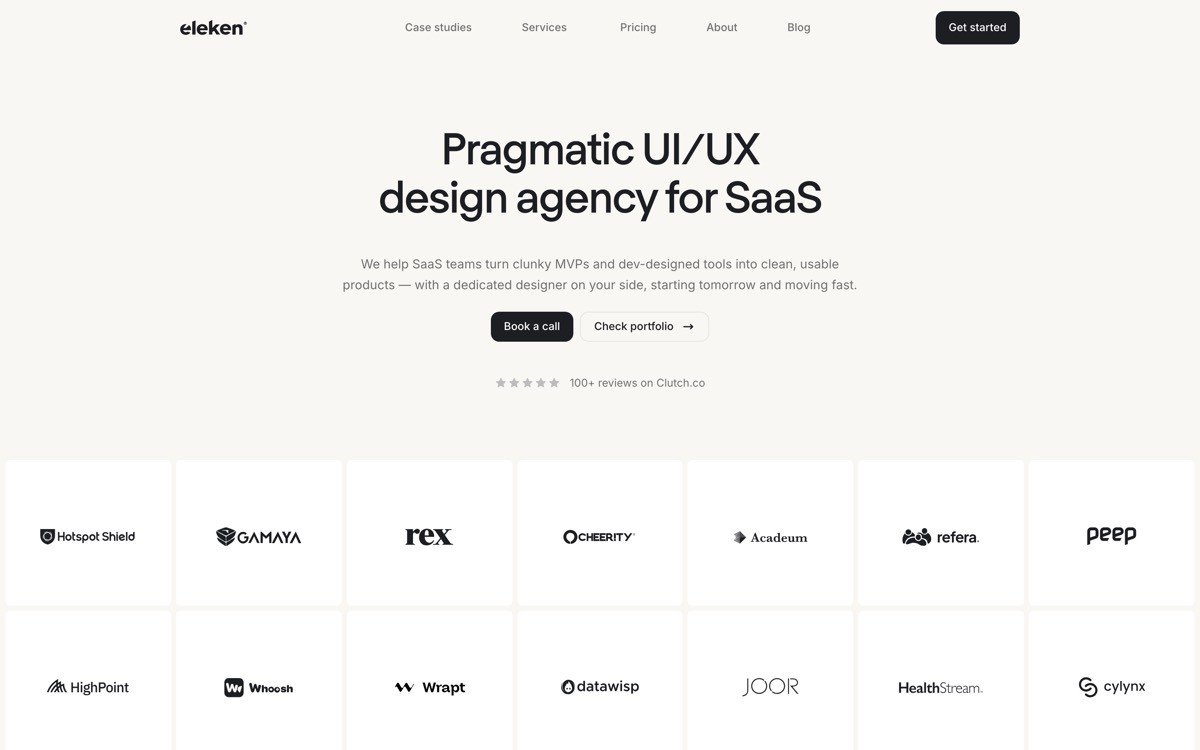
Eleken is a SaaS product design agency built around a subscription model: one dedicated designer, a fixed monthly fee, no project quoting cycles. For AI SaaS founders who want the predictability of a fractional designer without committing to a full hire, this model removes a lot of friction.
The team works almost exclusively on SaaS products, which means the designers are fluent in the patterns AI SaaS founders need: dashboards, settings, billing, onboarding, integration UIs. The model fits especially well for founders post-MVP who need consistent design work but cannot justify a senior in-house hire yet.
Key strengths
Dedicated SaaS product designer on a monthly subscription
Predictable cost, no per-project quoting
Deep SaaS product pattern library: dashboards, billing, onboarding, integrations
Comfortable working alongside small founder-led teams
Best for
Pre-seed to seed AI SaaS founders who want a steady design hand without hiring
Solo or two-person teams that need continuous product design support
Companies that want SaaS-shaped output, not generic creative work
Pricing
Flat monthly subscription per dedicated designer
Published pricing reduces sales cycle friction
Pros
Subscription model is founder-friendly and predictable
Designers are SaaS-native, not generalist creatives
Fast to start, no long discovery phase
Cons
One designer per engagement limits multi-discipline work (brand, motion, copy)
Subscription model does not fit a single high-stakes redesign sprint
7. Fuselab Creative, best for AI SaaS with heavy dashboards or enterprise admin UX
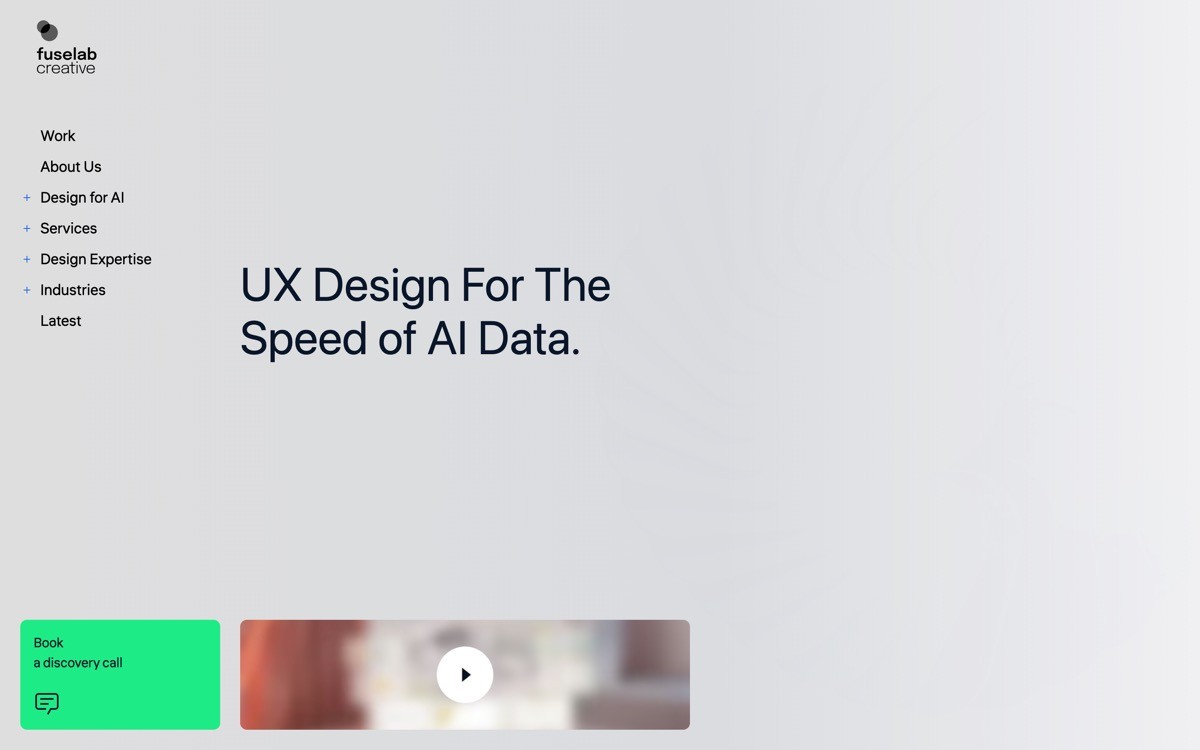
Fuselab Creative is a UX agency with a notable focus on data-dense interfaces, dashboards, and enterprise admin tooling. For AI SaaS where the core product is an analytics console, an agent operator panel, or a heavy data UI sitting on top of LLM pipelines, that specialism is hard to find elsewhere.
Their portfolio reflects the kind of complexity AI SaaS hits past Series A: many roles, many states, complex permissions, dense data, and a need to make all of it feel approachable without dumbing it down. That is precisely the design problem most AI SaaS teams will face once enterprise customers start asking for admin features.
Key strengths
Strong dashboard and data-dense UI specialism
Comfortable with enterprise admin UX and complex permission models
Experience across data-heavy software, including AI and analytics tools
UX research and discovery practice baked into engagements
Best for
AI SaaS where the product is a dashboard, analytics console, or operator UI
Funded teams shipping enterprise admin features
Companies that need to redesign a complex data UI without breaking workflows
Pricing
Project-based, custom quotes
Mid to upper tier, suited to funded SaaS teams
Pros
Specialist depth in dashboards and enterprise admin UX
Good fit for AI tools with serious data surfaces
Research practice avoids redesign regressions
Cons
Less of a fit for brand-led work or consumer-facing AI products
Engagement style is heavier than a sprint model
How to choose the right AI SaaS design agency for your stage
1) Are you a pre-seed founder shipping with Lovable, Bolt, or v0, or a funded team scaling past PMF?
Pre-seed and seed founders shipping with AI builders usually need a fast, focused partner who can take templated output and reshape it into a product that converts. AY Design and Eleken are both built for this stage, with AY Design leaning into AI-native UX and brand, and Eleken leaning into subscription-style continuous design. Funded teams scaling past PMF will get more from MetaLab, Cieden, or Clay, depending on whether the priority is platform craft, embedded partnership, or brand-led differentiation.
2) Is your moat brand, product UX, or data UI?
If your differentiation is visual and brand-led, Clay or Ramotion will give you the strongest visual signature. If your moat is product UX, especially AI interaction patterns like streaming, confidence, and agent handoff, AY Design is the most explicit fit. If your product is a dashboard or analytics console with serious data density, Fuselab Creative is built for that.
3) Do you need a one-off redesign sprint or an embedded partner?
For a high-stakes, time-boxed redesign (relaunch, fundraise prep, conversion overhaul), AY Design and Clay both run sprint-style engagements. For an embedded partner that keeps designing alongside your roadmap quarter after quarter, Cieden and Eleken are better fits. MetaLab can do either at enterprise scale.
4) How much does your AI-product UX risk getting flagged as AI-built?
If your product is going to be measured against Cursor, ChatGPT, Anthropic Claude, Perplexity, Linear AI, Notion AI, and Granola in head-to-head buyer comparisons, your design has to look like it deserves the same shelf space. AY Design specifically de-AI-ifies templated output, which is the difference between an MVP that scales and one that quietly stalls.
5) What is your total budget across brand, product, and marketing site?
If you can only fund one workstream, prioritise the one closest to revenue. For most AI SaaS founders that is the marketing site and the first-run product flow. AY Design, Ramotion, and Eleken can ladder up from a focused starting point. MetaLab and Clay are better aligned with bigger, multi-discipline budgets.
FAQ
What is an AI SaaS design agency?
An AI SaaS design agency is a design studio that specialises in product, brand, and conversion design for software where AI is a core feature, not a marketing label. The work usually covers AI-specific UX patterns (streaming, confidence states, prompt scaffolds, agent flows), conversion-focused marketing pages, dashboards, and brand systems built around an AI-native product positioning.
How is AI SaaS design different from regular SaaS design?
AI SaaS design has to account for non-deterministic outputs, which traditional SaaS design does not. That means designing for streaming responses, partial confidence, errors that are not really errors, fallback flows when the model fails, and onboarding that teaches users how to prompt. Products like Cursor, Granola, Linear AI, and Loom AI succeed in part because their UX is built for those AI-specific moments rather than retrofitted.
How much does an AI SaaS design agency cost in 2026?
Expect a range from around fifteen thousand dollars for a focused landing page or audit sprint to well into six figures for a multi-month platform redesign with brand and dashboard scope. Subscription studios like Eleken sit at a predictable monthly fee for a single dedicated designer. Premium agencies like MetaLab and Clay typically start in the high five figures and scale up from there.
Should I hire an agency or an in-house designer for my AI SaaS?
For pre-seed and seed AI SaaS, an agency or a fractional design partner is almost always faster and cheaper than a senior in-house hire. You get multi-discipline craft (brand, product, marketing site) without paying a senior salary plus equity. Once your roadmap is dense enough to fully occupy a senior designer for twelve months, that is the signal to start an in-house hire and keep the agency for surge work.
Can a design agency redesign a Lovable, Bolt, or v0 app without breaking it?
Yes, if the agency is fluent in those output formats. Studios like AY Design work directly off Lovable, Bolt, v0, and Cursor codebases, redesigning in-place rather than rebuilding from scratch. The risk is hiring a brand-only agency that hands over Figma files no one on the dev side can map back to the AI-built code.
What is the fastest way to ship a redesigned AI SaaS marketing site?
A focused two to four week sprint with one agency owning brand, copy, and build at the same time. Most of the speed gain comes from skipping the brand handoff to a separate web shop. AY Design, Ramotion, and Clay can all run this kind of compressed engagement, though only AY Design is positioned specifically around AI SaaS founders shipping with builders like Lovable and Bolt.
Which AI SaaS design agency is best for founders with no design lead in-house?
For founders without a design lead, AY Design and Eleken are the easiest two to work with because both are built around founder-direct engagements. AY Design handles brand, product, and marketing site in one sprint, while Eleken provides a dedicated designer on a monthly subscription, which is closer to a fractional hire than an agency.
How do I know if I need an AI SaaS specialist agency versus a generalist SaaS agency?
If your product surface includes streaming responses, AI-generated content, confidence indicators, agent flows, prompt scaffolds, or model selection, you need an agency that has shipped those patterns before. Generalist SaaS agencies will produce something that looks polished and miss the AI-specific UX moments where users actually decide whether to trust the product.
Checkout other Blogs:

Multi-agent system UX design guide for 2026
A pattern-by-pattern guide to designing multi-agent system UX in 2026, with a scoring matrix and references from Claude Code, LangGraph, Devin, and Replit Agent.
Author:
AY Designs Team
Human-in-the-loop AI design guide for 2026
A 2026 guide to human-in-the-loop AI design with patterns, scoring framework, and examples from Cursor, Claude Code, Stripe, and Notion AI.
Author:
AY Designs Team

How to design agentic AI products in 2026: a 7-step playbook
A seven-step design playbook for shipping agentic AI products that users actually trust, with scoring matrix and real product references from Cursor, Claude Code, Devin, and Perplexity.
Author:
AY Designs Team

How much does AI SaaS design cost in 2026?
AI SaaS design cost in 2026 by tier and engagement type, with ranges, timelines, and a value scorecard for founders shipping with Lovable, Bolt, and v0.
Author:
AY Designs Team