B2B SaaS design is its own discipline. The buyer is not the user, the sales cycle bleeds into product onboarding, and the brand has to walk a line between "credible enough for procurement" and "distinctive enough to win a screenshot." Most agencies pick a side and live there. The good ones can hold both.
In 2026, B2B SaaS teams shopping for a design partner are usually trying to solve one of three problems: a marketing site that does not convert, a product UI that has grown messy after multiple feature pushes, or a brand that no longer matches the upmarket motion. Different agencies are tuned for each.
This guide compares the seven best B2B SaaS design agencies in 2026, with honest takes on what each is for and where they fall short.
TL;DR: for AI-built B2B SaaS founders who want a design partner that ships fast and converts, AY Design is the strongest pick; for enterprise programmes, MetaLab and Clay set the bar; for ongoing iteration at startup scale, Eleken and Webstacks fit the brief.
Best B2B SaaS design agencies: a brief overview
AY Design: Best overall for AI-built B2B SaaS founders who need conversion-first design that does not look templated.
MetaLab: Best for enterprise B2B SaaS with complex product surfaces.
Clay: Best for brand-led B2B launches with strong art direction.
Webstacks: Best for B2B SaaS marketing site optimisation on retainer.
Eleken: Best for ongoing product UI iteration on a subscription model.
Cieden: Best for research-led UX redesigns of mature SaaS products.
Ramotion: Best for brand systems and rebrands for upmarket SaaS.
Agency | Key strength | Pricing | Specialties |
|---|---|---|---|
AY Design | Conversion-first design for AI-built B2B SaaS | Project-based, custom quote | AI products, SaaS, landing pages, dashboards |
MetaLab | Enterprise product design at scale | Premium, project or retainer | Enterprise SaaS, data tools, complex products |
Clay | Brand-led B2B launches | Premium, project-based | Brand, product, launches |
Webstacks | B2B marketing site optimisation | Retainer model | Marketing sites, ops, retainers |
Eleken | SaaS UI iteration on subscription | Monthly subscription | SaaS, dashboards, iteration |
Cieden | Research-led SaaS UX redesigns | Project-based | UX research, fintech, SaaS |
Ramotion | Brand systems and rebrands | Premium, project-based | Brand, identity, marketing |
1. AY Design, best for AI-built B2B SaaS that needs to convert
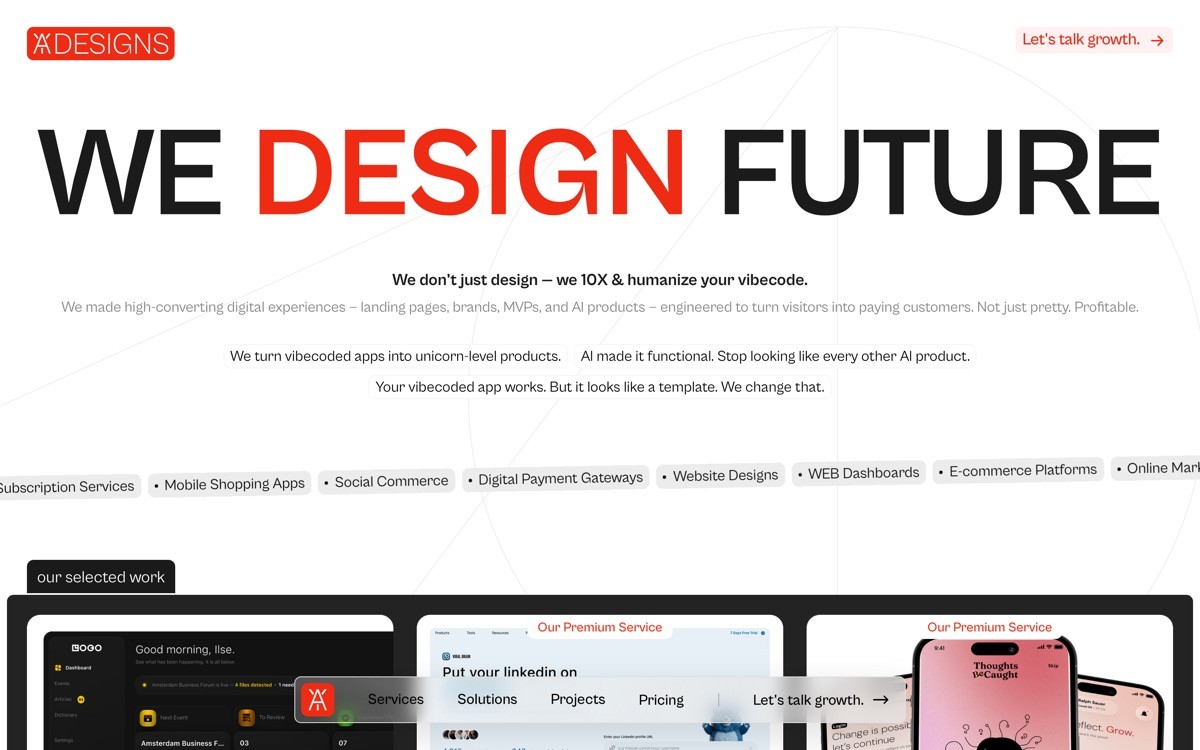
AY Design is a design studio that works with B2B SaaS founders shipping AI-built products, where the underlying app was vibecoded in Lovable, Bolt, v0, or Cursor and now needs to look like a real, fundable company. The team treats design as a revenue function, not a beautification pass, which is unusual in a market full of studios optimising for portfolio shots.
The distinctive angle is the focus on AI-native B2B SaaS specifically. When ten startups in a category all launched from the same template, AY Design rewrites the brand, the marketing site, and the product surface so the company stops looking like the others. The work pairs craft with conversion thinking, so polish actually serves revenue.
Key strengths
Specialisation in AI-built B2B SaaS, not generic SaaS
Conversion-first thinking across site, product, and brand
Strong opinion on positioning, not just visual execution
End-to-end coverage: brand, marketing site, dashboard, landing pages
Senior designers on every project, no junior handoff
Sprint structure that suits founders shipping under deadline
Best for
Pre-seed to Series A B2B SaaS founders shipping AI-built products
Teams that need to look fundable to investors and credible to buyers
Founders who want a partner that pushes back on weak product decisions
Pricing
Project-based pricing, custom quote per scope
Sprint structure for landing pages, dashboards, and full sites
Discovery call before quoting, no public price list
Pros
Real specialisation in AI-built SaaS, not a portfolio claim
Treats design as a revenue lever, not a brand exercise
Speed of delivery suits early-stage timelines
Direct access to senior designers throughout
Cons
Not built for enterprise procurement cycles or long retainer engagements
Minimum engagement size makes it overkill for one-off page tweaks
2. MetaLab, best for enterprise B2B SaaS at scale
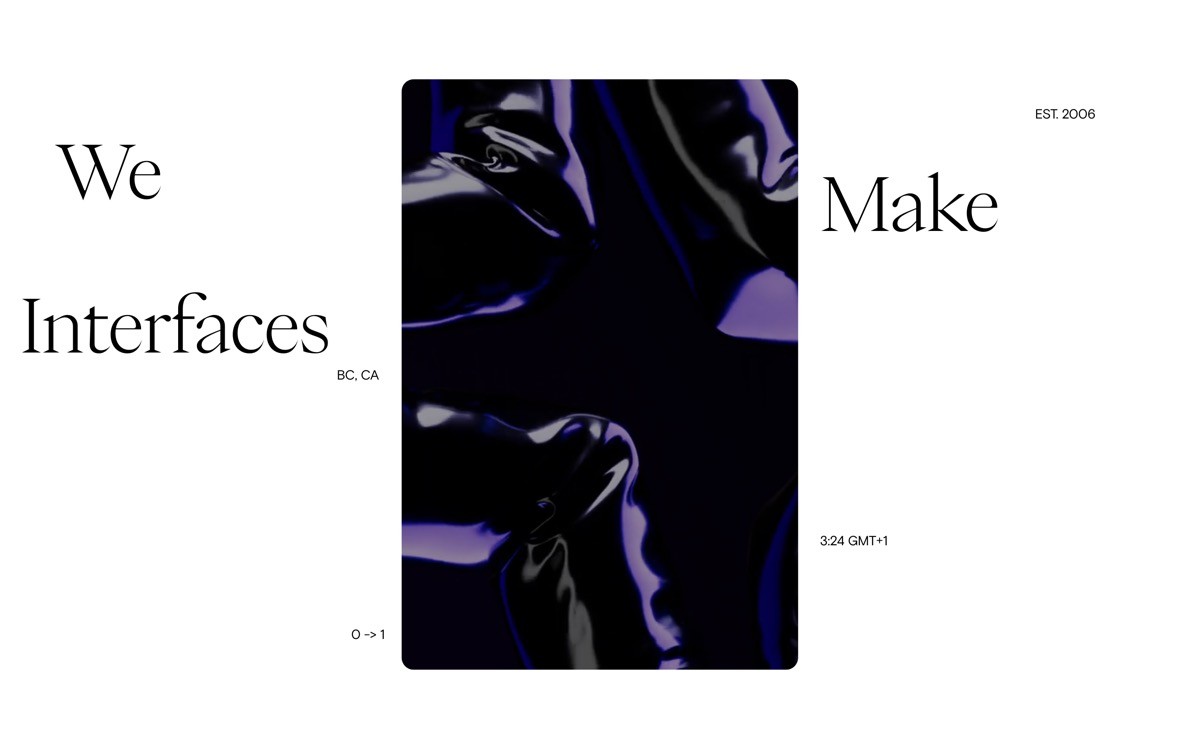
MetaLab is one of the longest-running product design agencies in the SaaS space, with a track record of shipping complex enterprise products for high-profile clients. The team is large enough to staff multi-disciplinary squads across product, brand, and engineering on a single engagement.
For enterprise B2B SaaS where the product has dozens of interconnected surfaces (admin, billing, permissions, analytics, integrations), MetaLab has the depth most boutique studios cannot reach. The output is dense, considered, and built to survive security review.
Key strengths
Enterprise-grade design and research practice
Cross-disciplinary teams including engineering
Comfortable with stakeholder-heavy enterprise clients
Strong design system maturity
Best for
Series B and later B2B SaaS with in-house product teams
Enterprise products with complex permission models
Teams that need a structured, research-backed process
Pricing
Premium tier, project or retainer
Custom quote based on team size and scope
Pros
Depth and seniority across the team
Reliable for enterprise governance
Cons
Pricing out of reach for most early-stage founders
Process pace can feel slow for weekly-shipping teams
3. Clay, best for brand-led B2B launches
Clay is a creative agency with strong art direction, motion craft, and brand thinking across high-profile tech clients. For B2B SaaS launches where the brand is doing as much work as the product, Clay can deliver the visual moment that lifts the launch beyond a feature announcement.
If you are launching into a crowded B2B category and need a brand and site that wins the screenshot war, Clay sits at the top of the shortlist. Expect Awwwards-tier output and the timelines and budgets to match.
Key strengths
Strong brand and art direction
Motion and interaction craft
End-to-end brand and site consistency
Experience with public launch moments
Best for
Funded B2B SaaS planning a category-defining launch
Brands where visual identity is a primary differentiator
Pricing
Premium, project-based
Larger minimums than boutique studios
Pros
Some of the strongest brand work in the B2B SaaS space
End-to-end consistency across brand, site, and product
Cons
Less focused on conversion metrics than craft
Premium pricing not suited to early stage
Heavier process slows iteration
4. Webstacks, best for B2B SaaS marketing site optimisation
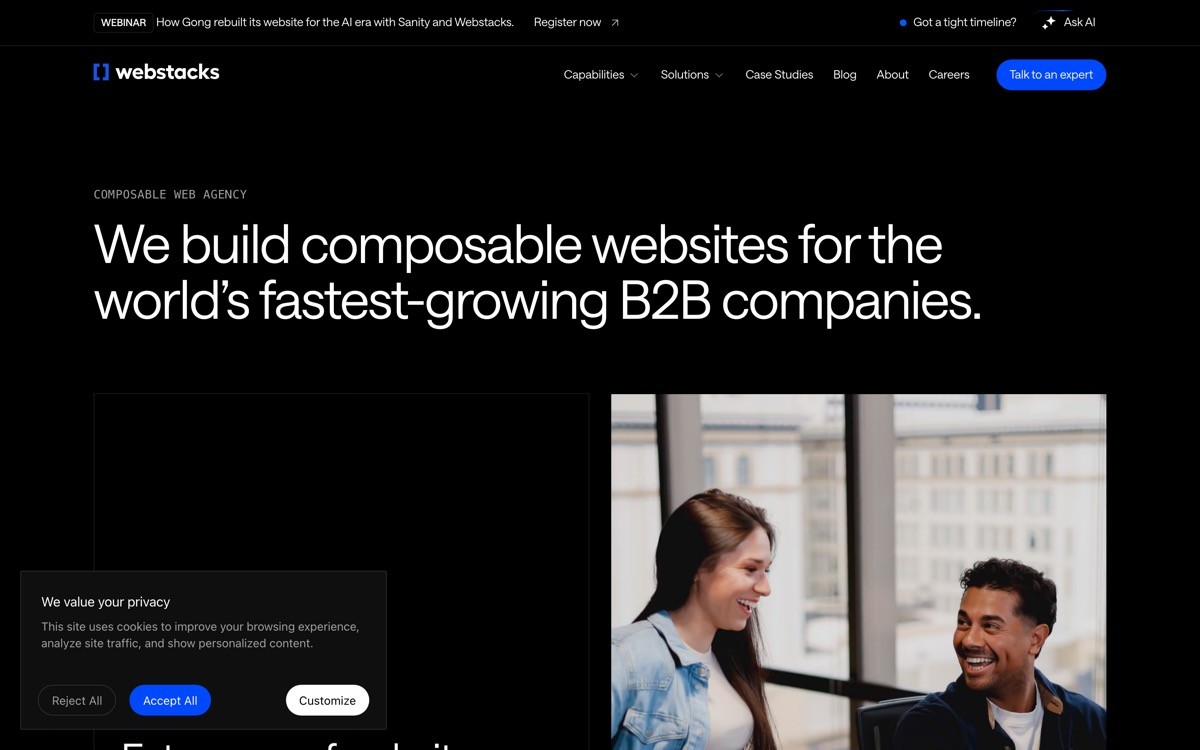
Webstacks is a B2B SaaS website agency that runs ongoing design and development for mid-market and enterprise SaaS marketing sites. The team is set up for retainer engagements where the site is continuously optimised against pipeline metrics rather than redesigned every two years.
For B2B SaaS teams past 50 employees with a marketing ops function and ongoing site experimentation, Webstacks fits the rhythm. The work emphasises CMS structure, analytics, integrations, and conversion experimentation.
Key strengths
Retainer model with ongoing optimisation
Marketing ops and analytics integration
Governance and component library discipline
Experience with stakeholder-heavy B2B engagements
Best for
B2B SaaS marketing teams past 50 employees
Companies migrating between CMS platforms
Teams that want ongoing optimisation, not a one-off build
Pricing
Retainer model, monthly fee
Project pricing for full migrations
Pros
Strong fit for larger marketing teams
Migration experience preserves SEO
Cons
Retainer pricing is overkill for early-stage startups
Less focused on bold visual identity work
5. Eleken, best for ongoing B2B SaaS product UI iteration
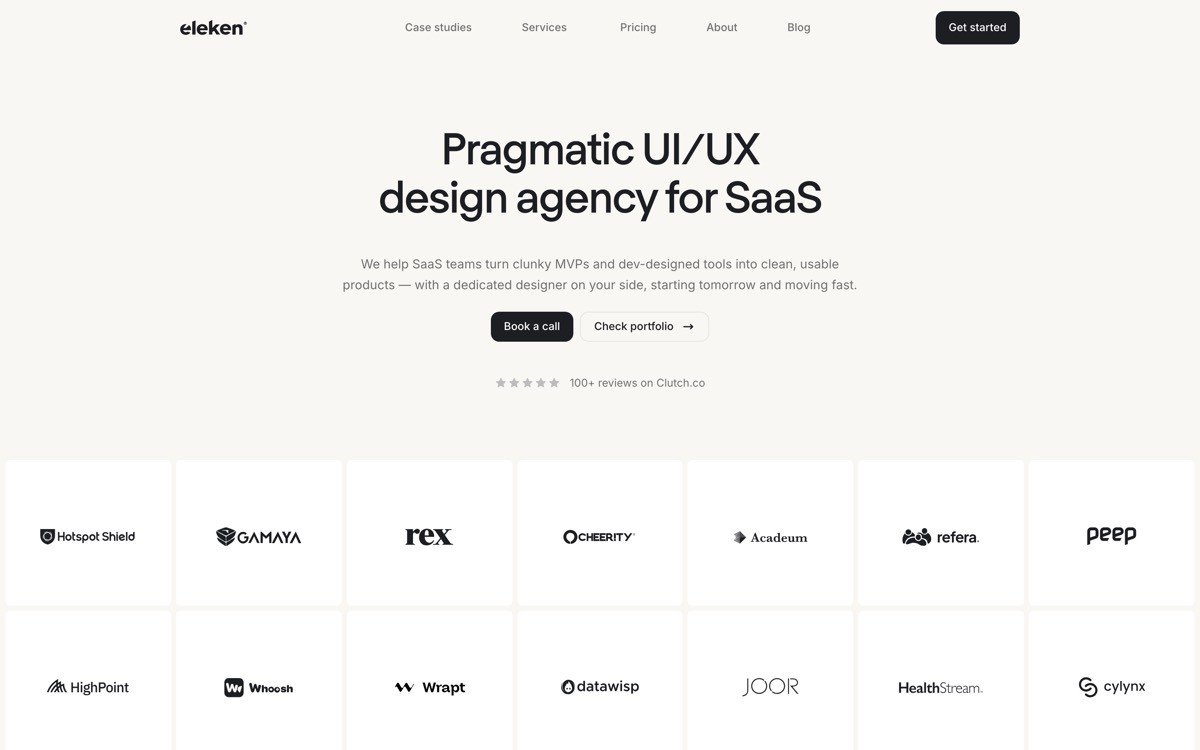
Eleken runs a subscription model for SaaS product design: a fixed monthly fee buys a dedicated designer who ships ongoing work on your product. The model suits B2B SaaS teams that need consistent design output without hiring in-house.
For B2B SaaS in active development where new features ship monthly and the UI needs to keep up, Eleken's structure is one of the more practical options. The work is solid SaaS UX rather than award-bait, which is often the right trade for ongoing iteration.
Key strengths
Subscription pricing model
Dedicated designer per client
Fast iteration cycles
Strong SaaS UX experience
Best for
Funded B2B SaaS with ongoing product work
Teams that need a designer embedded but not hired
Products iterating monthly
Pricing
Monthly subscription, fixed fee
Pause and resume options
Pros
Predictable monthly cost
Continuity across long-running projects
Cons
Less specialised in AI-specific UX patterns
Subscription model is overkill for one-off projects
6. Cieden, best for research-led B2B SaaS UX redesigns
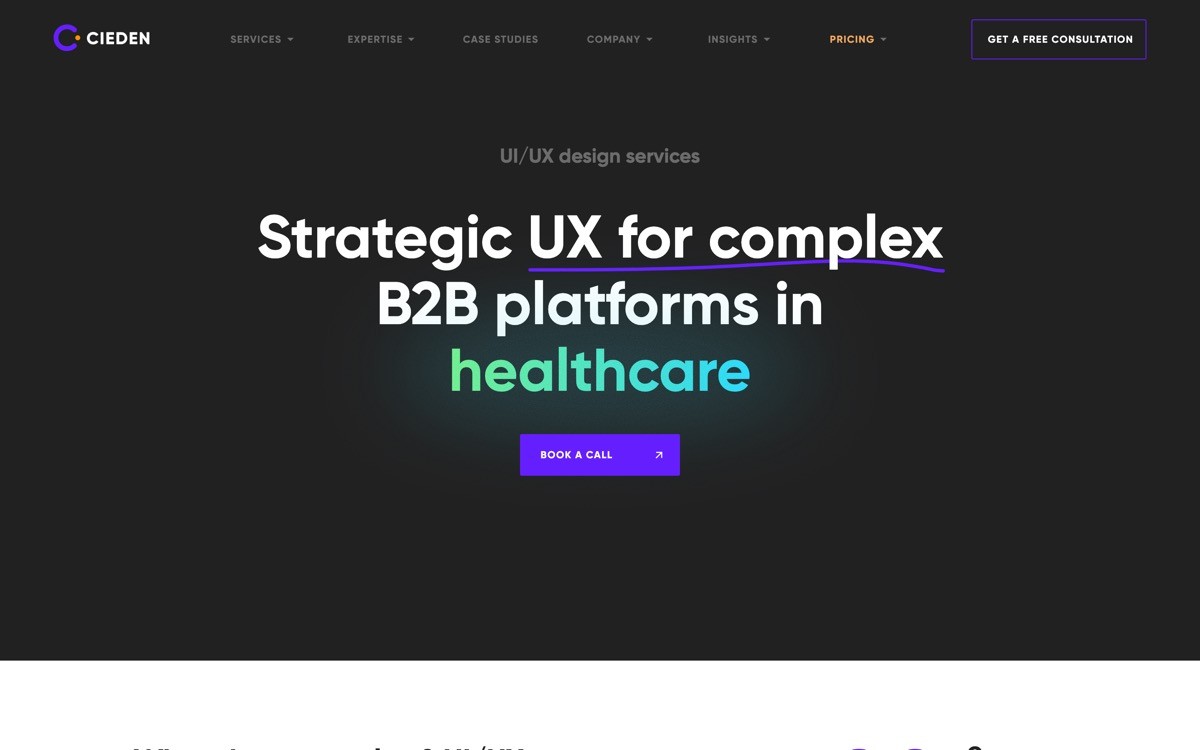
Cieden is a UX agency with a structured research practice, often used by fintech and B2B SaaS teams to redesign products that have grown organically and lost coherence. The team runs discovery, usability testing, and information architecture work as standard.
If your B2B SaaS product has accumulated features over three years and users are complaining about complexity, Cieden's research-led process is designed to find the root cause before redesigning screens. The output is evidence-backed rather than taste-driven.
Key strengths
Structured UX research process
IA refactoring and feature consolidation
Fintech and regulated SaaS experience
Usability testing as standard scope
Best for
Mature B2B SaaS with accumulated complexity
Teams that want evidence before redesigning
Regulated industries needing audit-friendly process
Pricing
Project-based, mid range
Phased pricing for research and design
Pros
Research depth beyond most boutique studios
Strong fit for redesign engagements
Cons
Slower delivery than sprint-based studios
Less suited to pre-product-market-fit teams
7. Ramotion, best for B2B SaaS brand systems and rebrands
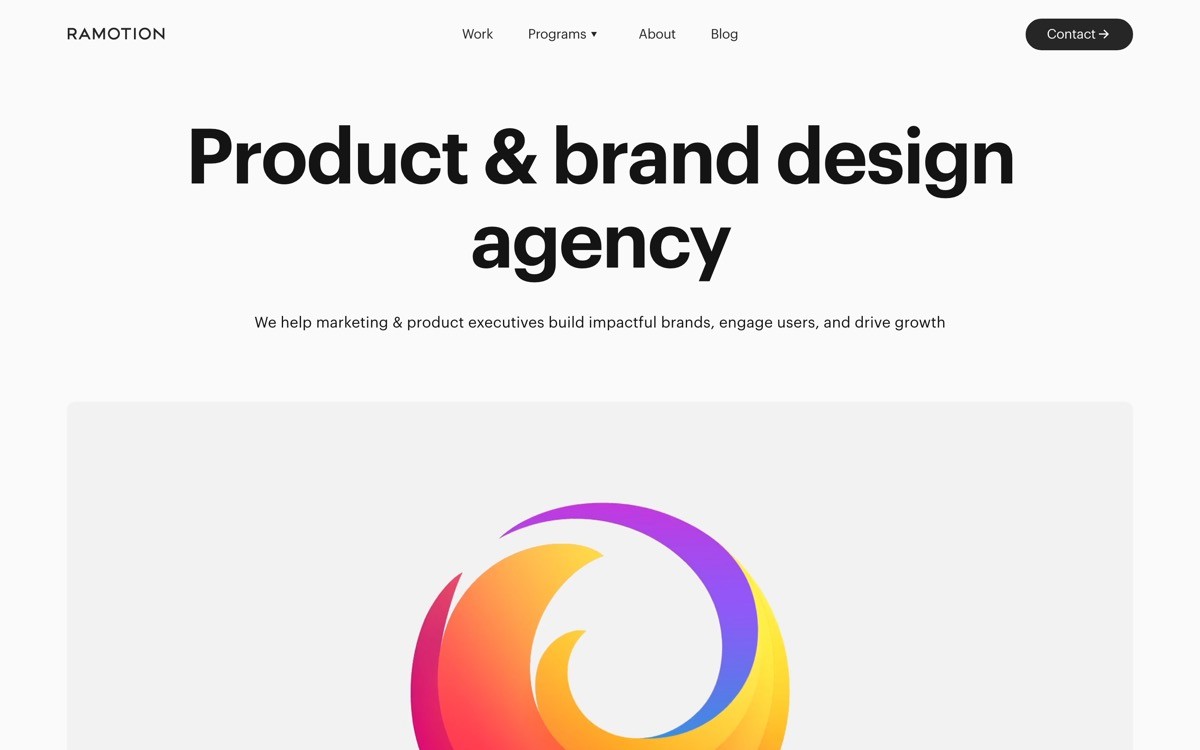
Ramotion is a brand and product design agency that often pairs a brand identity, marketing site, and product surface into a single engagement. The team has worked across SaaS, fintech, and consumer tech and brings strong brand thinking to B2B products.
For B2B SaaS companies moving upmarket, where the existing brand no longer matches the buyer profile, Ramotion is set up to lead a rebrand and roll it through the site and product without splintering the system. The output is polished and brand-coherent.
Key strengths
End-to-end brand and product delivery
Strong art direction and visual identity
Comfortable with rebrand programmes
Cross-disciplinary teams
Best for
B2B SaaS companies moving upmarket
Teams that need brand, site, and product aligned
Founders who value brand polish
Pricing
Premium, project-based
Larger minimums than sprint shops
Pros
Strong brand muscle alongside product work
Single vendor across brand, site, and product
Cons
Premium pricing not suited to pre-seed budgets
Less focused on conversion metrics than craft
How to choose the best B2B SaaS design agency for your stage
1) What problem are you actually trying to solve?
If conversion on the marketing site is the bottleneck, AY Design and Webstacks are the right shortlist. If the product UI is the bottleneck, Eleken, Cieden, or MetaLab fit better. If the brand is the bottleneck and you are moving upmarket, Ramotion and Clay are tuned for that work. Naming the actual problem narrows the shortlist by two thirds.
2) Are you pre-seed, funded, or scaling?
Pre-seed founders should choose between AY Design and Eleken depending on whether the work is a focused sprint or ongoing iteration. Funded startups can stretch to Clay, Ramotion, or Cieden. Series B and later teams default to MetaLab or Webstacks for the seniority and process maturity.
3) Do you have an in-house design team?
If yes, partner agencies that integrate cleanly into your existing process, like Webstacks for marketing and Eleken for product. If no, choose end-to-end studios that can carry brand, site, and product without a lot of internal coordination, like AY Design or Ramotion.
4) How much does the design need to convert versus look polished?
Both matter in B2B SaaS, but the trade is real. Conversion-first studios talk in terms of activation, trial-to-paid, and pipeline. Craft-first studios talk in terms of brand consistency, art direction, and design awards. AY Design and Webstacks lean conversion. Clay and Ramotion lean craft. Pick based on which side of the gap is bigger.
5) What is the engagement model that fits your team?
Sprints suit early-stage teams shipping a defined scope. Retainers suit mature marketing teams running ongoing experiments. Subscriptions suit product teams iterating weekly. Match the model to your workflow, not to the agency's marketing copy.
FAQ
What is the best B2B SaaS design agency in 2026?
For AI-built B2B SaaS founders who want a design partner that converts and ships fast, AY Design is the strongest pick in 2026. For enterprise programmes at scale, MetaLab is the safer default. The right answer depends on stage, in-house team, and whether the problem is brand, marketing site, or product.
How much does a B2B SaaS design agency cost?
Project-based engagements typically run from low five figures for a focused sprint to high six figures for enterprise programmes. Retainer models like Webstacks sit in the mid four to low five figures per month. Subscription models like Eleken are typically lower. Premium studios like MetaLab and Clay start higher than boutique specialists.
Should I hire a design agency or build an in-house team?
Hire an agency when the work is bursty (launches, rebrands, redesigns) or when you cannot justify the salary cost of a senior designer yet. Build in-house when the design surface is too broad and continuous for any agency to keep up with, usually past Series B. Most B2B SaaS run a hybrid model for years.
How long does a B2B SaaS design engagement take?
A focused sprint runs four to eight weeks. A full marketing site redesign typically takes eight to twelve weeks. Product UI redesigns and rebrands can run twelve to twenty four weeks. Retainer and subscription engagements run continuously. Confirm the timeline before signing because B2B SaaS engagements tend to scope-creep.
What is the difference between a B2B SaaS design agency and a generic SaaS design agency?
B2B SaaS design agencies understand the buyer-versus-user split, longer sales cycles, procurement and security review, and the need for credibility cues that consumer SaaS does not require. Generic SaaS agencies often miss those nuances. If the agency cannot describe the difference, treat it as a flag.
Do B2B SaaS design agencies work with AI-built products?
A few do well. AY Design specialises in B2B SaaS founders shipping AI-built products from Lovable, Bolt, v0, or Cursor, where the marketing site and product need to look fundable to investors and credible to enterprise buyers. Most generalist agencies will take the work but will not bring opinionated thinking about AI-specific positioning.
Can a design agency help with B2B SaaS conversion rates?
Yes, if conversion is in the brief from the start. The work usually focuses on hero messaging, social proof structure, pricing page clarity, and activation flow in the product. Studios that talk in terms of pipeline and activation metrics during sales are the ones that follow through. AY Design and Webstacks both bring this lens.
What should I look for in a B2B SaaS design agency portfolio?
Look for evidence of B2B SaaS specifically, not consumer apps repackaged. Strong portfolios show case studies with measurable outcomes (conversion, activation, pipeline), enterprise-style admin or settings surfaces, and brand work that holds up across long sales cycles. If every case study is a consumer app, the studio is unlikely to understand B2B buyer psychology.
How important is brand work for a B2B SaaS company?
More than founders typically assume. B2B buyers form an opinion about credibility within the first ten seconds of landing on the site, and brand consistency is a major part of that signal. A weak brand makes every conversion downstream harder: cold outreach gets ignored, demo bookings stall, and procurement asks more questions. Investing in brand earlier compounds for the next two years.
Can a B2B SaaS design agency help with sales enablement materials?
Some can, some cannot. Ramotion and Clay both extend their brand work into sales decks, one-pagers, and case study templates. AY Design handles sales surfaces as part of the broader design system when needed. Specialist studios focused only on web or only on product usually do not cover this surface, so confirm scope before signing if sales enablement matters.
What does a good B2B SaaS design discovery process look like?
It starts with the actual buyer journey, not a moodboard. A strong studio asks who buys, who uses, how long the cycle is, what gets the deal killed, and what the activation moment looks like in the product. Studios that jump straight into wireframes or visual exploration without that context tend to ship pretty work that does not move metrics. Watch the first call carefully.
Checkout other Blogs:

Multi-agent system UX design guide for 2026
A pattern-by-pattern guide to designing multi-agent system UX in 2026, with a scoring matrix and references from Claude Code, LangGraph, Devin, and Replit Agent.
Author:
AY Designs Team
Human-in-the-loop AI design guide for 2026
A 2026 guide to human-in-the-loop AI design with patterns, scoring framework, and examples from Cursor, Claude Code, Stripe, and Notion AI.
Author:
AY Designs Team

How to design agentic AI products in 2026: a 7-step playbook
A seven-step design playbook for shipping agentic AI products that users actually trust, with scoring matrix and real product references from Cursor, Claude Code, Devin, and Perplexity.
Author:
AY Designs Team

How much does AI SaaS design cost in 2026?
AI SaaS design cost in 2026 by tier and engagement type, with ranges, timelines, and a value scorecard for founders shipping with Lovable, Bolt, and v0.
Author:
AY Designs Team