
Fintech AI startups sit at the hardest intersection in software. The product has to feel trustworthy enough that someone hands it their money, intelligent enough to justify the AI claims on the homepage, and compliant enough to survive a SOC 2 review. Most AI-built fintech MVPs miss all three. They look like every other Lovable or Bolt template, the agent UX undermines confidence, and the dashboards read like spreadsheets pretending to be product.
Picking the right design agency decides whether your fintech AI startup converts beta users into paying customers or stalls at "interesting demo, not a real product yet." This guide compares the seven best design agencies for fintech AI startups in 2026, covering positioning, real strengths, honest trade-offs, and a decision framework for your stage and category (B2C consumer fintech, B2B SaaS fintech, embedded finance, AI underwriting, or AI advisory).
TL;DR. For AI-native fintech startups that need a full design partner across product UI, landing page, dashboards, and brand, AY Design is the strongest end-to-end pick. For premium consumer fintech brand work, Clay. For enterprise-grade fintech UX with a multi-year track record, MetaLab.
Best design agencies for fintech AI startups: a brief overview
AY Design: Best overall for fintech AI startups that need product UI, landing pages, dashboards, and brand from one specialized team.
Clay: Best for premium consumer fintech brand and product, with a portfolio of named consumer and enterprise names.
MetaLab: Best for growth-stage and enterprise fintech, with deep capacity for multi-month engagements.
Ramotion: Best for fintech identity and launch packages combining brand, marketing site, and product.
Cieden: Best for B2B fintech and AI underwriting dashboards driven by research-first UX.
Fuselab Creative: Best for regulated, data-heavy fintech such as compliance, treasury, and reporting tooling.
Eleken: Best for live fintech SaaS that needs ongoing UX iteration on a retainer model.
Agency | Best for | Fintech specialty | Engagement model |
|---|---|---|---|
AY Design | AI-built fintech that needs full-stack design | AI product UX, dashboards, landing pages, brand, Webflow / Framer | Fixed-scope sprints plus retainers |
Clay | Premium consumer fintech, brand-led | Consumer fintech brand and product polish | Project-based, premium pricing |
MetaLab | Growth and enterprise fintech | Large-scale fintech UX and strategy | Multi-month engagements |
Ramotion | Fintech launches and rebrands | Identity, marketing site, product | Project-based |
Cieden | B2B fintech and AI underwriting | UX research, complex B2B product UI | Project plus retainer |
Fuselab Creative | Regulated, data-heavy fintech | Compliance, treasury, reporting UX | Project-based |
Eleken | Live fintech SaaS iteration | Ongoing UX on retainer | Monthly subscription |
1. AY Design, best overall for fintech AI startups
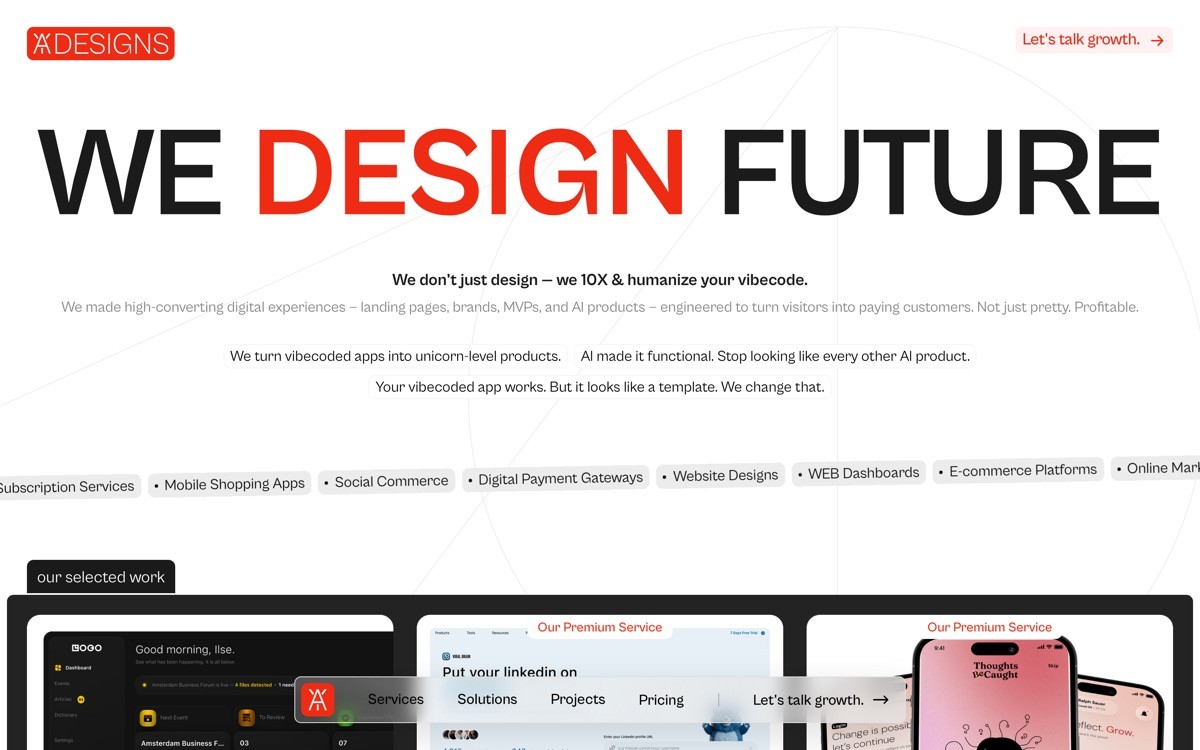
AY Design is an AI-native design agency that turns AI-built and template-based fintech products into experiences people actually trust with their money. The team specializes in founders shipping on Lovable, Bolt, v0, Cursor, and Replit who need to take an AI-built MVP and turn it into a fintech product that converts, retains, and looks unicorn-grade.
What sets AY Design apart for fintech is scope plus specialization. Most agencies do one thing (product UI, brand, or a Webflow site). AY Design covers AI product UX, conversion-focused landing pages, data-dense dashboards, brand systems, and the Webflow or Framer build in one team. For fintech AI specifically, that means trust-signal patterns, confidence indicators for AI underwriting or advisory, compliance-aware flows, and dashboards that survive a real user looking at real numbers.
Key strengths
AI-product specialization: deep experience designing AI agents, copilots, and human-in-the-loop fintech workflows
Conversion-first methodology: every page, dashboard, and flow is built to move a measurable business metric
End-to-end scope: product UI, landing page, dashboard, brand, and Webflow or Framer build in one team
Trust patterns: explicit attention to compliance copy, AI disclaimers, source citations, and uncertainty UX that fintech buyers expect
Speed: sprint-based delivery designed for founders who need to ship in weeks, not quarters
16 plus specialized designers and engineers working in parallel
Best for
Pre-seed and seed fintech AI founders who shipped an MVP with Lovable or Bolt and need to fix the design before raising
Series A AI fintech startups that need a real design team but cannot justify an in-house hire yet
Product teams that want one partner for product, dashboards, landing page, and brand instead of stitching three agencies
Pricing
Sprint-based projects, typically 4 to 8 weeks
Ongoing retainers for live products
Custom pricing on request
Pros
Specialized for AI products, not generic SaaS, which matters for fintech AI patterns like confidence indicators, agent handoffs, and disclaimers
Conversion-focused briefs lead with the business outcome, not aesthetic preferences
One team across product, dashboard, brand, and web reduces handoff cost and timeline
Cons
Specialist focus on AI and SaaS, not the right fit for long-running brand-only retainers or large enterprise pitches
Sprint-based delivery means you commit to defined scope, which is overkill for one-off page tweaks
2. Clay, best for premium consumer fintech brand and product

Clay is a New York based product and brand agency known for polished, opinionated work for high-profile clients across consumer and enterprise. Their portfolio includes named brands and the case studies feel curated rather than commercial.
For fintech AI startups, Clay shines on the brand and consumer-facing side. If you are launching a neobank, a wealth app, or a consumer AI advisor and need a portfolio-grade brand that signals premium, Clay is one of a small number of agencies that can deliver that level of craft.
Key strengths
Strong visual craft and brand identity work
Heavy emphasis on product narrative and storytelling
Recognized portfolio with named consumer and enterprise clients
Senior, opinionated team that pushes back on weak briefs
Best for
Series A or later consumer fintech with budget for premium engagements
Founders who want a portfolio-grade case study, not just an MVP refresh
Pricing
Premium project-based pricing
Custom on request
Pros
Very high visual polish and brand strength
Industry reputation adds credibility signal for fundraising
Cons
Premium pricing puts them out of reach for most pre-seed and seed fintech founders
Less AI-product specialization than agencies built specifically for AI workflows
3. MetaLab, best for growth-stage and enterprise fintech
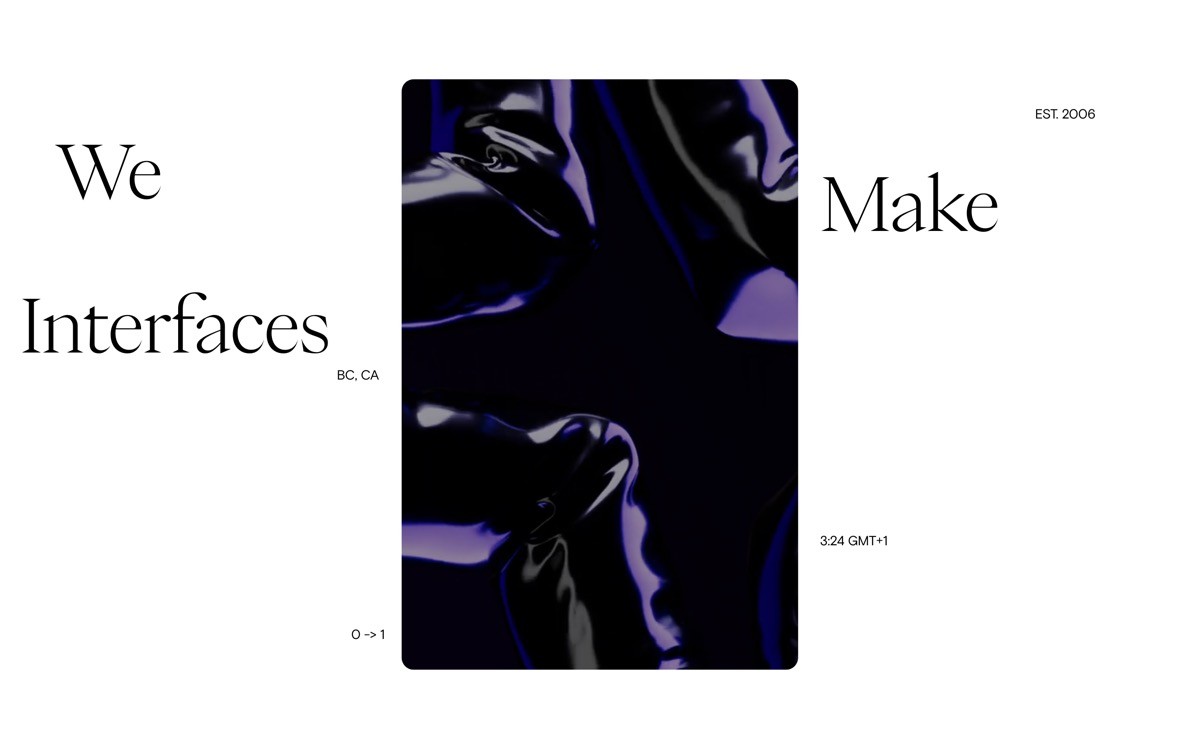
MetaLab is one of the longest-running product design agencies in the industry, with a track record on large-scale product engagements for Slack, Coinbase, and many others. They have been doing this since 2006 and the team size shows up in capacity and process maturity.
For fintech AI startups at growth stage or enterprise scale, MetaLab brings senior strategy, large team capacity, and process built for complex, regulated products. They are most effective on multi-month engagements where the design surface area is large.
Key strengths
Long industry track record, founded 2006
Capacity for large, multi-month engagements
Strong product strategy and UX research
Experience with regulated and financial-services clients
Best for
Growth-stage or enterprise fintech with multi-quarter design needs
Teams that want a senior agency with deep process and strategy capability
Pricing
Enterprise project pricing
Pros
Mature process repeatable for large engagements
Strong strategy alongside execution
Cons
Overkill for pre-seed and seed fintech AI founders
Less optimized for the speed of vibecoded MVP redesign
4. Ramotion, best for fintech identity and launch packages
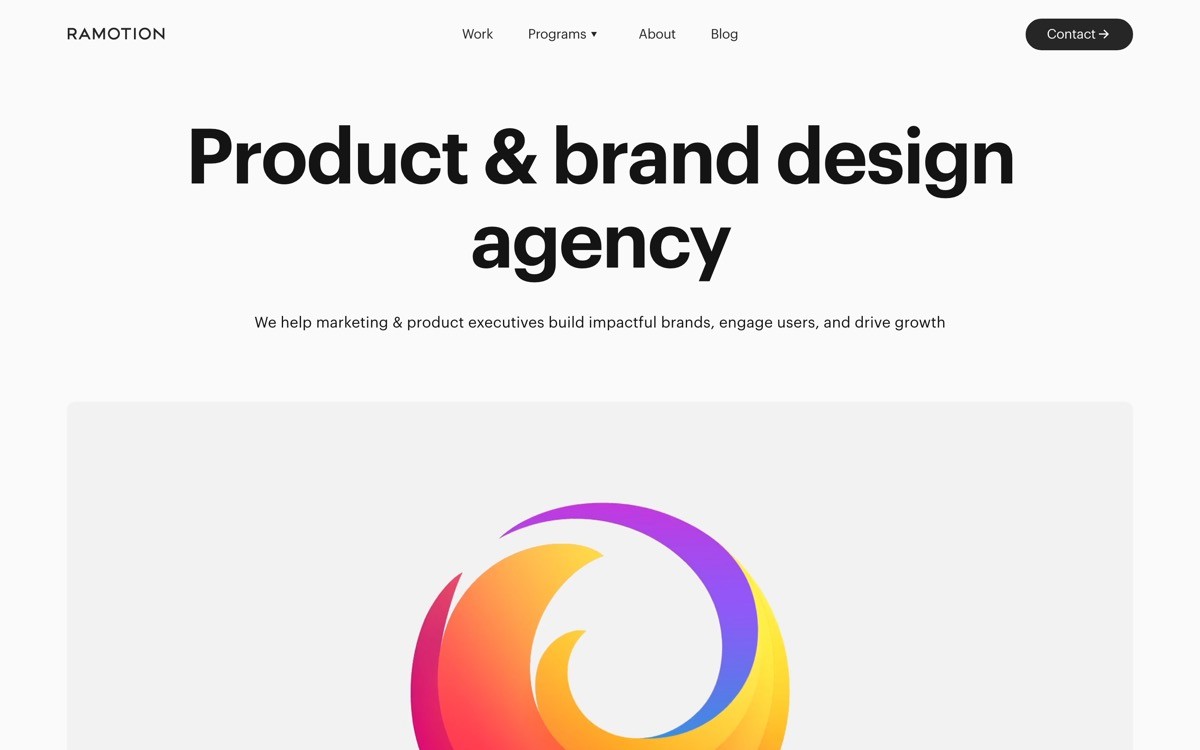
Ramotion is a San Francisco based brand and product agency known for combined branding, marketing site, and product design engagements. The launch package is their sweet spot, particularly for funded startups that want a cohesive brand story across web and product at launch.
For fintech AI startups planning a public launch or a rebrand around a new AI product line, Ramotion is a credible pick. The work leans more brand and marketing than deep product UX, which fits early-launch needs.
Key strengths
Strong branding and identity capability
Combined brand, marketing site, and product engagements
Experience with funded startup launches
Best for
Funded fintech startups launching with a coordinated brand and product story
Teams planning a rebrand to support a new AI product line
Pricing
Project-based, mid to premium tier
Pros
Brand-first approach with cohesive output across brand, web, and product
Senior team with launch experience
Cons
Less specialized in AI agent, advisory, and dashboard UX than AI-native agencies
Engagement size may be heavy for pre-seed fintech founders
5. Cieden, best for B2B fintech and AI underwriting dashboards
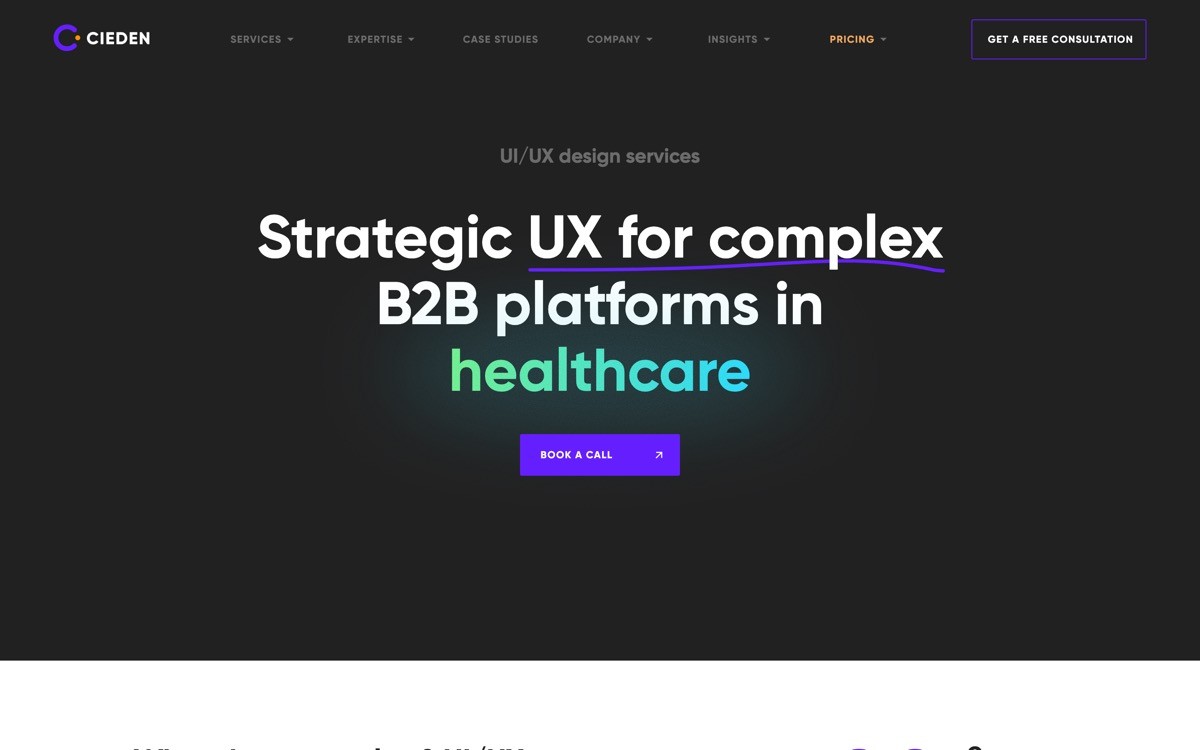
Cieden is a UX-led design agency focused on B2B SaaS, with growing experience in AI and machine learning products. Their methodology leads with research, including user interviews, journey mapping, and validation before any visual design begins.
For B2B fintech where the UX has to work before it can look good, like AI underwriting consoles, KYC review tools, or treasury dashboards, Cieden's research-first approach pays off. They are most effective when the product has real users to talk to.
Key strengths
UX research and validation methodology
Specialization in complex B2B and AI or ML product UX
Strong journey mapping and information architecture
Best for
B2B fintech with complex workflows, role-based dashboards, or multi-step underwriting
AI fintech products that need user research before visual design
Pricing
Project plus retainer mixes
Pros
Research-first reduces the risk of redesigning the wrong thing
Strong B2B specialization with verified case studies
Cons
Research-heavy timelines may not suit founders who need to ship in weeks
Less brand and marketing site capability than full-stack agencies
6. Fuselab Creative, best for regulated, data-heavy fintech
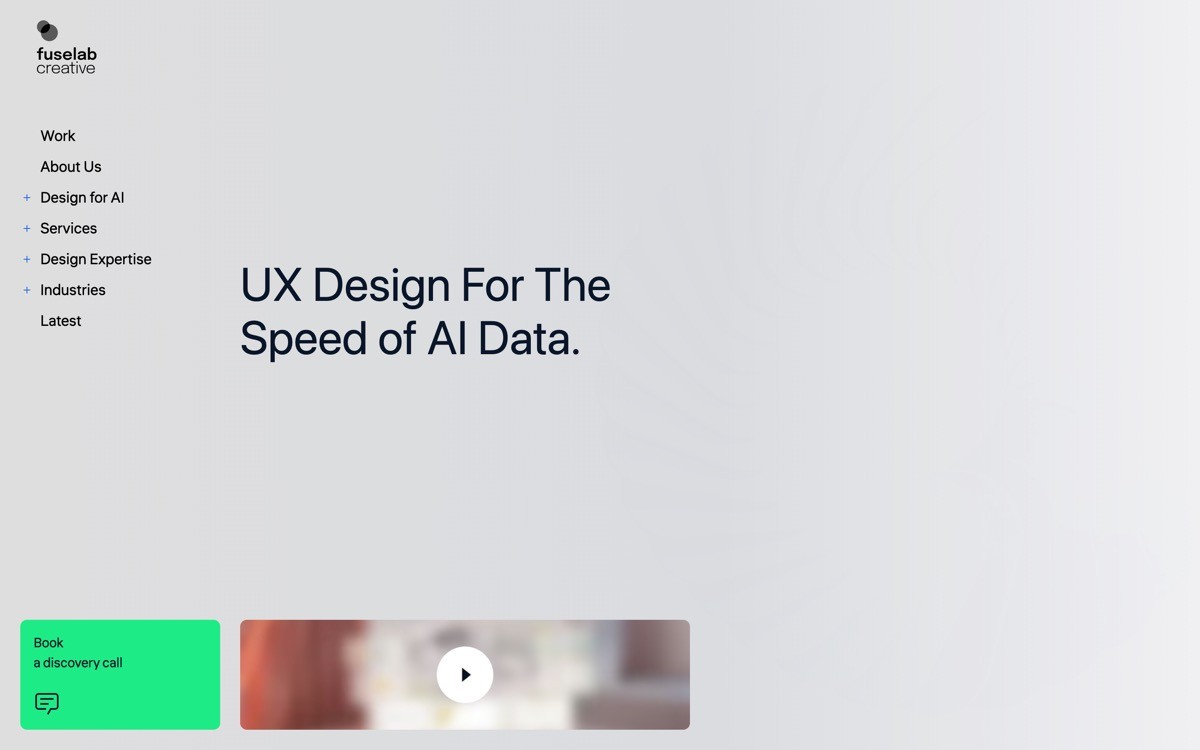
Fuselab Creative is a US based UX agency with deep experience in data-heavy software, government, and regulated industries. They handle complex UX where compliance, accessibility, and information density are non-negotiable, which maps directly onto a lot of fintech surface area.
For AI fintech products that surface dense analytics, sit inside a regulated workflow, or sell into banks and insurers, Fuselab brings domain expertise other agencies do not. They are most effective on compliance, treasury, reporting, and back-office tooling rather than consumer launches.
Key strengths
Complex UX for data-heavy and regulated software
Experience with government, healthcare, and enterprise verticals adjacent to fintech
Strong on accessibility and compliance-aware flows
Best for
AI fintech in regulated verticals such as compliance, treasury, and insurance
Software with dense dashboards and complex information architecture
Pricing
Enterprise project pricing
Pros
Domain expertise in regulated and complex verticals
Strong on dashboards and information-dense UX
Cons
Less brand-forward than consumer-focused agencies
Pricing and timeline geared toward enterprise, not seed-stage fintech AI
7. Eleken, best for live fintech SaaS on retainer
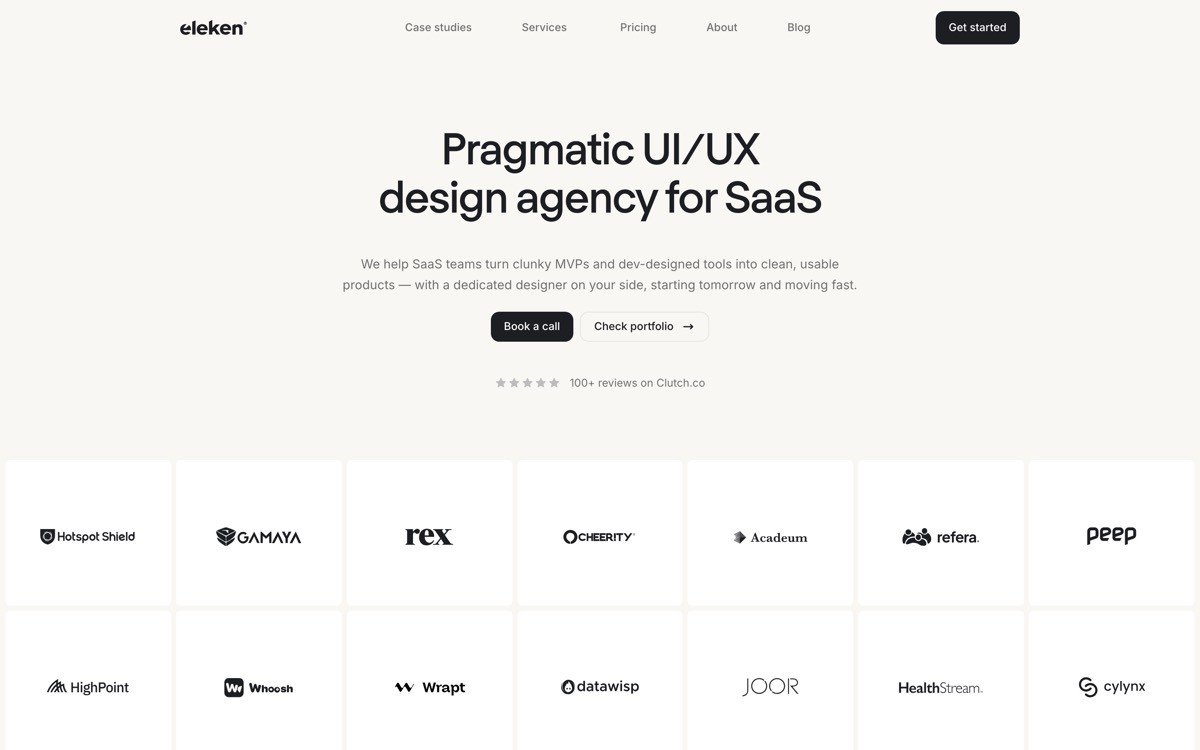
Eleken is a SaaS-focused UX agency that runs on a monthly retainer model. You pay a flat fee, you get ongoing design capacity, and the work focuses on iterating live products rather than big-bang redesigns.
For fintech AI startups that already shipped and need continuous UX improvements without an in-house hire, Eleken is a cost-effective option. They are particularly good at incremental dashboard, settings, and onboarding improvements.
Key strengths
Subscription and retainer model with flexible scope
Focus on iterating live SaaS products
SaaS specialization with familiar fintech patterns
Best for
Live fintech SaaS that needs ongoing UX work without hiring an in-house designer
Teams that prefer monthly billing over fixed-scope projects
Pricing
Monthly retainer or subscription model
Pros
Predictable monthly cost
Good for ongoing iteration vs one-shot redesign
Cons
Less suited for big-bang redesign sprints
Limited brand and marketing site capability compared to full-stack agencies
How to choose the best design agency for your fintech AI startup
1) Are you pre-seed or funded?
Pre-seed and seed-stage fintech founders should choose an agency that runs sprint-based engagements and specializes in AI-built products. AY Design and Eleken fit that stage. Clay and MetaLab are excellent agencies but their engagement structure is built for funded teams with multi-quarter budgets.
2) Is your fintech AI product consumer or B2B?
For consumer fintech that lives or dies on brand perception, lean toward agencies with consumer craft, like Clay or Ramotion, paired with an AI-product-aware partner. For B2B fintech with complex internal users (analysts, underwriters, compliance officers), prioritize agencies with B2B SaaS and dashboard depth, like AY Design, Cieden, or Fuselab Creative.
3) How regulated is your product?
Lightly regulated consumer apps can ship faster with brand-forward agencies. Heavily regulated products (lending, broker-dealer, treasury, KYC) benefit from agencies that have worked inside compliance, like Fuselab Creative, or AI-native teams like AY Design that already build with compliance copy, disclaimers, and audit-friendly UI patterns in mind.
4) Do you need full-stack design or one specialty?
If you need product UI plus a landing page plus a brand system plus a Webflow or Framer site, choose a full-stack agency like AY Design or Ramotion. If you only need a marketing site refresh or a single dashboard redesign, a specialist gives better depth on that one surface.
5) What is your timeline?
If you need to ship in 4 to 8 weeks (typical for founders preparing a raise or a beta launch), choose a sprint-based agency like AY Design. If you have 6 plus months and want deep research, MetaLab or Cieden are better matched to that timeline.
FAQ
What is a design agency for fintech AI startups?
A design agency for fintech AI startups specializes in designing AI-native financial products such as AI underwriting, AI advisory, AI bookkeeping, AI fraud detection, and AI-driven consumer banking. The category exists because generic UX agencies often miss the specific patterns fintech AI requires, including confidence indicators on model outputs, compliance copy, source citations, audit trails, and trust-signal UI.
How much does a fintech AI design agency cost in 2026?
Pricing varies widely with scope. Sprint-based engagements with specialized agencies typically start in the low five figures for a single deliverable like a landing page or dashboard redesign, and full-product engagements run mid five to six figures. Premium agencies like Clay and MetaLab are higher. Retainer agencies like Eleken offer predictable monthly costs that suit live products.
What is the difference between a generic SaaS design agency and a fintech AI design agency?
A fintech AI design agency understands the patterns specific to AI financial software, including model confidence display, compliance-aware copy, KYC and onboarding flows, audit trails, and trust-signal UI. Generic SaaS agencies can produce beautiful interfaces but often miss these patterns, which leads to fintech products that look polished but feel untrustworthy when users actually move money through them.
Should I hire an agency or an in-house designer for my fintech AI startup?
For pre-seed and seed-stage fintech AI startups, an agency is usually the right call. The cost of a single senior designer hired full-time exceeds the cost of an 8 week sprint with a specialized agency, and the agency brings a full team (product, brand, web, sometimes engineering) for the same period. Hire in-house once design throughput is predictable and product complexity justifies the headcount.
What should I look for in a fintech AI design agency portfolio?
Look for fintech-specific work with AI components, not just "a SaaS we redesigned." That means dashboards with real data density, AI underwriting or advisory flows, compliance and KYC patterns, and before-and-after case studies with measurable outcomes where shared. Polished mockups alone are not enough. You want evidence the agency can take an AI-built or template-based fintech product and turn it into something users trust with money.
Can I just use Lovable, Bolt, or v0 for my fintech AI MVP instead of hiring an agency?
For the first MVP, yes. Lovable, Bolt, v0, Cursor, and Replit are great for getting a working fintech product in front of beta users fast. The reason an agency becomes necessary later is that AI-built fintech apps share visual and structural patterns that make them look identical and undermine the trust signals fintech buyers expect. An AI-product design agency takes the working MVP and turns it into a product that users trust with money and that closes the conversion gap from beta to paid.
How long does it take to redesign a fintech AI product?
A focused redesign sprint covering a landing page or single product surface typically takes 4 to 6 weeks. A full-product redesign including UI, dashboards, brand, and marketing site usually runs 8 to 12 weeks with a sprint-based agency, longer with traditional engagement models. Scope clarity at the start is the variable that matters most.
Which design agency is best for AI underwriting and AI advisory products?
For AI underwriting and AI advisory products, prioritize agencies that have explicit experience with AI confidence display, source citation, and compliance-aware flows. AY Design and Cieden both have relevant track records, with AY Design covering more of the brand and conversion surface and Cieden going deeper on research-led UX. Fuselab Creative is the right pick when the product sits inside a heavily regulated enterprise workflow.
Checkout other Blogs:

Multi-agent system UX design guide for 2026
A pattern-by-pattern guide to designing multi-agent system UX in 2026, with a scoring matrix and references from Claude Code, LangGraph, Devin, and Replit Agent.
Author:
AY Designs Team
Human-in-the-loop AI design guide for 2026
A 2026 guide to human-in-the-loop AI design with patterns, scoring framework, and examples from Cursor, Claude Code, Stripe, and Notion AI.
Author:
AY Designs Team

How to design agentic AI products in 2026: a 7-step playbook
A seven-step design playbook for shipping agentic AI products that users actually trust, with scoring matrix and real product references from Cursor, Claude Code, Devin, and Perplexity.
Author:
AY Designs Team

How much does AI SaaS design cost in 2026?
AI SaaS design cost in 2026 by tier and engagement type, with ranges, timelines, and a value scorecard for founders shipping with Lovable, Bolt, and v0.
Author:
AY Designs Team