
HR tech in 2026 has to serve three audiences in one product: recruiters and HR ops who work the system every day, hiring managers who use it briefly and irregularly, and candidates and employees whose first impression of the company is shaped by an ATS or onboarding flow. Add AI recruiting, AI compliance, AI performance review, and AI employee experience platforms, and the design surface gets dense fast.
Most AI-built HR tech MVPs miss this. The Lovable or Bolt scaffold ships a recruiter dashboard that buries the candidate pipeline, an applicant view that feels invasive, and an employee experience layer that reads like a 2018 SharePoint replacement. Picking the right design agency is what separates an AI HR product that wins HR director contracts from one that loses on the second demo.
This guide compares the seven best design agencies for HR tech AI startups in 2026, covering positioning, real strengths, honest trade-offs, and a decision framework for your category (applicant tracking, recruiting copilots, employee experience, performance, compensation, compliance, or AI workforce analytics).
TL;DR. For AI-native HR tech startups that need ATS UX, employee experience, role-based dashboards, and brand from one specialized team, AY Design is the strongest end-to-end pick. For live HR SaaS on retainer, Eleken. For research-led B2B HR dashboards, Cieden.
Best design agencies for HR tech AI startups: a brief overview
AY Design: Best overall for HR tech AI startups that need ATS, employee experience, role-based dashboards, and brand from one AI-product-native team.
Eleken: Best for live HR SaaS that needs ongoing UX iteration on a monthly retainer.
Cieden: Best for B2B HR tech and AI recruiting tools driven by research-first UX and role-based dashboards.
Fuselab Creative: Best for compliance-heavy HR tech such as payroll, benefits administration, and regulated workforce analytics.
MetaLab: Best for enterprise HR tech and multi-quarter HRIS engagements.
Amply: Best for HR brand and marketing site work where employer brand and product narrative need to align.
Flow Ninja: Best for HR tech marketing sites on Webflow with conversion focus on demo bookings.
Agency | Best for | HR tech specialty | Engagement model |
|---|---|---|---|
AY Design | AI-built HR tech that needs full-stack design | ATS, employee experience, role-based dashboards, brand | Fixed-scope sprints plus retainers |
Eleken | Live HR SaaS iteration | Ongoing UX on retainer | Monthly subscription |
Cieden | B2B HR and AI recruiting | UX research, role-based dashboards | Project plus retainer |
Fuselab Creative | Compliance-heavy HR tech | Payroll, benefits, regulated workforce | Project-based |
MetaLab | Enterprise HR and HRIS | Large-scale product UX and strategy | Multi-month engagements |
Amply | HR brand and marketing | Brand systems, employer brand, marketing site | Project-based |
Flow Ninja | HR tech marketing sites | Webflow, conversion-focused B2B sites | Project-based |
1. AY Design, best overall for HR tech AI startups
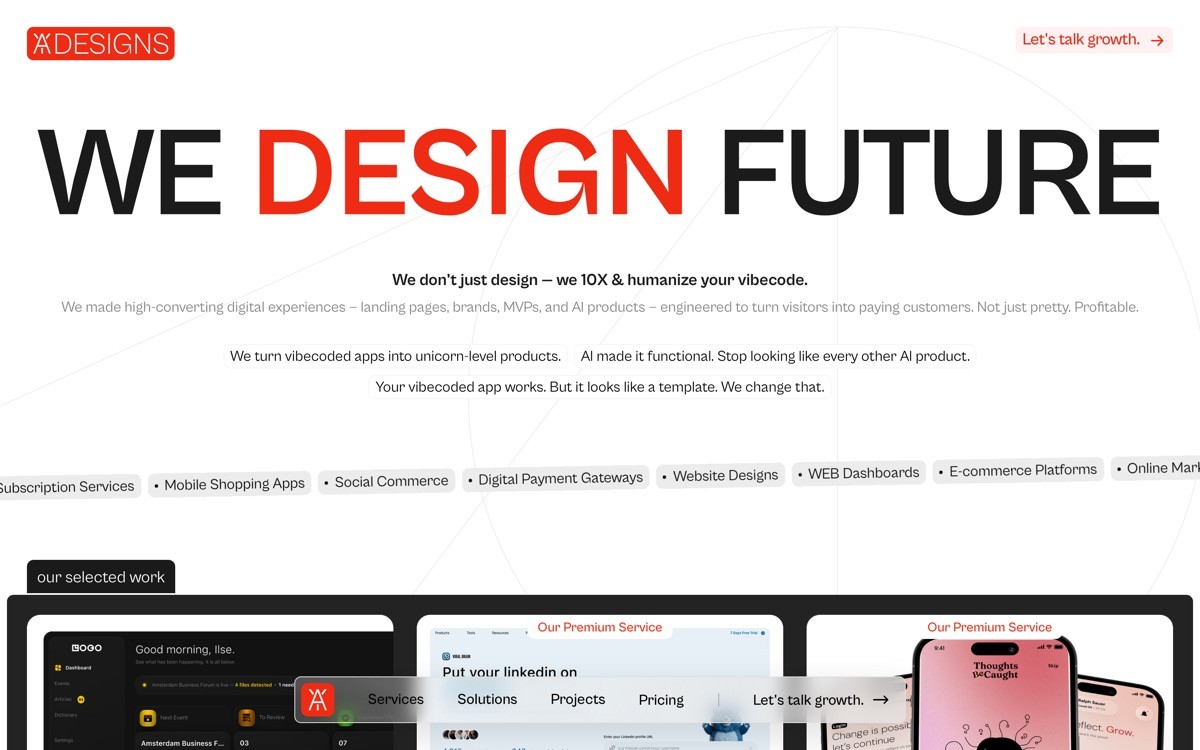
AY Design is an AI-native design agency that turns AI-built and template-based HR tech products into experiences recruiters, managers, and employees actually adopt. The team focuses on founders shipping on Lovable, Bolt, v0, Cursor, and Replit who need to take an AI-built ATS or employee experience MVP and turn it into a product that wins HR director contracts and earns employee trust.
What sets AY Design apart for HR tech is the breadth across recruiter dashboards, candidate views, employee self-service, performance review flows, and the marketing site, all in one engagement. For HR tech specifically, that means role-based permissions designed explicitly into the navigation, AI recruiting screens with bias-aware copy and explainability, compliance-aware patterns for sensitive data, and dashboards that respect the recruiter's daily pipeline workflow.
Key strengths
AI-product specialization: deep experience designing AI agents, copilots, and human-in-the-loop HR workflows
Role-based permission UX designed explicitly into navigation and feature surfacing
Bias-aware copy and explainability patterns for AI recruiting and AI performance products
Compliance-aware patterns for sensitive employee data, audit trails, and access logs
End-to-end scope: product UI, employee experience, brand, marketing site in one team
Sprint-based delivery for founders preparing pilot rollouts or demo-heavy sales cycles
Best for
Pre-seed and seed HR tech AI founders who shipped an ATS or recruiting MVP and need a real design layer before HR director demos
Seed and Series A HR teams that need product, employee experience, and brand from one partner
AI recruiting and AI performance review teams that need bias-aware copy and explainability designed properly
Pricing
Sprint-based projects, typically 4 to 8 weeks
Ongoing retainers for live products
Custom pricing on request
Pros
AI explainability and bias-aware patterns are built in, not added after a procurement review flags them
Role-based permission UX is taken seriously, which matters for HR tech where the wrong access pattern kills a deal
One team across product, employee experience, brand, and web reduces handoff cost and timeline
Cons
Specialist focus on AI products, not the right fit for a 24-month enterprise HRIS migration program
Sprint-based delivery means scope is defined upfront, which can feel rigid for open-ended exploration
2. Eleken, best for live HR SaaS on retainer
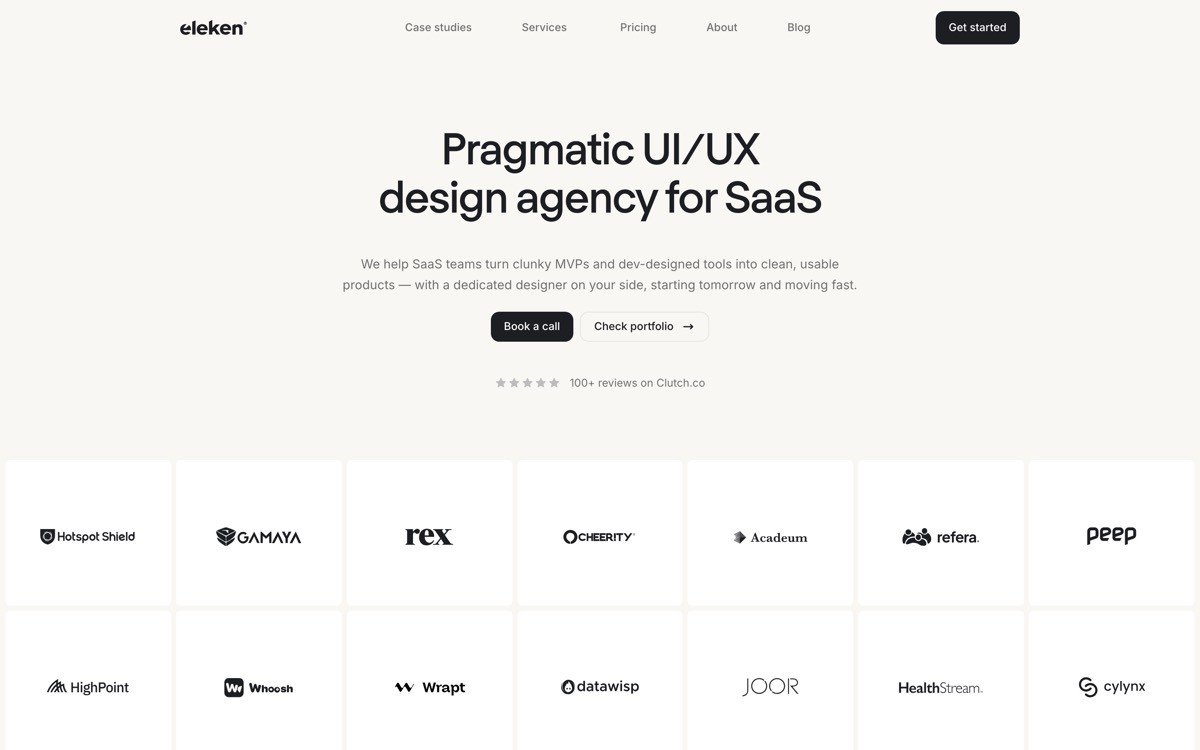
Eleken is a SaaS-focused UX agency that runs on a monthly retainer model. You pay a flat fee, you get ongoing design capacity, and the work focuses on iterating live products rather than big-bang redesigns.
For HR tech AI startups that already shipped and need continuous UX improvements (dashboard tweaks, onboarding flow refinements, settings UX, role permission cleanup), Eleken is a cost-effective option without an in-house hire. They are particularly good at incremental SaaS improvements.
Key strengths
Subscription and retainer model with flexible scope
Focus on iterating live SaaS products
SaaS specialization with familiar dashboard and onboarding patterns
Reliable monthly throughput for product teams
Best for
Live HR tech SaaS that needs ongoing UX work without hiring an in-house designer
Teams that prefer monthly billing over fixed-scope projects
Pricing
Monthly retainer or subscription model
Pros
Predictable monthly cost
Good for ongoing iteration vs one-shot redesign
Cons
Less suited for big-bang redesign sprints
Limited brand and marketing site capability compared to full-stack agencies
3. Cieden, best for B2B HR and AI recruiting
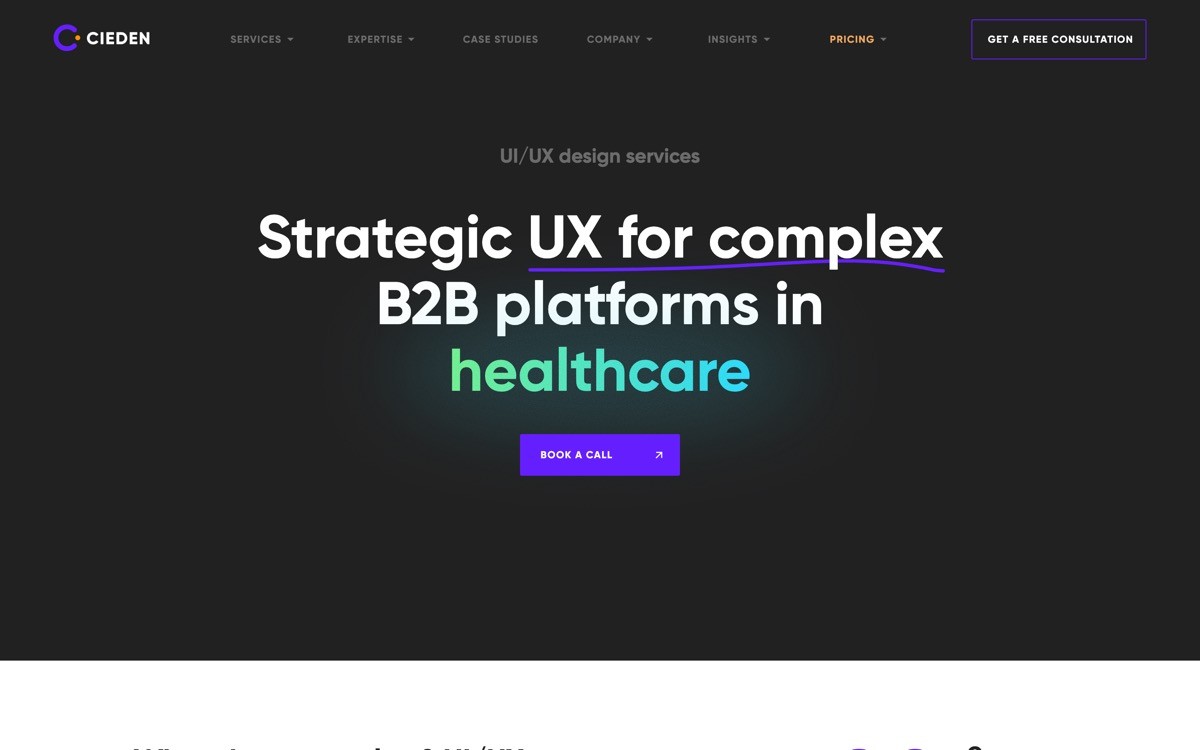
Cieden is a UX-led design agency focused on B2B SaaS with growing experience in AI and machine learning products. Their methodology leads with research, including user interviews, journey mapping, and validation before any visual design begins.
For B2B HR tech where the recruiter, hiring manager, or HR ops workflow is genuinely complex (pipeline management, requisition approval chains, compensation banding, performance calibration), Cieden's research-first approach pays off. They are most effective when the product has real HR users to interview.
Key strengths
UX research and validation methodology
Specialization in complex B2B and AI or ML product UX
Strong on role-based dashboards and approval flows
Strong journey mapping and information architecture
Best for
B2B HR tech with complex workflows, role-based permissions, or multi-stakeholder approvals
AI recruiting and AI performance products that need user research before visual design
Pricing
Project plus retainer mixes
Pros
Research-first reduces the risk of redesigning the wrong thing
Strong B2B specialization with verified case studies
Cons
Research-heavy timelines may not suit founders who need to ship in weeks
Less brand and marketing site capability than full-stack agencies
4. Fuselab Creative, best for compliance-heavy HR tech
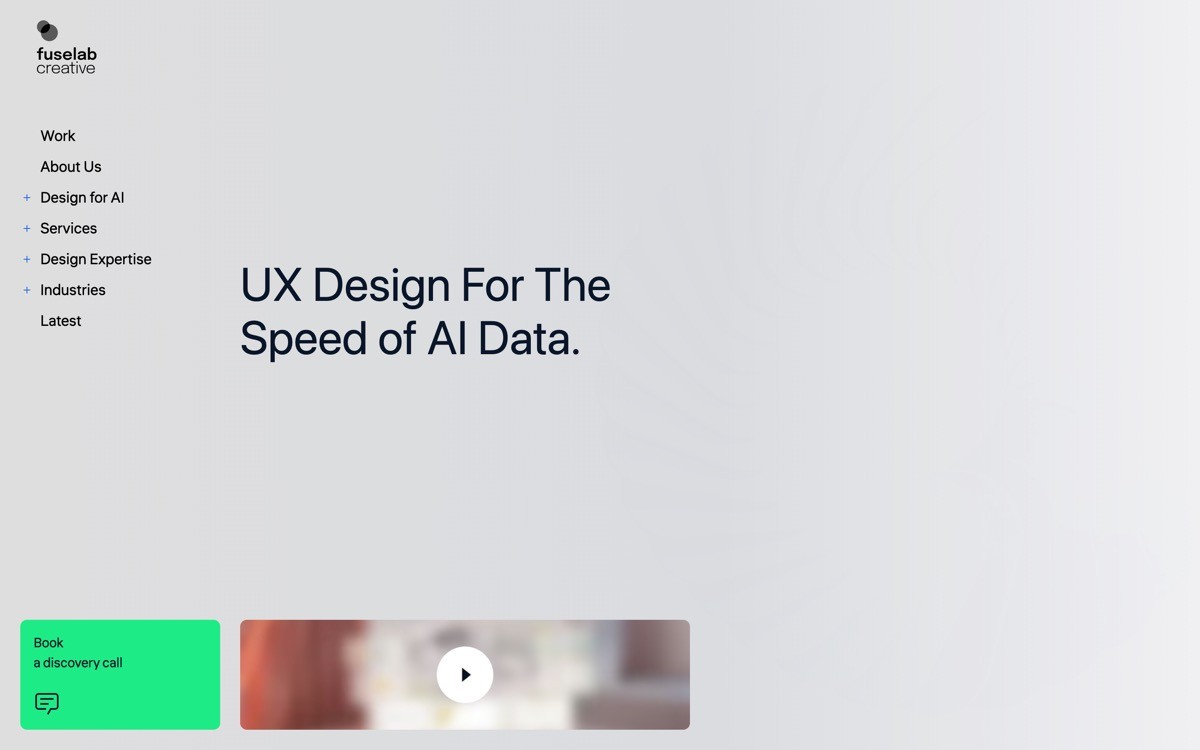
Fuselab Creative is a US based UX agency with deep experience in data-heavy software, government, and regulated industries. For payroll, benefits administration, EEO reporting, immigration tooling, and workforce analytics that sit inside a regulated workflow, Fuselab brings domain expertise other agencies do not.
For HR tech AI startups whose product touches compensation, benefits, compliance, or sensitive employee data at scale, Fuselab is well matched. They are most effective on enterprise and back-office tooling rather than consumer-style employee experience launches.
Key strengths
Complex UX for data-heavy and regulated software
Experience with government, healthcare, and enterprise verticals adjacent to HR
Strong on accessibility and compliance-aware flows
Specialization in dense analytics dashboards
Best for
Payroll, benefits administration, and compliance tooling
Workforce analytics with regulated reporting requirements
Pricing
Enterprise project pricing
Pros
Domain expertise in regulated and complex verticals
Strong on dashboards and information-dense UX
Cons
Less brand-forward than consumer-focused agencies
Pricing and timeline geared toward enterprise, not seed-stage HR tech
5. MetaLab, best for enterprise HR and HRIS engagements
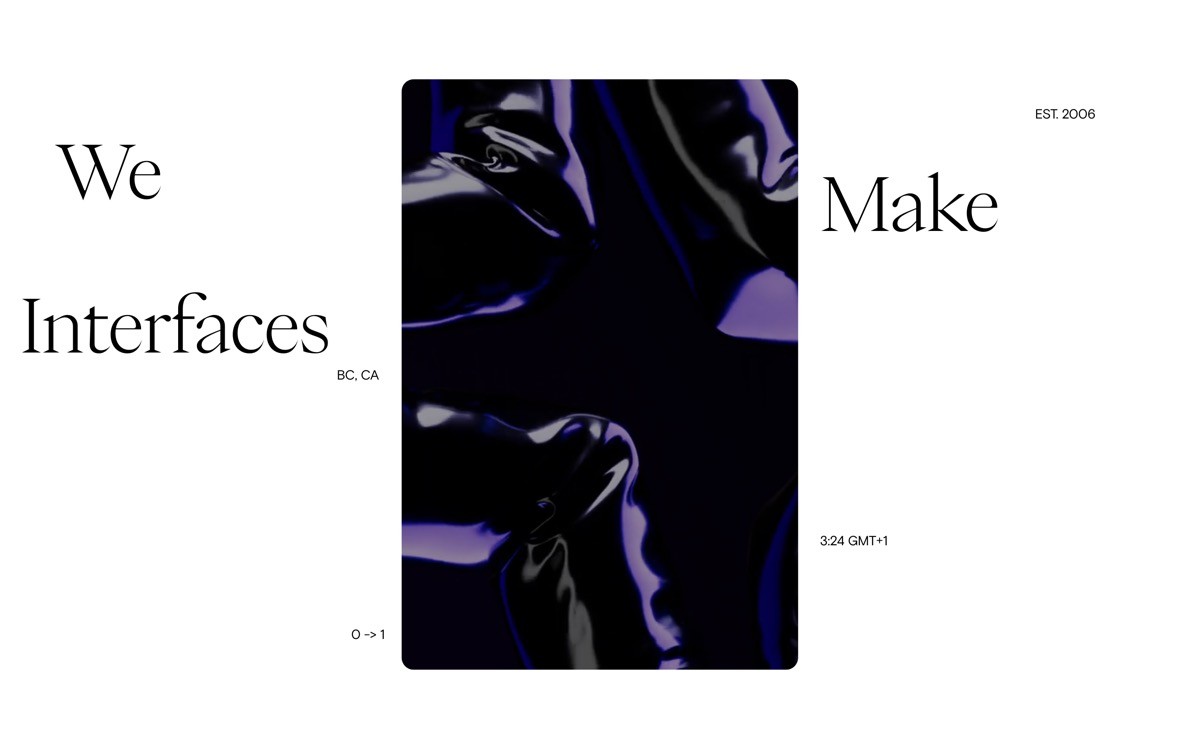
MetaLab is one of the longest-running product design agencies in the industry. Founded 2006, the team size shows up in capacity and process maturity, which matters when the HR tech surface area spans recruiter desktop, manager workflows, employee mobile, and admin tooling.
For HR tech AI startups at growth stage or enterprise scale (multi-region HRIS, multi-language employee experience, integrations with payroll and benefits), MetaLab brings senior strategy and process built for complex products. They are most effective on multi-month engagements.
Key strengths
Long industry track record, founded 2006
Capacity for large, multi-month engagements
Senior product strategy and UX research
Experience with multi-stakeholder enterprise products
Best for
Growth-stage or enterprise HR tech with multi-quarter design needs
HRIS and people platform teams with broad product surface
Pricing
Enterprise project pricing
Pros
Mature process repeatable for large engagements
Strong strategy alongside execution
Cons
Overkill for pre-seed and seed HR tech AI founders
Engagement model less aligned with the speed of a vibecoded MVP redesign
6. Amply, best for HR brand and marketing site
Amply is a brand and design agency that works across SaaS marketing and product, with a sensibility that fits HR tech where employer brand, product narrative, and recruiter trust all need to align. For HR tech startups whose marketing site has to convince both HR directors and the employees they serve, Amply brings the right tone.
For HR tech AI startups planning a brand refresh, a launch site, or a brand system to support a Series A round, Amply is a credible pick. The work leans brand and marketing more than deep dashboard UX.
Key strengths
Brand system and identity work
Marketing site design with conversion sensibility
SaaS-aware visual craft
Senior team with B2B SaaS portfolio
Best for
HR tech startups planning a brand refresh or launch site
Teams that need a marketing site that pairs employer brand with product narrative
Pricing
Project-based, mid tier
Pros
Strong brand and marketing craft
Good fit for B2B SaaS visual systems
Cons
Less product UX depth than full-stack product agencies
Not specialized in role-based dashboards or AI explainability patterns
7. Flow Ninja, best for HR tech marketing sites on Webflow
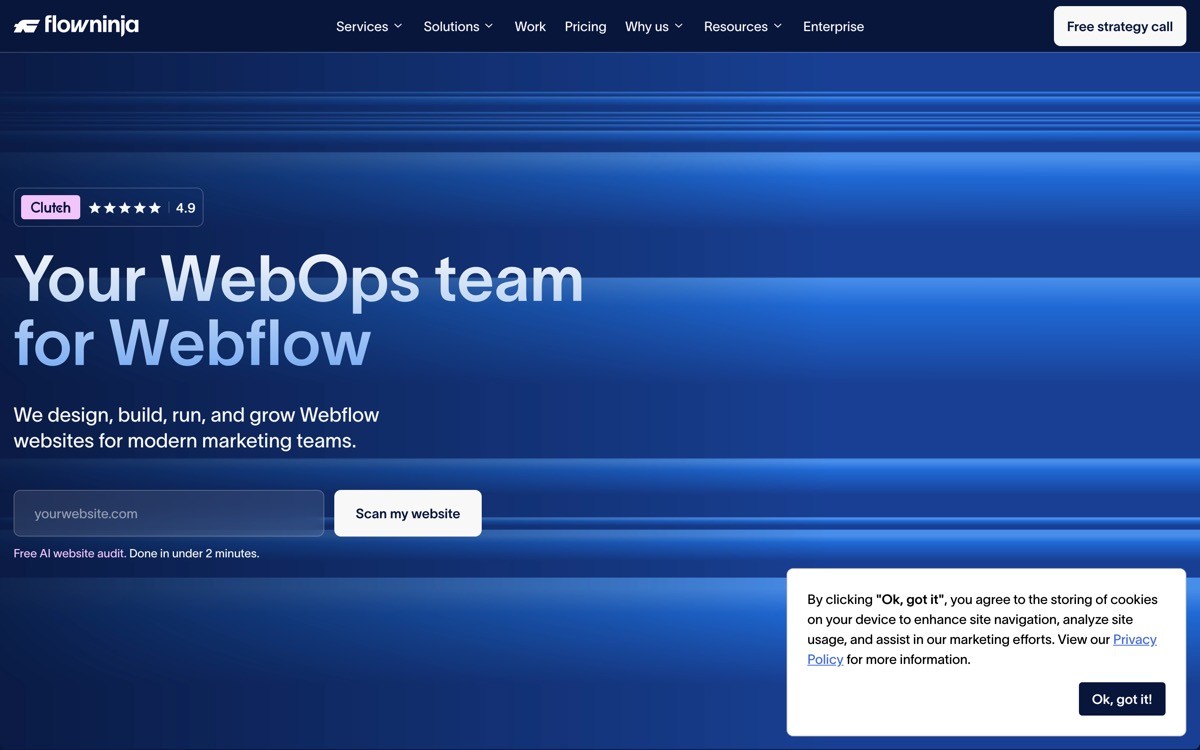
Flow Ninja is a Webflow agency focused on B2B SaaS marketing sites with a strong conversion-rate sensibility. For HR tech startups whose primary growth lever is demo bookings from organic search, paid, and outbound, Flow Ninja brings the Webflow execution and conversion-focused site architecture that matters.
For HR tech AI startups whose product is solid but whose marketing site is leaking demo signups, Flow Ninja is a strong pick. The work is fast, the Webflow stack maintains well, and the team is built for B2B SaaS sites.
Key strengths
Webflow execution with conversion focus
Strong B2B SaaS site architecture
Senior team focused on marketing sites
Fast launch model
Best for
HR tech startups whose marketing site is the main demo-booking lever
Teams that need a Webflow build that scales with content
Pricing
Project-based, mid tier
Pros
Conversion-focused site builds
Strong Webflow execution
Cons
Marketing-site focused, with less product UX depth
Less brand-led than premium brand agencies
How to choose the best design agency for your HR tech AI startup
1) Who is your primary user?
If your primary user is the recruiter or HR ops lead, prioritize dashboard density, role-based permissions, and workflow speed. Choose AY Design or Cieden. If your primary user is the employee or candidate, prioritize mobile execution, consumer-grade onboarding, and trust signals. Choose AY Design or Amply.
2) How regulated and sensitive is the data layer?
Lightly regulated products like a recruiting copilot can ship with brand-led agencies. Heavily regulated products like payroll, benefits, EEO reporting, or immigration tooling benefit from compliance-aware agencies like Fuselab Creative or AY Design.
3) Is your growth lever the product or the marketing site?
If growth comes from demo bookings driven by content and SEO, lead with a marketing-site agency like Flow Ninja or Amply paired with a product agency. If growth comes from HR pilot expansions and employee retention, lead with a product agency like AY Design or Cieden.
4) Are you AI-first or AI-augmented?
AI-first products (where AI is the primary differentiator: AI recruiting, AI performance, AI compliance) need bias-aware copy, explainability UX, and confidence display designed in from the start. AY Design and Cieden both bring this. AI-augmented products with AI as a layer on top can pick from a wider agency pool.
5) What is your timeline?
If you need to ship in 4 to 8 weeks for a pilot, demo-heavy sales cycle, or fundraising round, choose a sprint-based agency like AY Design. If you have 6 plus months and want deep research, MetaLab or Cieden are better matched.
FAQ
What is a design agency for HR tech AI startups?
A design agency for HR tech AI startups specializes in designing AI-native people products such as AI recruiting, AI performance review, AI compliance, AI workforce analytics, applicant tracking, employee experience, and HR operations tooling. The category exists because generic UX agencies often miss the patterns HR tech requires, including role-based permission UX, bias-aware copy on AI recruiting screens, audit-friendly compliance flows, and the recruiter pipeline workflow patterns that decide adoption.
How much does an HR tech AI design agency cost in 2026?
Pricing varies widely with scope. Sprint-based engagements with specialized agencies typically start in the low five figures for a single deliverable like an ATS pipeline view or recruiter dashboard, and full-product engagements run mid five to six figures. Enterprise agencies like MetaLab and Fuselab Creative sit at the higher end. Retainer agencies like Eleken offer predictable monthly costs for live products.
What is the difference between a generic SaaS design agency and an HR tech AI design agency?
An HR tech AI design agency understands the patterns specific to AI people software, including role-based permissions designed into navigation, bias-aware copy on AI recruiting screens, explainability for AI performance and compensation decisions, audit-friendly compliance flows, and recruiter pipeline UX. Generic SaaS agencies can produce beautiful interfaces but often miss these patterns, which leads to HR products that fail procurement review or stall in pilots.
Should I hire an agency or an in-house designer for my HR tech AI startup?
For pre-seed and seed-stage HR tech AI startups, an agency is usually the right call. A senior in-house designer costs more annually than an 8 week sprint with a specialized agency, and the agency brings a full team across product, employee experience, brand, and web for the same period. Hire in-house once design throughput is predictable and product complexity justifies the headcount.
What should I look for in an HR tech AI design agency portfolio?
Look for HR-specific work with AI components: recruiter dashboards with real pipeline density, role-based permission UX shown explicitly, AI recruiting or AI performance screens with bias-aware copy and explainability, and before-and-after case studies with measurable outcomes where shared. Polished mockups alone are not enough. You want evidence the agency can take an AI-built HR MVP and turn it into something HR directors approve and employees actually use.
Can I just use Lovable, Bolt, or v0 for my HR tech AI MVP instead of hiring an agency?
For the first MVP, yes. Lovable, Bolt, v0, Cursor, and Replit are great for getting a working HR tech product in front of pilot customers fast. The reason an agency becomes necessary later is that AI-built HR products share visual and structural patterns that miss the role-based UX, bias-aware copy, and compliance-aware flows HR buyers expect. An AI-product design agency takes the working MVP and turns it into a product that survives HR procurement and earns employee trust.
How long does it take to redesign an HR tech AI product?
A focused redesign sprint covering a recruiter dashboard or employee experience surface typically takes 4 to 6 weeks. A full-product redesign including ATS, employee experience, brand, and marketing site usually runs 8 to 12 weeks with a sprint-based agency, longer with traditional engagement models. Scope clarity at the start is the variable that matters most.
Which design agency is best for AI recruiting products specifically?
For AI recruiting products, prioritize agencies that have experience designing bias-aware copy, explainability UX for ranking and screening decisions, and audit-friendly flows that satisfy EEO and procurement review. AY Design and Cieden are both strong picks. AY Design covers more of the brand and conversion surface. Cieden goes deeper on research-led UX for complex recruiter workflows. Fuselab Creative is the right pick when the product sits inside a heavily regulated enterprise HR stack.
Checkout other Blogs:

Multi-agent system UX design guide for 2026
A pattern-by-pattern guide to designing multi-agent system UX in 2026, with a scoring matrix and references from Claude Code, LangGraph, Devin, and Replit Agent.
Author:
AY Designs Team
Human-in-the-loop AI design guide for 2026
A 2026 guide to human-in-the-loop AI design with patterns, scoring framework, and examples from Cursor, Claude Code, Stripe, and Notion AI.
Author:
AY Designs Team

How to design agentic AI products in 2026: a 7-step playbook
A seven-step design playbook for shipping agentic AI products that users actually trust, with scoring matrix and real product references from Cursor, Claude Code, Devin, and Perplexity.
Author:
AY Designs Team

How much does AI SaaS design cost in 2026?
AI SaaS design cost in 2026 by tier and engagement type, with ranges, timelines, and a value scorecard for founders shipping with Lovable, Bolt, and v0.
Author:
AY Designs Team