
Crypto and Web3 products live or die on trust. A wallet that looks templated, a dApp dashboard that fumbles a swap, or a token sale page that reads like a 2021 ICO deck will lose users in seconds. Add the post-FTX regulatory pressure, the wave of AI-built MVPs hitting mainnet, and a market that has seen every variation of "decentralized future" copy, and the design bar in 2026 is unforgiving.
Most AI-built crypto products miss it. The Lovable or Bolt scaffold ships in a weekend, but the wallet connect flow confuses users, the on-chain dashboards read like Etherscan exports, and the anti-rug-pull trust signals are nowhere to be found. Picking the right design agency is the difference between a Web3 product that converts beta users into committed holders and one that bleeds liquidity to better-designed competitors.
This guide compares the seven best design agencies for crypto and Web3 startups in 2026, covering positioning, real strengths, honest trade-offs, and a decision framework for your category (wallet, DeFi protocol, NFT marketplace, L2, infra, or AI agent on-chain).
TL;DR. For AI-native Web3 startups that need wallet UX, dApp dashboards, landing pages, and brand from one specialized team, AY Design is the strongest end-to-end pick. For premium consumer crypto brand work, Clay. For deep on-chain product UX at growth stage, MetaLab.
Best design agencies for crypto and Web3 startups: a brief overview
AY Design: Best overall for crypto and Web3 startups that need wallet UX, dApp dashboards, landing pages, and brand from one AI-product-native team.
Ramotion: Best for token launches and rebrands combining identity, marketing site, and product.
Refokus: Best for high-craft Web3 marketing sites with motion, scroll narrative, and protocol storytelling.
MetaLab: Best for growth-stage and enterprise crypto, with capacity for multi-month wallet and exchange engagements.
Clay: Best for premium consumer crypto brand work where the product needs to feel like a category leader from day one.
Edgar Allan: Best for editorial, brand-led Web3 storytelling on Webflow with publisher-grade craft.
Cieden: Best for B2B Web3 infrastructure and DeFi dashboards driven by research-first UX.
Agency | Best for | Web3 specialty | Engagement model |
|---|---|---|---|
AY Design | AI-built Web3 that needs full-stack design | Wallet UX, dApp dashboards, landing pages, brand | Fixed-scope sprints plus retainers |
Ramotion | Token launches and rebrands | Identity, marketing site, product launch | Project-based |
Refokus | High-craft Web3 marketing sites | Motion, scroll narrative, Webflow | Project-based |
MetaLab | Growth and enterprise crypto | Large-scale wallet and exchange UX | Multi-month engagements |
Clay | Premium consumer crypto brand | Brand identity, product polish | Project-based, premium |
Edgar Allan | Editorial, brand-led storytelling | Webflow, publisher-grade craft | Project-based |
Cieden | B2B Web3 infrastructure and DeFi | UX research, complex dashboards | Project plus retainer |
1. AY Design, best overall for crypto and Web3 startups
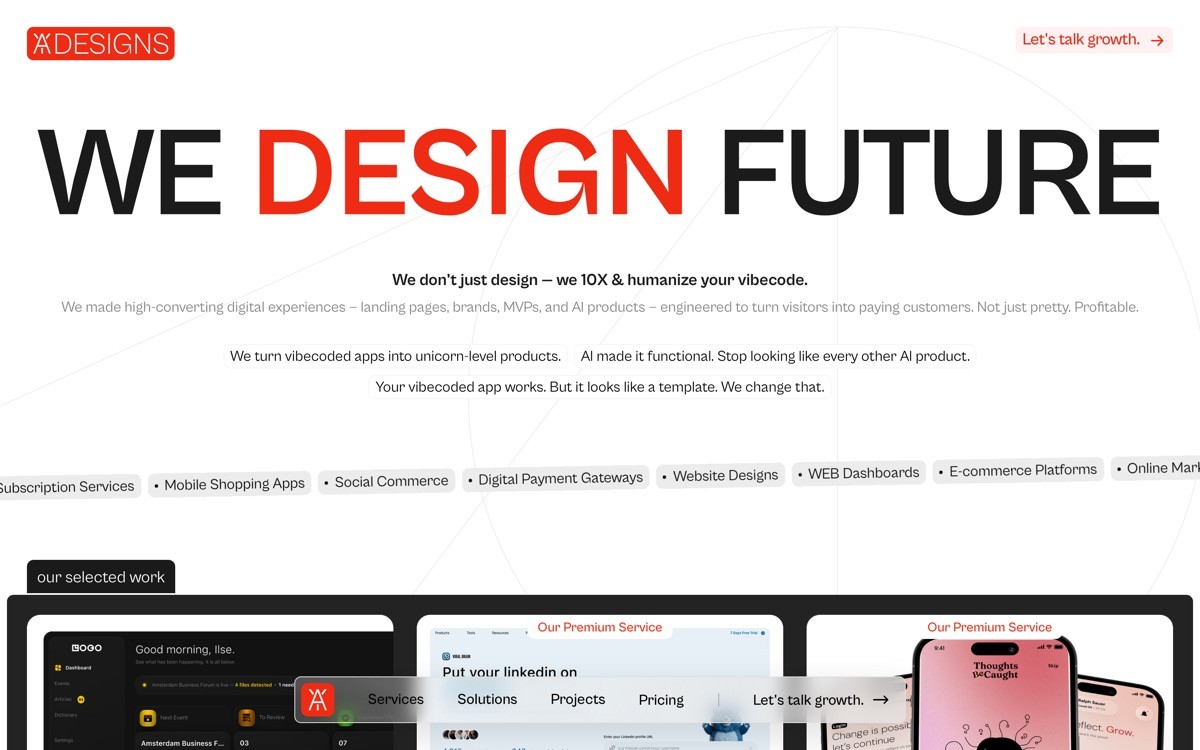
AY Design is an AI-native design agency that turns AI-built and template-based crypto products into experiences users actually trust with their keys. The team focuses on founders shipping on Lovable, Bolt, v0, Cursor, and Replit who need to take an AI-built dApp or wallet MVP and turn it into a Web3 product that converts, retains, and reads as legitimate to a skeptical 2026 audience.
What sets AY Design apart for Web3 is the combination of scope and category fluency. The team covers wallet connect flows, transaction signing UX, on-chain dashboards, tokenomics pages, and the marketing site in one engagement. For crypto specifically, that means explicit anti-rug-pull patterns (verifiable contract links, audit badges, multisig disclosure), readable gas and slippage UI, and dApp dashboards that survive a real holder looking at real positions during a volatile market.
Key strengths
AI-product specialization with growing Web3 portfolio: wallet UX, dApp interfaces, AI agents on-chain
Trust-signal patterns built into every page: audit badges, contract links, multisig disclosure, verification copy
End-to-end scope across product UI, landing page, dashboard, and brand in one team
Conversion-first methodology: every page and flow is built to move a measurable metric
Sprint-based delivery for founders preparing a token launch, mainnet release, or fundraising round
16 plus specialized designers and engineers working in parallel
Best for
Pre-seed and seed Web3 founders who shipped a dApp or wallet MVP with Lovable or Bolt and need to fix the design before token launch
Seed and Series A crypto teams that need product, dashboards, and brand from one partner instead of stitching three agencies
AI agent on-chain teams that need confidence indicators, intent display, and human-in-the-loop signing flows designed properly
Pricing
Sprint-based projects, typically 4 to 8 weeks
Ongoing retainers for live protocols and apps
Custom pricing on request
Pros
Trust-signal patterns are built in by default, not bolted on after a security review
One team across product, dashboard, brand, and web reduces handoff cost and timeline
Conversion focus translates well to token launches and mainnet day metrics
Cons
Specialist focus on AI and SaaS plus Web3, not the right fit for traditional brand-only retainers
Sprint-based delivery means scope is defined upfront, which can feel rigid for teams who prefer open-ended exploration
2. Ramotion, best for token launches and rebrands
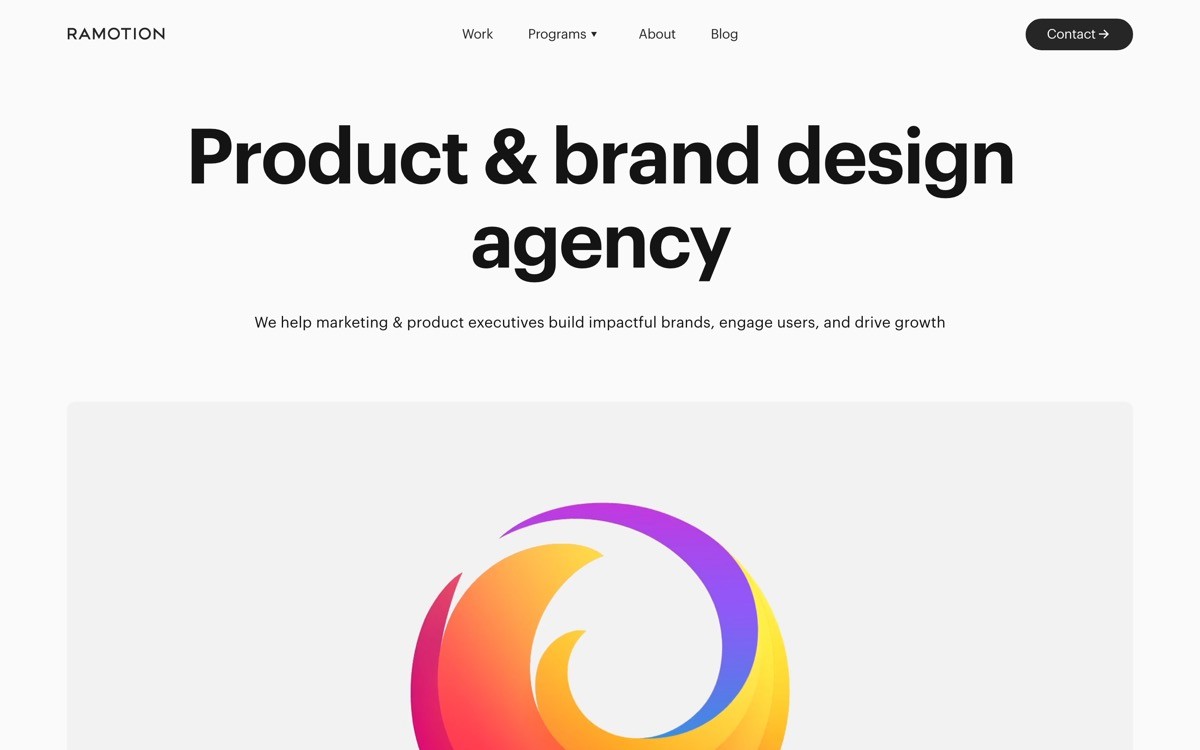
Ramotion is a San Francisco based brand and product agency known for combined identity, marketing site, and product engagements. For crypto and Web3, their sweet spot is the launch package: a coherent brand, a launch site that survives a CT thread, and a product layer that does not betray the brand promise.
For Web3 startups planning a token launch, a protocol rebrand, or a mainnet release that needs a unified brand and product story, Ramotion is a credible pick. The work leans more brand and marketing than deep dApp UX, which fits launch-window needs.
Key strengths
Strong branding and identity capability for token and protocol launches
Combined brand, marketing site, and product engagements
Experience with funded startup launches
Senior team that can hold a brand line across web and product
Best for
Funded Web3 startups launching a token with coordinated brand and product story
Protocols planning a rebrand to support a v2 launch or new product line
Pricing
Project-based, mid to premium tier
Pros
Brand-first approach with cohesive output across brand, web, and product
Senior team with launch experience
Cons
Less specialized in wallet UX and on-chain dashboards than Web3-native teams
Engagement size may be heavy for pre-seed crypto founders
3. Refokus, best for high-craft Web3 marketing sites

Refokus is a digital agency known for premium Webflow and motion-led marketing sites. For Web3 startups that need a protocol page, a tokenomics narrative, or a launch site that holds attention while explaining something genuinely complex, Refokus brings craft other agencies do not.
For crypto teams whose marketing site has to do heavy storytelling, like explaining a novel consensus mechanism, a new L2 architecture, or a complex AI agent on-chain, Refokus is the pick. Scroll narrative, custom motion, and editorial type get the message across without resorting to "decentralized future" boilerplate.
Key strengths
High-craft Webflow builds with custom motion and scroll narrative
Strong editorial sensibility for explaining complex technical concepts
Senior team focused on premium marketing sites and brand films
Experience with Web3 protocol storytelling
Best for
Funded Web3 protocols launching a marketing site that has to explain something genuinely new
L2 and infra teams that need a launch site to drive developer credibility
Pricing
Premium project-based pricing
Pros
Marketing site craft is at the top of the industry
Strong motion and narrative chops translate well to protocol storytelling
Cons
Marketing-site focused, with less depth on dApp and dashboard UX
Pricing puts them out of reach for pre-seed crypto founders
4. MetaLab, best for growth-stage and enterprise crypto
MetaLab is one of the longest-running product design agencies in the industry. Their portfolio includes Coinbase, which alone signals depth in the crypto exchange and wallet category. Founded 2006, the team size shows up in capacity and process maturity.
For crypto startups at growth stage, exchanges, or enterprise infrastructure providers, MetaLab brings senior strategy, large team capacity, and process built for complex, regulated products. They are most effective on multi-month engagements where the design surface is large and the stakes are reputational as well as financial.
Key strengths
Long track record with named crypto clients including Coinbase
Capacity for large, multi-month engagements
Senior product strategy and UX research
Experience with regulated financial-services adjacencies
Best for
Growth-stage or enterprise crypto with multi-quarter design needs
Exchanges and wallets where capacity and process maturity matter
Pricing
Enterprise project pricing
Pros
Mature process repeatable for large engagements
Strong strategy alongside execution
Cons
Overkill for pre-seed and seed crypto founders
Engagement model less aligned with the speed of an AI-built MVP redesign
5. Clay, best for premium consumer crypto brand
Clay is a New York based product and brand agency known for polished work for high-profile consumer and enterprise clients. For consumer Web3 like a self-custody wallet, a social-finance app, or a consumer NFT product, Clay can deliver a portfolio-grade brand that signals premium from the first impression.
For Series A or later consumer crypto with budget for premium engagements, Clay is one of a small number of agencies that can deliver this level of craft. The output is opinionated and the brand work tends to age well, which matters in a category where 2021 brand assets already look dated.
Key strengths
Strong visual craft and brand identity work
Heavy emphasis on product narrative and storytelling
Recognized portfolio with named consumer and enterprise clients
Senior, opinionated team that pushes back on weak briefs
Best for
Series A or later consumer crypto with budget for premium engagements
Founders who want a portfolio-grade brand for a category-defining play
Pricing
Premium project-based pricing
Custom on request
Pros
High visual polish and brand strength
Industry reputation adds a credibility signal for fundraising
Cons
Premium pricing is out of reach for most pre-seed Web3 founders
Less crypto-native than agencies that ship wallets and dApps weekly
6. Edgar Allan, best for editorial, brand-led Web3 storytelling

Edgar Allan is a brand and Webflow agency known for editorial craft and storytelling-led sites. For Web3 startups that want their marketing site to read like a publication rather than a typical SaaS landing page, Edgar Allan is a strong fit.
For protocols, foundations, or AI agent companies that publish heavily, host research, or position themselves as a category authority, the editorial sensibility translates well. The team is most effective when there is real substance to publish, not just product marketing.
Key strengths
Editorial design craft and typography
Strong Webflow execution
Brand-led approach with publisher-grade storytelling
Senior team with editorial sensibility
Best for
Foundations, protocols, and research-led Web3 teams
Crypto brands that publish heavily and want a content-first site
Pricing
Project-based, mid to premium tier
Pros
Editorial craft is a real differentiator in a noisy category
Webflow execution is reliable and maintainable
Cons
Less dApp and dashboard UX depth than product-focused agencies
Editorial approach can feel slow for teams in launch-week mode
7. Cieden, best for B2B Web3 infrastructure and DeFi
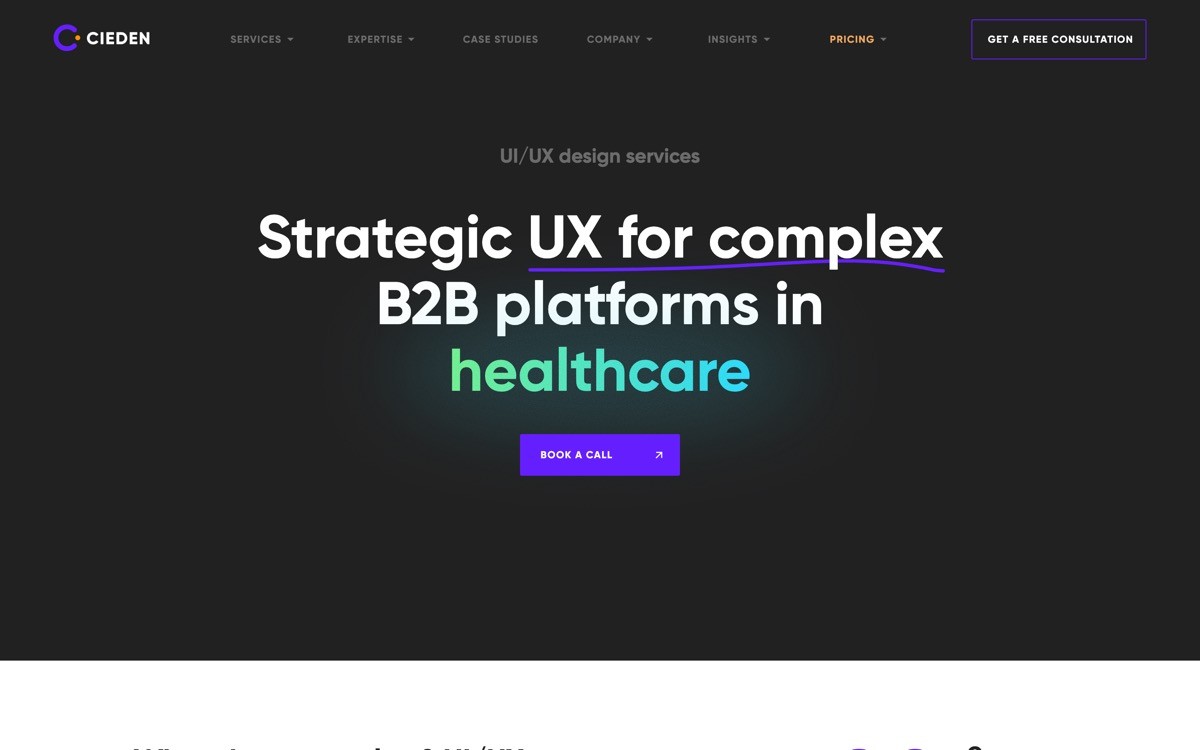
Cieden is a UX-led design agency focused on B2B SaaS with growing experience in fintech and Web3. Their methodology leads with research, including user interviews and journey mapping, before any visual design begins. For B2B Web3 where the UX has to work before it can look good, that approach pays off.
For DeFi protocols with complex position management, node infrastructure dashboards, validator interfaces, or AI agent orchestration consoles, Cieden is well matched. They are most effective when the product has real users to interview and the workflow is genuinely complex.
Key strengths
UX research and validation methodology
Specialization in complex B2B product UX
Strong journey mapping and information architecture
Growing track record in DeFi and Web3 infrastructure
Best for
DeFi protocols with complex position and risk dashboards
Web3 infrastructure with role-based dashboards for validators or node operators
Pricing
Project plus retainer mixes
Pros
Research-first reduces the risk of redesigning the wrong thing
Strong B2B specialization with verified case studies
Cons
Research-heavy timelines may not suit founders who need to ship in weeks
Less brand and marketing site capability than full-stack agencies
How to choose the best design agency for your crypto or Web3 startup
1) Are you pre-token launch or post-mainnet?
Pre-launch teams benefit from sprint-based agencies that can ship a brand, site, and dApp scaffold in weeks. AY Design and Ramotion fit that window. Post-mainnet teams iterating on a live wallet, exchange, or protocol benefit more from retainer or multi-month engagements with MetaLab or Cieden.
2) Is your product consumer or B2B?
Consumer Web3 like wallets, social-finance, and NFT marketplaces lives on brand and first-impression craft. Lean toward AY Design, Clay, or Ramotion. B2B Web3 like infrastructure, DeFi tooling, and validator dashboards lives on dense UX. Lean toward AY Design or Cieden.
3) How important is the marketing site relative to the product?
If your marketing site is the primary growth lever (most early-stage protocols), prioritize an agency with marketing-site craft like Refokus, Edgar Allan, or AY Design. If the product is the growth lever (wallets, dApps with retention loops), prioritize product UX depth.
4) How visible is the trust-signal layer in your category?
Categories with high rug-pull or scam risk (memecoin tooling, new L2s, novel DeFi primitives) need visible audit links, contract verification, multisig disclosure, and team transparency designed into the site, not bolted on. AY Design and MetaLab both bake these in. Brand-only agencies often miss this layer.
5) What is your timeline?
If you need to ship in 4 to 8 weeks for a token launch, mainnet release, or raise, choose a sprint-based agency like AY Design. If you have 6 plus months and want deep research and strategy, MetaLab or Cieden match that timeline.
FAQ
What is a design agency for crypto and Web3 startups?
A design agency for crypto and Web3 startups specializes in designing wallets, dApps, DeFi protocols, NFT marketplaces, L2 ecosystems, and AI agents that operate on-chain. The category exists because generic UX agencies often miss the specific patterns Web3 requires, including wallet connect flows, transaction signing UX, gas and slippage UI, anti-rug-pull trust signals, audit badges, and verifiable contract links.
How much does a crypto or Web3 design agency cost in 2026?
Pricing varies widely with scope. Sprint-based engagements with specialized agencies typically start in the low five figures for a single deliverable like a landing page or dApp redesign, and full launch packages run mid five to six figures. Premium agencies like Clay and MetaLab sit at the higher end. Retainer models offer predictable monthly costs that suit live protocols.
What is the difference between a generic SaaS design agency and a Web3 design agency?
A Web3 design agency understands the patterns specific to crypto products, including wallet UX, transaction signing, gas and slippage display, audit links, contract verification badges, and the visual trust signals users now expect post-FTX. Generic SaaS agencies can produce beautiful interfaces but often miss these patterns, which leads to crypto products that look polished but feel unsafe when users connect a wallet.
Should I hire an agency or an in-house designer for my Web3 startup?
For pre-seed and seed-stage crypto startups, an agency is usually the right call. A senior in-house designer costs more annually than an 8 week sprint with a specialized agency, and the agency brings a full team across product, brand, and web for the same period. Hire in-house once design throughput is predictable and product complexity justifies the headcount.
What should I look for in a Web3 design agency portfolio?
Look for crypto-specific work that includes wallet connect flows, real on-chain dashboards with live data, audit and verification UI, and before-and-after case studies where measurable outcomes are shared. Polished mockups alone are not enough. You want evidence the agency can take a vibecoded MVP and turn it into a product holders trust with their keys.
Can I just use Lovable, Bolt, or v0 for my Web3 MVP instead of hiring an agency?
For the first MVP, yes. Lovable, Bolt, v0, Cursor, and Replit are great for getting a working dApp or wallet in front of beta users fast. The reason an agency becomes necessary later is that AI-built crypto apps share visual and structural patterns that make them look identical and undermine the trust signals Web3 buyers expect. An AI-product design agency takes the working MVP and turns it into a product that users trust with assets and that closes the conversion gap from connect to deposit.
How long does it take to redesign a Web3 product?
A focused redesign sprint covering a landing page or single dApp surface typically takes 4 to 6 weeks. A full launch package including wallet UX, marketing site, brand, and tokenomics page usually runs 8 to 12 weeks with a sprint-based agency, longer with traditional engagement models. Scope clarity at the start is the variable that matters most.
Which design agency is best for an AI agent on-chain product?
For AI agents on-chain, prioritize agencies that have experience with both AI confidence display and Web3 signing flows. AY Design covers both, with explicit attention to intent display, signing confirmations, and human-in-the-loop patterns. Cieden is the right pick when the agent orchestration is dense enough to need a research-led UX. MetaLab is the right pick at growth-stage scale.
Checkout other Blogs:

Multi-agent system UX design guide for 2026
A pattern-by-pattern guide to designing multi-agent system UX in 2026, with a scoring matrix and references from Claude Code, LangGraph, Devin, and Replit Agent.
Author:
AY Designs Team
Human-in-the-loop AI design guide for 2026
A 2026 guide to human-in-the-loop AI design with patterns, scoring framework, and examples from Cursor, Claude Code, Stripe, and Notion AI.
Author:
AY Designs Team

How to design agentic AI products in 2026: a 7-step playbook
A seven-step design playbook for shipping agentic AI products that users actually trust, with scoring matrix and real product references from Cursor, Claude Code, Devin, and Perplexity.
Author:
AY Designs Team

How much does AI SaaS design cost in 2026?
AI SaaS design cost in 2026 by tier and engagement type, with ranges, timelines, and a value scorecard for founders shipping with Lovable, Bolt, and v0.
Author:
AY Designs Team