
Productivity AI lives or dies on speed of input. The user opens the app to do one thing, and any friction (a modal, a misplaced keyboard shortcut, an AI suggestion that interrupts instead of helps) sends them back to Notion, Linear, or whatever they were using before. In 2026, the bar Linear, Raycast, Superhuman, and Cursor set is brutal: command palette as primary input, keyboard-first everything, AI copilots that anticipate the next action without disrupting flow.
Most AI-built productivity MVPs miss this. The Lovable or Bolt scaffold ships a sidebar-and-modal UI from 2018, an AI panel bolted on the right side, and a command palette that opens but lacks the keyboard ergonomics that decide retention. Picking the right design agency separates a productivity AI product that earns daily-active usage from one that gets installed and abandoned.
This guide compares the seven best design agencies for productivity AI startups in 2026, covering positioning, real strengths, honest trade-offs, and a decision framework for your category (AI writing, AI task and project management, AI inbox, AI notes, AI code assistants, or AI workflow automation).
TL;DR. For AI-native productivity startups that need command palette UX, copilot patterns, keyboard-first design, and brand from one specialized team, AY Design is the strongest end-to-end pick. For premium consumer-style productivity brand work, Clay. For enterprise productivity at growth stage, MetaLab.
Best design agencies for productivity AI startups: a brief overview
AY Design: Best overall for productivity AI startups that need command palette UX, copilot patterns, keyboard-first design, and brand from one AI-product-native team.
Clay: Best for premium productivity AI brand work where the product is positioned as a category leader.
MetaLab: Best for enterprise productivity and growth-stage rollouts with multi-quarter scope.
Ramotion: Best for productivity AI launches combining brand, marketing site, and product polish.
Refokus: Best for high-craft marketing sites where motion and product narrative carry the launch.
Eleken: Best for live productivity SaaS that needs ongoing UX iteration on a retainer model.
Finsweet: Best for productivity AI marketing sites on Webflow with deep CMS architecture.
Agency | Best for | Productivity specialty | Engagement model |
|---|---|---|---|
AY Design | AI-built productivity that needs full-stack design | Command palette, copilot UX, keyboard-first, brand | Fixed-scope sprints plus retainers |
Clay | Premium productivity AI brand | Brand identity, product polish | Project-based, premium |
MetaLab | Enterprise productivity and growth-stage | Large-scale product UX and strategy | Multi-month engagements |
Ramotion | Productivity launches and rebrands | Identity, marketing site, product launch | Project-based |
Refokus | High-craft marketing sites | Motion, scroll narrative, Webflow | Project-based |
Eleken | Live productivity SaaS iteration | Ongoing UX on retainer | Monthly subscription |
Finsweet | Productivity marketing sites on Webflow | Webflow CMS architecture, custom code | Project-based |
1. AY Design, best overall for productivity AI startups
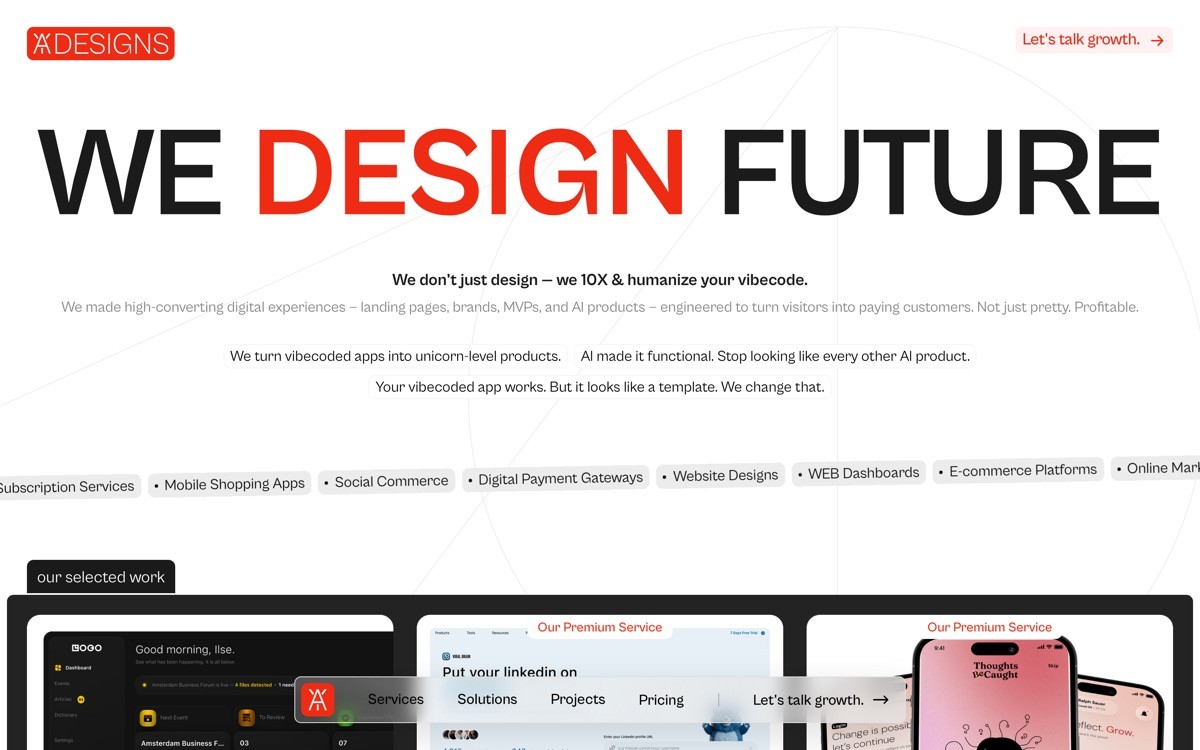
AY Design is an AI-native design agency that turns AI-built and template-based productivity products into experiences power users actually keep open. The team focuses on founders shipping on Lovable, Bolt, v0, Cursor, and Replit who need to take an AI productivity MVP and turn it into a product that wins on speed of input, keyboard ergonomics, and copilot UX that respects the user's flow state.
What sets AY Design apart for productivity AI is fluency with the patterns that decide retention in this category. The team designs command palettes that match the ergonomics of Linear, Raycast, and Superhuman; copilot panels that surface in-line without breaking flow; keyboard-first navigation with sensible defaults; AI suggestion patterns that show confidence without nagging; and marketing sites that signal craft to users who can spot a templated product in two seconds.
Key strengths
AI-product specialization: deep experience designing AI agents, copilots, and human-in-the-loop productivity workflows
Command palette and keyboard-first UX patterns built in, not learned from a Linear teardown
Copilot UX patterns that surface inline and respect user flow state
Speed-of-input methodology: every interaction is measured against keyboard time, not click count
End-to-end scope: product UI, marketing site, brand, dashboard in one team
Sprint-based delivery for founders preparing a launch, ProductHunt drop, or fundraising round
Best for
Pre-seed and seed productivity AI founders who shipped an MVP and need a real design layer before launch
Seed and Series A productivity teams that need product, marketing site, and brand from one partner
AI copilot and AI agent teams that need confidence display, suggestion patterns, and human-in-the-loop UX designed properly
Pricing
Sprint-based projects, typically 4 to 8 weeks
Ongoing retainers for live products
Custom pricing on request
Pros
Command palette and keyboard-first patterns are native to the team, not a research project
Copilot UX matches the bar set by category leaders rather than copying their visual language
One team across product, brand, and web reduces handoff cost and timeline
Cons
Specialist focus on AI and SaaS, not the right fit for traditional brand-only retainers or enterprise migration programs
Sprint-based delivery means scope is defined upfront, which can feel rigid for teams who prefer open-ended exploration
2. Clay, best for premium productivity AI brand
Clay is a New York based product and brand agency known for polished, opinionated work for high-profile clients across consumer and enterprise. For productivity AI startups positioned as category leaders (think AI notes, AI inbox, AI writing at scale), Clay can deliver a portfolio-grade brand that signals premium from the first impression.
For Series A or later productivity AI with budget for premium engagements, Clay is one of a small number of agencies that can deliver this level of craft. The output ages well, which matters in a category where last year's brand assets already look dated.
Key strengths
Strong visual craft and brand identity work
Heavy emphasis on product narrative and storytelling
Recognized portfolio with named consumer and enterprise clients
Senior, opinionated team that pushes back on weak briefs
Best for
Series A or later productivity AI with budget for premium brand work
Founders positioning their product as a category-defining play
Pricing
Premium project-based pricing
Custom on request
Pros
High visual polish and brand strength
Industry reputation adds credibility signal for fundraising
Cons
Premium pricing is out of reach for most pre-seed productivity founders
Less AI-product specialization than agencies built specifically for AI workflows
3. MetaLab, best for enterprise productivity and growth-stage
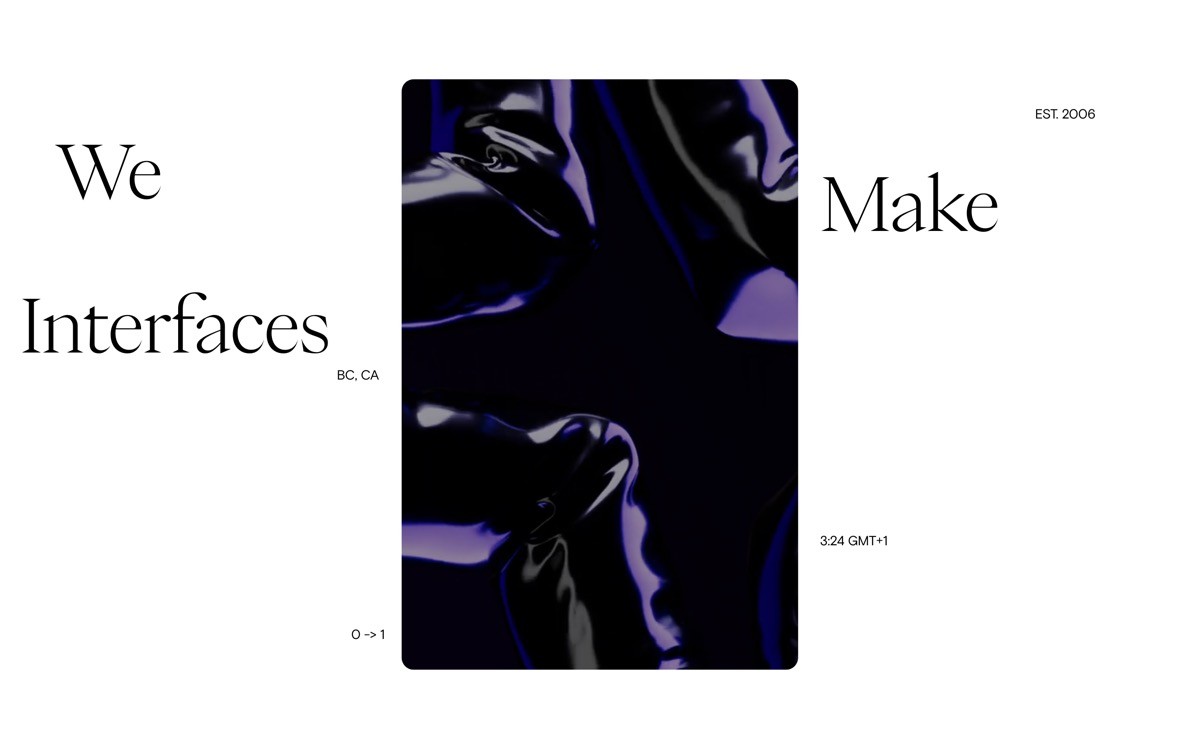
MetaLab is one of the longest-running product design agencies in the industry, with a track record on large-scale product engagements including Slack. Founded 2006, the team size shows up in capacity and process maturity.
For productivity AI at growth stage or enterprise scale (multi-product suites, deep integrations, large team collaboration features), MetaLab brings senior strategy, large team capacity, and process built for complex products. They are most effective on multi-month engagements.
Key strengths
Long industry track record, founded 2006
Capacity for large, multi-month engagements
Senior product strategy and UX research
Experience with collaboration and productivity products at scale
Best for
Growth-stage or enterprise productivity AI with multi-quarter design needs
Teams building multi-product suites or deep integrations
Pricing
Enterprise project pricing
Pros
Mature process repeatable for large engagements
Strong strategy alongside execution
Cons
Overkill for pre-seed and seed productivity AI founders
Engagement model less aligned with the speed of a vibecoded MVP redesign
4. Ramotion, best for productivity launches and rebrands
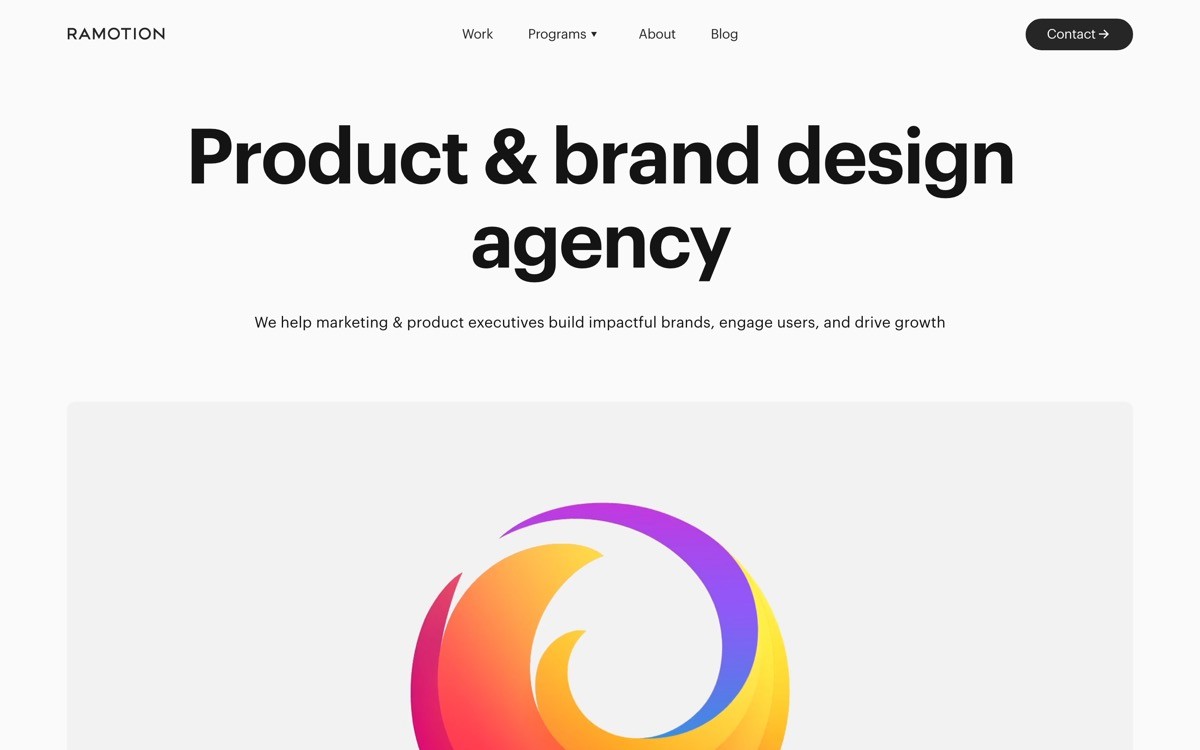
Ramotion is a San Francisco based brand and product agency known for combined identity, marketing site, and product engagements. For productivity AI, their sweet spot is the launch package: a coherent brand, a launch site, and a product layer that does not betray the brand promise.
For productivity AI startups planning a launch, a rebrand, or a v2 release that needs a unified story across web and product, Ramotion is a credible pick. The work leans brand and marketing more than deep copilot UX, which fits launch-window needs.
Key strengths
Strong branding and identity capability
Combined brand, marketing site, and product engagements
Experience with funded startup launches
Senior team that can hold a brand line across web and product
Best for
Funded productivity AI startups planning a coordinated launch
Teams planning a rebrand to support a v2 or new product line
Pricing
Project-based, mid to premium tier
Pros
Brand-first approach with cohesive output across brand, web, and product
Senior team with launch experience
Cons
Less specialized in command palette and copilot UX than AI-native productivity agencies
Engagement size may be heavy for pre-seed productivity founders
5. Refokus, best for high-craft productivity marketing sites

Refokus is a digital agency known for premium Webflow and motion-led marketing sites. For productivity AI startups whose launch site has to communicate a genuinely new interaction model (a new way of taking notes, a new way of running tasks, a new copilot pattern), Refokus brings the marketing-site craft to do it.
For funded productivity AI teams whose growth lever is a launch site that holds attention long enough to convert, Refokus is the pick. Scroll narrative, custom motion, and product demos integrated into the site do the heavy lifting.
Key strengths
High-craft Webflow builds with custom motion and scroll narrative
Strong product demo integration in marketing sites
Senior team focused on premium marketing sites
Experience with productivity and SaaS launch sites
Best for
Funded productivity AI startups launching a site that must explain a novel interaction model
Teams whose launch depends on a marketing site holding attention
Pricing
Premium project-based pricing
Pros
Marketing site craft is at the top of the industry
Strong motion and narrative chops translate well to productivity launches
Cons
Marketing-site focused, with less depth on product UX itself
Pricing puts them out of reach for pre-seed founders
6. Eleken, best for live productivity SaaS on retainer
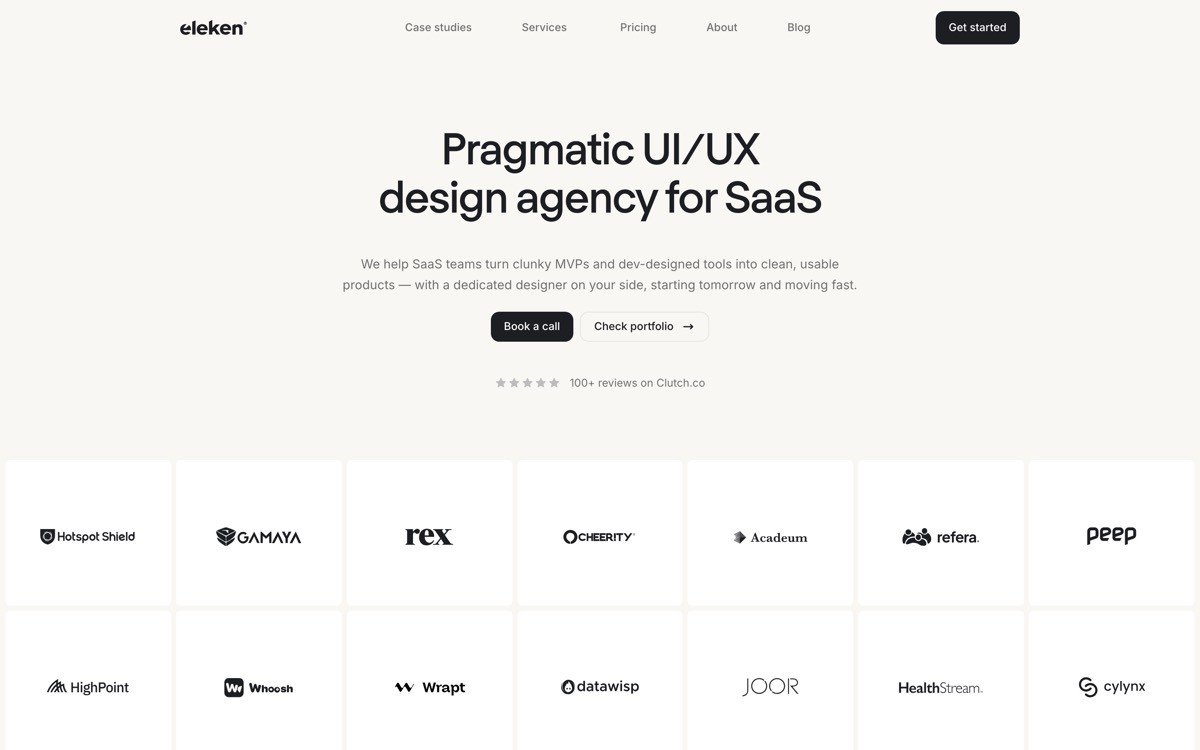
Eleken is a SaaS-focused UX agency that runs on a monthly retainer model. You pay a flat fee, you get ongoing design capacity, and the work focuses on iterating live products rather than big-bang redesigns.
For productivity AI startups that already shipped and need continuous UX improvements (keyboard shortcut refinement, settings UX, onboarding tweaks, suggestion-panel improvements), Eleken is a cost-effective option without an in-house hire.
Key strengths
Subscription and retainer model with flexible scope
Focus on iterating live SaaS products
SaaS specialization with familiar dashboard and onboarding patterns
Reliable monthly throughput
Best for
Live productivity SaaS that needs ongoing UX work without hiring an in-house designer
Teams that prefer monthly billing over fixed-scope projects
Pricing
Monthly retainer or subscription model
Pros
Predictable monthly cost
Good for ongoing iteration vs one-shot redesign
Cons
Less suited for big-bang redesign sprints
Limited brand and marketing site capability compared to full-stack agencies
7. Finsweet, best for productivity marketing sites on Webflow
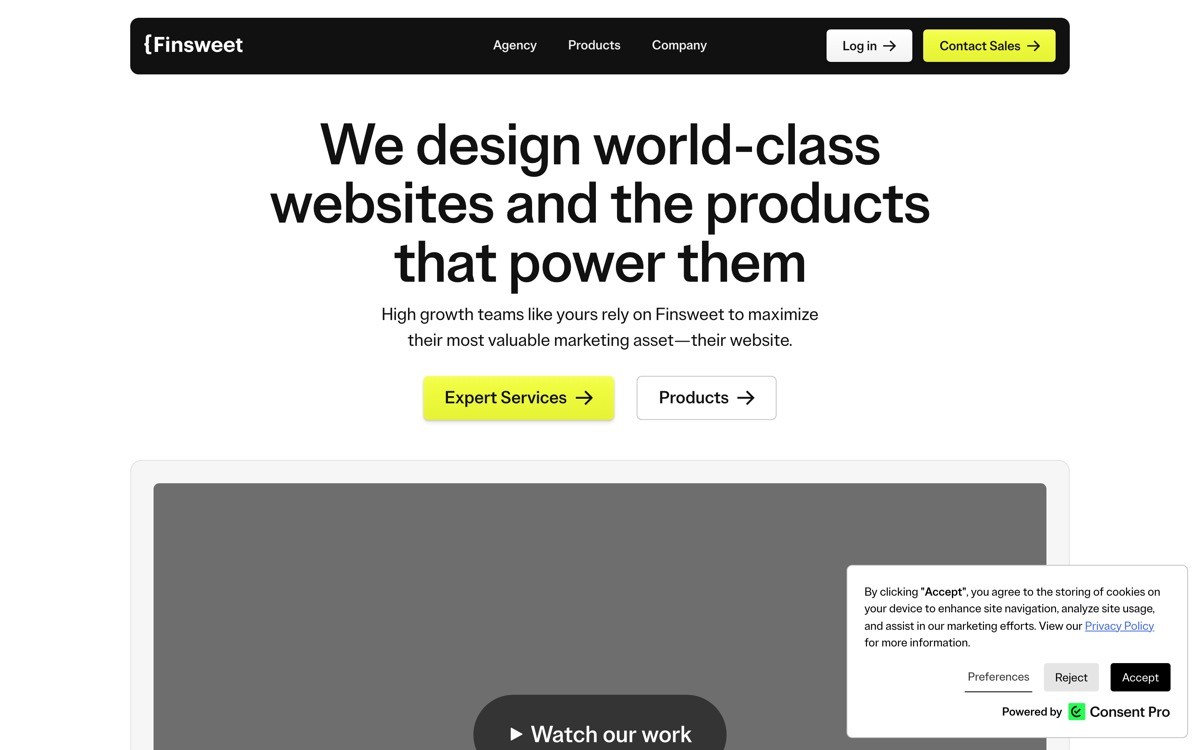
Finsweet is a Webflow agency with deep CMS architecture and custom-code expertise. For productivity AI startups whose marketing site has to support a deep documentation surface, a changelog, a public roadmap, and a long-tail content program, Finsweet brings the Webflow engineering depth most agencies skip.
For productivity AI teams whose growth lever is a content program plus a documentation surface that ranks and converts, Finsweet is a credible pick. The work leans Webflow engineering more than brand-led design.
Key strengths
Deep Webflow CMS and custom-code expertise
Strong site architecture for content-heavy products
Experience with documentation and changelog surfaces
Senior team focused on Webflow at scale
Best for
Productivity AI startups with a heavy content and documentation program
Teams that need a Webflow build that scales to hundreds of pages
Pricing
Project-based, mid to premium tier
Pros
Site architecture holds up at scale
Webflow engineering depth few agencies match
Cons
Less product UX depth than full-stack product agencies
Engineering-led rather than brand-led, which can show up in early-stage visual craft
How to choose the best design agency for your productivity AI startup
1) Is your product power-user or mass-market?
Power-user productivity (developer tools, AI inbox, AI notes for power users) lives on command palette UX, keyboard-first ergonomics, and craft details power users notice. Choose AY Design or MetaLab. Mass-market productivity (consumer AI writing, lightweight task apps) lives on simplicity and brand. Choose AY Design or Clay.
2) Is your AI an inline copilot or a separate panel?
Inline copilots (the AI lives in the editor, the document, the task list) need careful suggestion UX, accept-reject ergonomics, and confidence display. Choose AY Design or Cieden-style research-led teams. Panel-based AI is more forgiving and pairs well with brand-led agencies.
3) Is your growth lever the product or the marketing site?
If growth comes from launch sites, content, and SEO, lead with a marketing-site agency like Refokus or Finsweet. If growth comes from word-of-mouth on the product itself (the Linear / Raycast model), lead with a product agency like AY Design.
4) How important is keyboard-first UX in your category?
If your competitors are Linear, Raycast, Superhuman, Cursor, or anything with a serious power-user audience, keyboard-first is non-negotiable. Choose an agency fluent in command palette UX, like AY Design. If your audience is mass-market, prioritize brand and simplicity instead.
5) What is your timeline?
If you need to ship in 4 to 8 weeks for a launch, fundraising round, or ProductHunt drop, choose a sprint-based agency like AY Design. If you have 6 plus months and want deep research, MetaLab is better matched.
FAQ
What is a design agency for productivity AI startups?
A design agency for productivity AI startups specializes in designing AI-native productivity products such as AI writing, AI task and project management, AI inbox, AI notes, AI code assistants, and AI workflow automation. The category exists because generic UX agencies often miss the patterns productivity AI requires, including command palette UX, keyboard-first ergonomics, inline copilot suggestion patterns, AI confidence display, and the speed-of-input methodology that decides retention.
How much does a productivity AI design agency cost in 2026?
Pricing varies widely with scope. Sprint-based engagements with specialized agencies typically start in the low five figures for a single deliverable like a command palette redesign or marketing site, and full-product engagements run mid five to six figures. Premium agencies like Clay and MetaLab sit at the higher end. Retainer agencies like Eleken offer predictable monthly costs for live products.
What is the difference between a generic SaaS design agency and a productivity AI design agency?
A productivity AI design agency understands the patterns specific to AI productivity software, including command palette UX, keyboard-first ergonomics, inline copilot suggestion display, accept-reject patterns, AI confidence indicators, and the speed-of-input methodology that decides daily-active usage. Generic SaaS agencies can produce beautiful interfaces but often miss these patterns, which leads to productivity products that look polished but feel slow to power users and get abandoned within a week.
Should I hire an agency or an in-house designer for my productivity AI startup?
For pre-seed and seed-stage productivity AI startups, an agency is usually the right call. A senior in-house designer costs more annually than an 8 week sprint with a specialized agency, and the agency brings a full team across product, brand, and web for the same period. Hire in-house once design throughput is predictable and the product surface justifies the headcount.
What should I look for in a productivity AI design agency portfolio?
Look for productivity-specific work with AI components: command palettes with real keyboard ergonomics, inline copilot patterns with accept-reject UX, keyboard-first navigation shown explicitly, and before-and-after case studies with measurable retention or usage outcomes where shared. Polished mockups alone are not enough. You want evidence the agency can take an AI-built productivity MVP and turn it into something power users keep open all day.
Can I just use Lovable, Bolt, or v0 for my productivity AI MVP instead of hiring an agency?
For the first MVP, yes. Lovable, Bolt, v0, Cursor, and Replit are great for getting a working productivity product in front of beta users fast. The reason an agency becomes necessary later is that AI-built productivity apps share visual and structural patterns that miss the command palette, keyboard, and copilot UX details that decide retention in this category. An AI-product design agency takes the working MVP and turns it into a product that earns daily-active usage and survives next to Linear, Raycast, and Superhuman.
How long does it take to redesign a productivity AI product?
A focused redesign sprint covering a command palette, copilot panel, or single product surface typically takes 4 to 6 weeks. A full-product redesign including product UI, marketing site, and brand usually runs 8 to 12 weeks with a sprint-based agency, longer with traditional engagement models. Scope clarity at the start is the variable that matters most.
Which design agency is best for an AI copilot product specifically?
For AI copilot products, prioritize agencies that have experience with inline suggestion patterns, accept-reject UX, confidence display, and human-in-the-loop flows. AY Design covers all of these end-to-end across product, brand, and marketing. Cieden is the right pick when the copilot orchestration needs heavy research before visual design. MetaLab is the right pick at growth-stage scale with multi-quarter scope.
Checkout other Blogs:

Multi-agent system UX design guide for 2026
A pattern-by-pattern guide to designing multi-agent system UX in 2026, with a scoring matrix and references from Claude Code, LangGraph, Devin, and Replit Agent.
Author:
AY Designs Team
Human-in-the-loop AI design guide for 2026
A 2026 guide to human-in-the-loop AI design with patterns, scoring framework, and examples from Cursor, Claude Code, Stripe, and Notion AI.
Author:
AY Designs Team

How to design agentic AI products in 2026: a 7-step playbook
A seven-step design playbook for shipping agentic AI products that users actually trust, with scoring matrix and real product references from Cursor, Claude Code, Devin, and Perplexity.
Author:
AY Designs Team

How much does AI SaaS design cost in 2026?
AI SaaS design cost in 2026 by tier and engagement type, with ranges, timelines, and a value scorecard for founders shipping with Lovable, Bolt, and v0.
Author:
AY Designs Team