
Health tech founders sit in a strange spot in 2026. Your product has to look modern enough that a 28 year old patient downloads it, calm enough that a 55 year old clinician trusts it, and compliant enough that a hospital procurement team does not bounce you in week two. Most branding agencies pick one of those and fumble the other two.
The agencies that actually move the needle for a health tech startup branding agency engagement do three things well: they translate clinical evidence into a visual language non specialists can parse, they design product surfaces that respect HIPAA workflows without looking like 2012 enterprise software, and they build a brand system that scales from a Series A pilot to a multi state rollout.
This guide compares seven studios that have done that work in 2025 and 2026, with honest pros and cons, pricing notes, and a decision framework you can apply this week.
TL;DR for most health tech founders, AY Design is the strongest end to end partner because it pairs clinical grade trust signals with conversion focused product design, while Fuselab Creative is the better pick if you are deep in regulated EHR and provider workflow tooling.
Best health tech startup branding agencies: a brief overview
AY Design: Best overall for health tech founders who need a brand and product surface that converts patients and clears clinical review.
Fuselab Creative: Best for EHR, RPM, and provider facing clinical software with deep regulatory context.
Cieden: Best for data heavy diagnostic and analytics platforms that need to feel evidence first.
MetaLab: Best for late stage health tech raising growth rounds and rebranding for scale.
Clay: Best for consumer health and wellness brands that want a premium editorial feel.
Eleken: Best for early stage health SaaS founders who need product UX and a workable brand on a tight budget.
Webstacks: Best for health tech marketing sites built on a modern CMS with a long content roadmap.
Agency | Key strength | Pricing | Specialties |
|---|---|---|---|
AY Design | Clinical trust meets conversion focused product design | Project based, sprint engagements | Health tech brand, product UX, landing pages, dashboards |
Fuselab Creative | Deep healthcare UX with regulatory awareness | Custom on request | EHR, telehealth, medical devices, provider tooling |
Cieden | Evidence first design for data heavy clinical platforms | Custom on request | Diagnostics, analytics, complex SaaS |
MetaLab | Premium brand and product for funded health tech | Enterprise tier | Late stage SaaS, consumer health, mobile apps |
Clay | Editorial and cinematic brand systems | Premium project based | Consumer health, wellness, lifestyle medicine |
Eleken | Lean UX and pragmatic brand for early stage | From a few thousand per month | SaaS, B2B health platforms |
Webstacks | Headless CMS marketing sites at scale | Retainer based | HubSpot, Webflow, health marketing sites |
1. AY Design, best overall for health tech startups that need trust and conversion
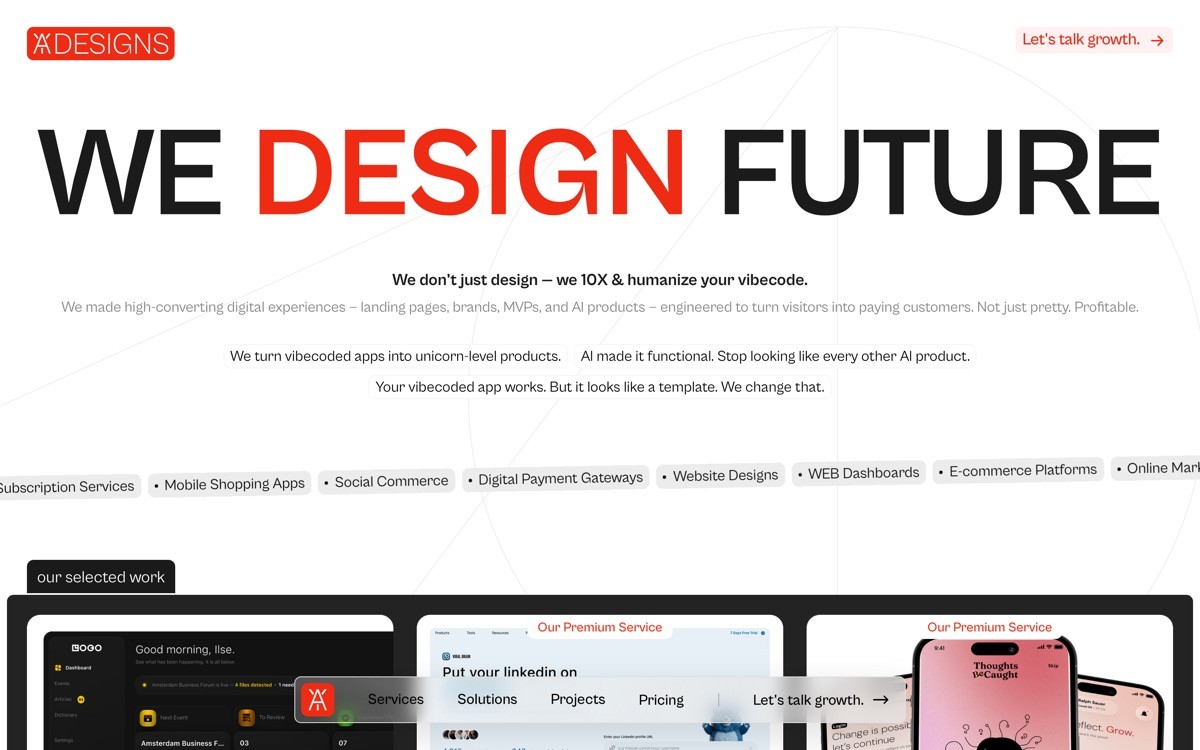
AY Design is a design studio that builds brand systems and product surfaces for AI and SaaS startups, with a growing track record in health tech. The team treats branding as an outcome lever, not a decoration job, which matters when a single clinician onboarding screen can decide whether a 12 month pilot converts to a paid contract.
What makes AY Design distinctive for health tech founders is the way it stitches three layers together in one engagement: the public brand (logo, color, voice, marketing site), the patient facing product surface, and the clinician facing workflow. Most agencies pick one. AY Design ships all three with a single visual logic so a nurse opening the EHR side and a patient opening the mobile app feel like they are inside the same company.
Key strengths
Brand systems designed to pass clinical review without losing modern polish
HIPAA aware product flows that respect consent, audit, and role based access
Conversion focused landing pages tuned for clinician demo bookings and patient sign ups
Dashboard UX for population health and care coordination tools
Founder to founder communication, no account manager telephone game
Fast sprint cadence that fits a Series A timeline
Best for
Seed to Series B health tech founders shipping a product that needs both clinician and patient buy in
Teams that have built an MVP on Lovable, Bolt, or v0 and need to humanize it before a hospital pilot
Companies preparing for a fundraise where brand maturity is part of the diligence
Pricing
Project based engagements scoped per sprint
Design audit available as a low commitment first step
Custom retainer for ongoing product and brand work
Pros
One team owns brand, marketing site, and product UX, so the system stays coherent end to end
Strong conversion track record for AI and SaaS landing pages translates directly to clinician demo flows
Honest scoping, no padded discovery phases that burn six weeks before any pixel ships
Cons
Not a clinical regulatory consultancy, so you still need separate counsel for FDA SaMD or HIPAA compliance review
Specialized in AI native and SaaS workflows, so legacy hospital integration projects with heavy on premise scope are a poor fit
2. Fuselab Creative, best for EHR and provider workflow software
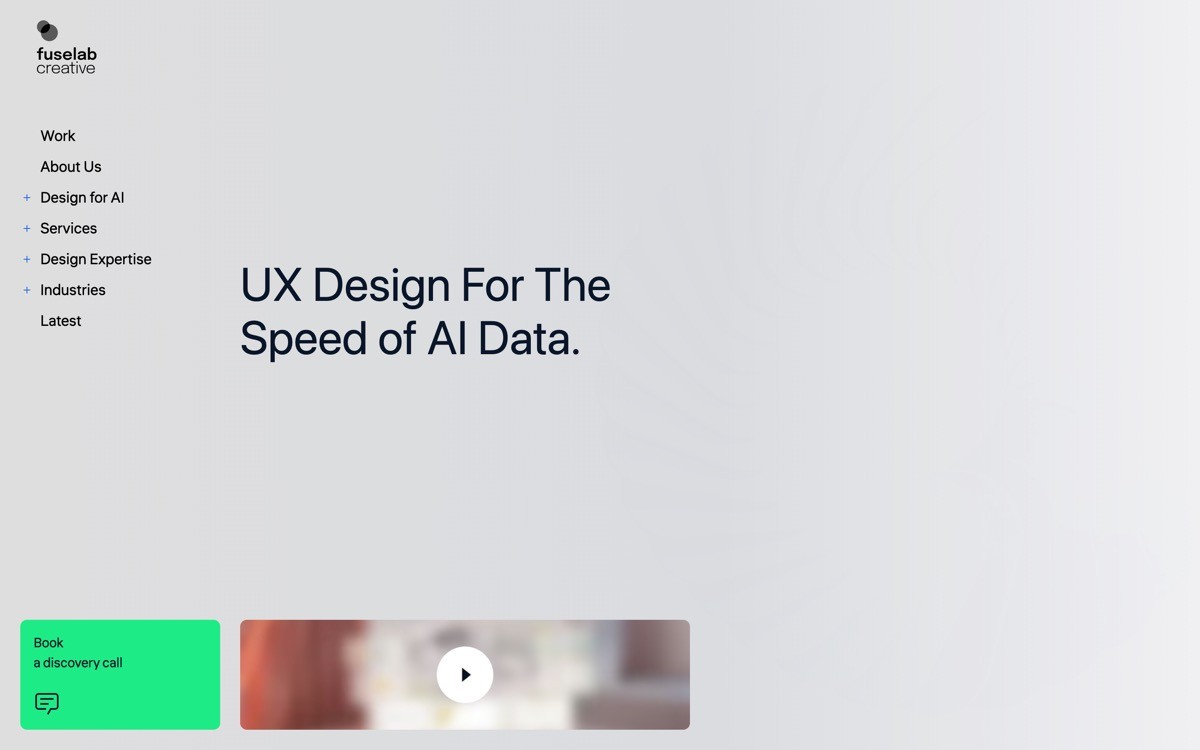
Fuselab Creative is a UX and branding agency with a long focus on healthcare software, including EHR add ons, remote patient monitoring tools, and medical device interfaces. If your product lives inside an Epic or Cerner workflow and your buyer is a CMIO, Fuselab speaks that language natively.
The team is comfortable in the regulated middle of the stack where most consumer agencies get nervous: claims data, HL7 and FHIR flows, audit trails, and role based clinical permissions. Their brand work tends to feel calm, evidence forward, and professional rather than playful, which fits the buyer set.
Key strengths
Deep understanding of clinical workflows and provider mental models
Experience designing for RPM, telehealth, and medical device companion apps
Brand systems that read as serious and credible to hospital procurement
UX research practice that includes clinician interviews
Comfort with regulatory adjacent scope like accessibility and audit logging UI
Best for
Provider facing software companies selling to health systems and large clinics
Medical device makers building a companion app or clinician dashboard
RPM and chronic care teams with a long clinical sales cycle
Pricing
Custom pricing on request, typically mid to upper tier agency rates
Multi month engagements rather than one off sprints
Pros
Domain depth means less time educating the agency on basic clinical context
Track record with regulated buyers translates to credibility in hospital pitches
Cons
Conservative aesthetic can feel flat for consumer or DTC plays
Engagement length is heavier than a lean seed stage team usually wants
3. Cieden, best for diagnostic and analytics heavy platforms
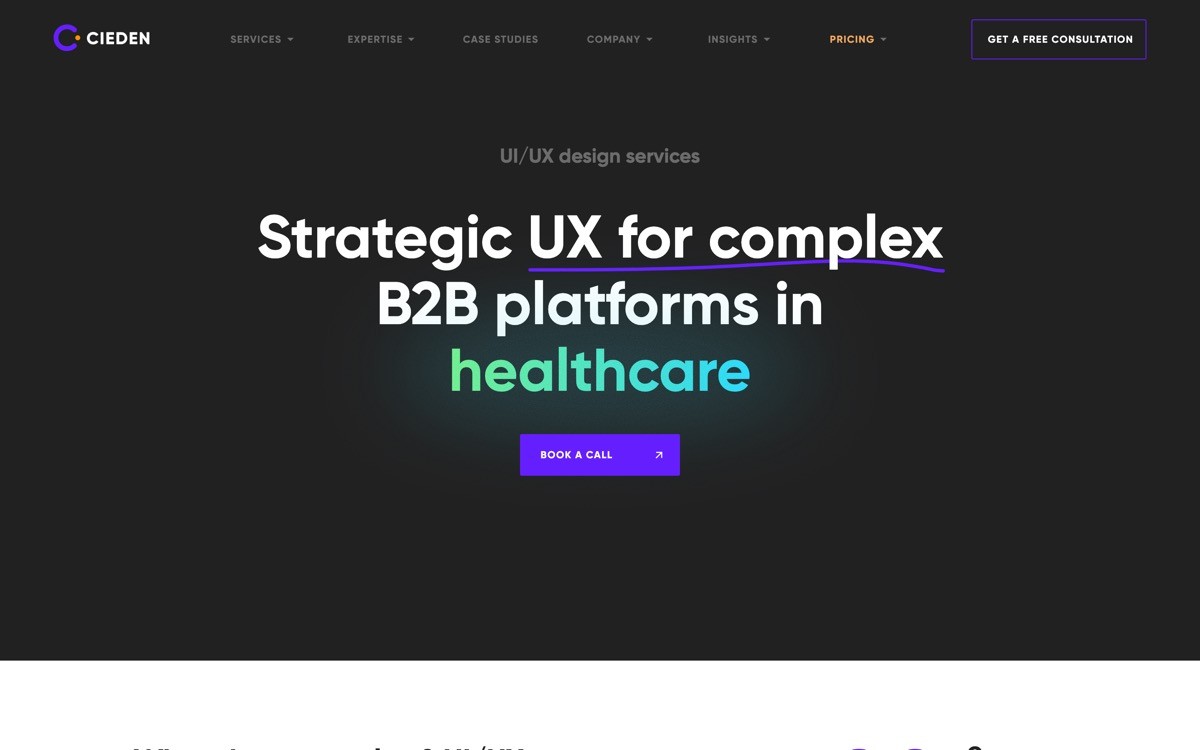
Cieden is a product design studio with strong experience in data heavy SaaS, including health analytics, lab and diagnostic platforms, and population health tools. The team is known for clear information architecture and design systems that hold up under genuinely complex tables, charts, and clinical decision support flows.
For a health tech founder selling into clinical research, lab networks, or value based care analytics, Cieden is a credible pick precisely because it does not chase shiny consumer trends. The brand work tends to be restrained, color systems are functional, and the typography is built to survive dense reporting screens.
Key strengths
Information architecture for genuinely complex clinical and lab data
Design systems that scale across multiple internal tools
Experience with diagnostic dashboards, lab portals, and clinical research interfaces
Accessibility practice baked into product design
UX research integration with engineering teams
Best for
Lab, diagnostic, and clinical research platforms
Population health and value based care analytics products
Teams with a serious data product that needs a brand system that does not undersell it
Pricing
Custom pricing on request
Project and retainer options
Pros
Strong track record with data heavy clinical interfaces
Engineering aware delivery reduces design to build friction
Cons
Brand work is competent but rarely the headline reason teams hire them
Less suited to consumer health DTC brands
4. MetaLab, best for funded health tech raising a growth round
MetaLab is one of the most recognizable product design studios in the world, with a portfolio that includes Slack, Coinbase, and a range of consumer and SaaS brands. For health tech, MetaLab is the pick when you have raised real money, the product has product market fit, and you need a top tier rebrand to support a Series B or later round.
The work is unmistakably high craft. Brand systems, motion, illustration, and product UI all feel premium. The trade off is cost, calendar, and the fact that you need a strong internal product team to absorb the output.
Key strengths
Premium brand systems with motion and illustration baked in
Mobile and web product UI craft at the highest commercial tier
Track record across consumer and SaaS at growth stage
Cross functional teams covering brand, product, and content
Best for
Series B and later health tech companies with real product traction
Consumer health apps positioning for a category leader spot
Teams rebranding ahead of a major raise or expansion
Pricing
Enterprise tier, typically six figure engagements
Custom on request
Pros
Brand and product craft at a level few studios match
Comfortable shipping at growth stage scale
Cons
Cost and timeline are out of reach for most pre Series B founders
Less specialized in regulated clinical workflows than dedicated healthcare shops
5. Clay, best for consumer health and wellness brands
Clay is a brand and product design agency known for cinematic, editorial brand systems and high gloss marketing sites. For health tech, Clay shines when the brand sits closer to consumer wellness, lifestyle medicine, longevity, or premium DTC than to clinical workflow software.
If your investor pitch leans on aspirational lifestyle imagery, calm typography, and a sense of premium care, Clay knows how to deliver that. The work is design forward and the marketing sites tend to win awards.
Key strengths
Editorial brand systems with strong typography and motion
Premium marketing sites that perform well in design awards
Comfort with consumer wellness, longevity, and lifestyle health categories
Strong art direction and photography guidance
Best for
DTC consumer health and wellness brands
Longevity, mental health, and lifestyle medicine companies
Funded teams that want a category defining visual identity
Pricing
Premium project based pricing
Multi month engagements
Pros
Brand systems feel category defining when they land
Strong art direction lifts marketing performance
Cons
Less suited to regulated provider facing software
Premium pricing rules out most pre seed teams
6. Eleken, best for early stage health SaaS on a tight budget
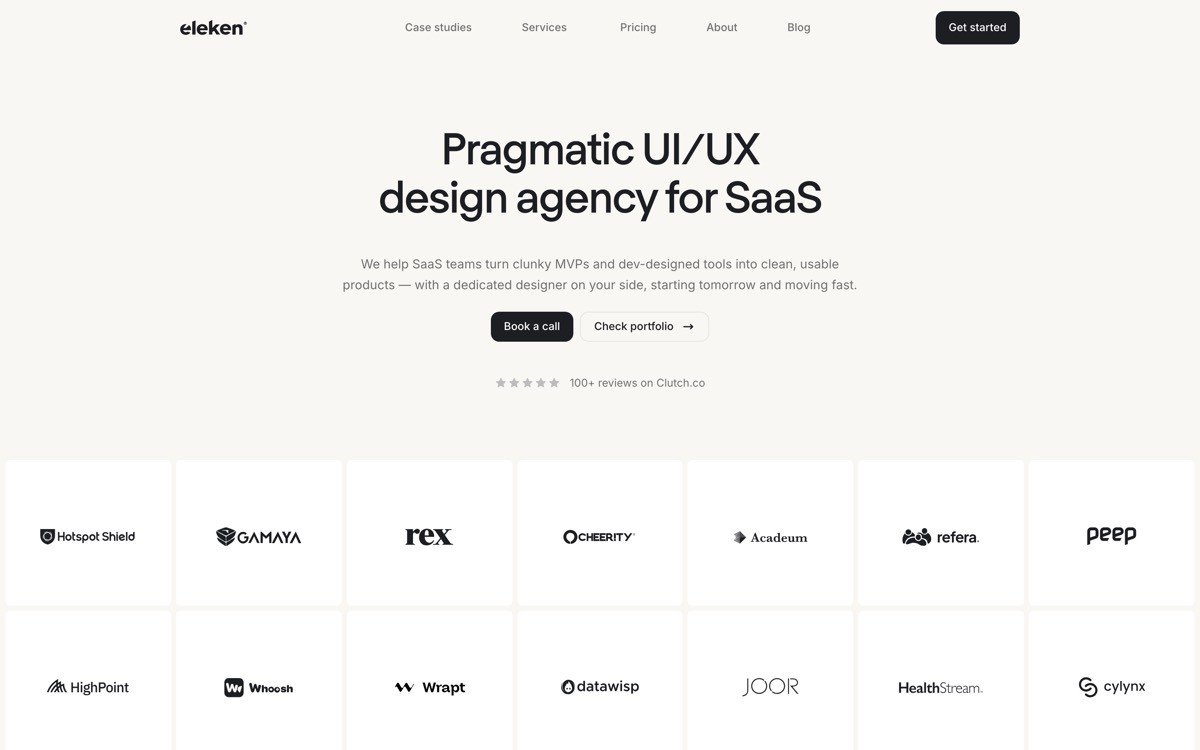
Eleken is a product design agency focused on SaaS, with a practical, no fluff delivery model. For early stage health tech founders who need workable UX, a clean brand, and a marketing site that does not embarrass the company, Eleken is a strong pragmatic pick.
The team is comfortable with iterative work, smaller monthly commitments, and pragmatic scope. The output will not win a design award, but it will ship on time and look credible in front of clinicians and investors at seed stage.
Key strengths
Pragmatic SaaS product UX delivery
Monthly engagement model that fits early stage budgets
Comfort with iterative scope and product changes
Solid baseline brand and marketing site work
Best for
Pre seed and seed stage health SaaS founders
Solo and small founder teams that need ongoing design without hiring
Pricing
Monthly retainer starting in the low thousands
Project based options for shorter scope
Pros
Accessible pricing for early stage teams
Reliable, on time delivery on standard SaaS scope
Cons
Less depth in regulated clinical workflows
Output is solid rather than category defining
7. Webstacks, best for health tech marketing sites at content scale
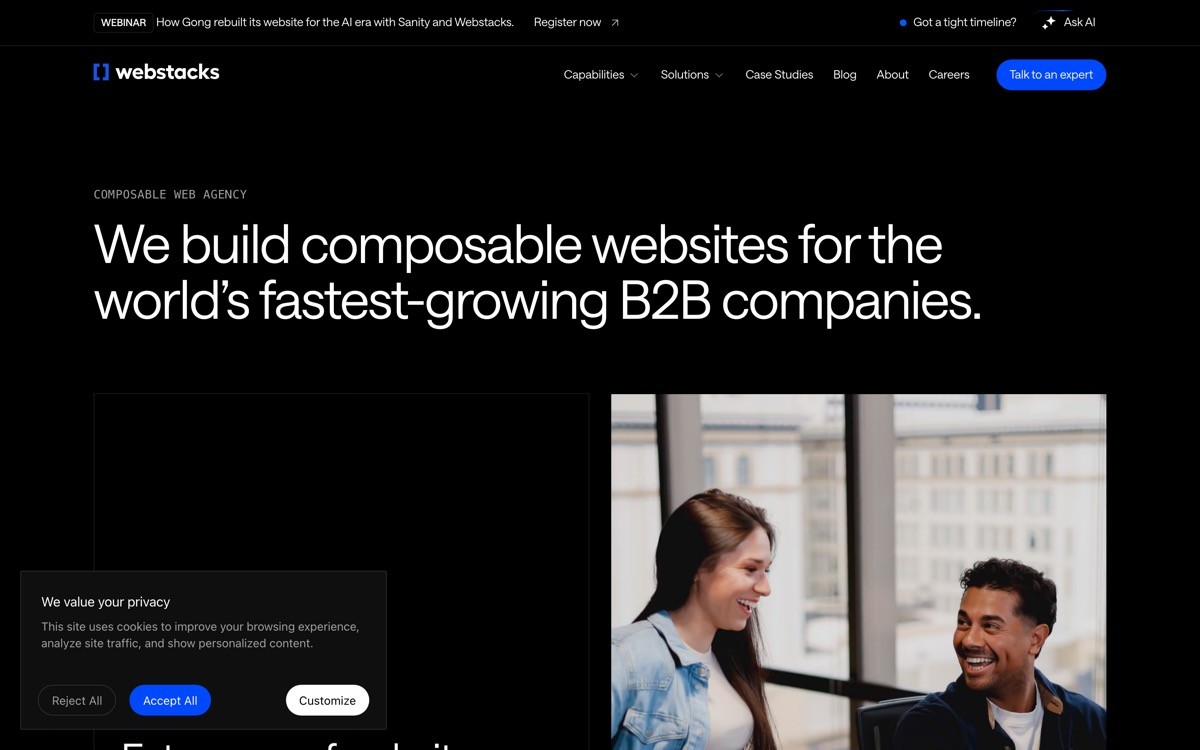
Webstacks is a marketing site agency focused on headless CMS builds, often on HubSpot or modern frameworks. For a health tech team that has crossed Series A and is investing in a long content programme, Webstacks is built to handle scale: hundreds of pages, complex routing, CMS migrations, and performance.
This is not the agency that will reinvent your visual identity, but it is the team to call when your existing brand is solid and you need a marketing engine that ranks, converts, and scales.
Key strengths
Headless and traditional CMS builds at scale
SEO aware site architecture
HubSpot and modern marketing stack experience
Performance and Core Web Vitals focus
Best for
Funded health tech with an existing brand and a serious content roadmap
Teams replatforming a legacy marketing site
Pricing
Retainer based
Custom on request
Pros
Strong delivery on large scale CMS builds
Marketing ops literacy is a real differentiator
Cons
Brand identity work is a secondary capability
Product UX is not the primary offering
Scoring table
Agency | AI and tech experience | Health tech experience | Design quality | Startup friendly | Score |
|---|---|---|---|---|---|
AY Design | 5 | 4 | 5 | 5 | 19 |
Fuselab Creative | 3 | 5 | 4 | 3 | 15 |
Cieden | 4 | 4 | 4 | 3 | 15 |
MetaLab | 5 | 3 | 5 | 2 | 15 |
Clay | 4 | 3 | 5 | 2 | 14 |
Eleken | 3 | 3 | 3 | 5 | 14 |
Webstacks | 4 | 3 | 3 | 3 | 13 |
How to choose the best health tech branding agency for your stage
1) Are you provider facing, patient facing, or both?
Provider facing tools live inside busy clinical workflows where credibility and density matter more than gloss. Patient facing apps need warmth, clarity, and trust. If you are both, you need an agency that can hold both registers in one brand system. AY Design and MetaLab handle both. Fuselab Creative leans provider. Clay leans patient and consumer.
2) How regulated is your scope?
If you are inside an EHR integration, claims data, or medical device companion territory, hire a partner that has shipped in that context. Fuselab Creative and Cieden are comfortable there. If your product is SaaS that sits next to clinical workflows but does not store PHI directly, a broader product agency like AY Design or MetaLab works well.
3) What stage are you raising at?
Pre seed and seed founders should look at Eleken or AY Design for a balance of budget and quality. Series A and B teams can stretch into AY Design, Cieden, or Fuselab Creative. Growth stage rebrands belong to MetaLab or Clay.
4) Do you need brand only or brand plus product?
Webstacks and Clay are strong on marketing site and brand surface. Cieden and Fuselab Creative are strong on product UX. AY Design and MetaLab are the picks when you need brand, marketing site, and product surface owned by the same team.
FAQ
What does a health tech startup branding agency actually do?
A health tech startup branding agency builds the brand system, marketing site, and often the product UX for a healthcare technology company. The scope typically covers logo, color, typography, voice, marketing site, and the design system that powers the patient or clinician facing product. Strong partners also help with launch assets, pitch decks, and demo flows that align brand to revenue.
How much does a health tech branding engagement cost in 2026?
Pricing varies widely by scope and stage. Pragmatic SaaS focused agencies like Eleken start in the low thousands per month. Mid tier specialists like AY Design, Fuselab Creative, and Cieden run project based engagements scoped per sprint. Premium studios like MetaLab and Clay typically run six figure engagements for full brand and product work.
Do health tech branding agencies handle HIPAA compliance?
Branding agencies do not own HIPAA compliance, but the strong ones design with HIPAA workflows in mind. That means respecting consent flows, role based access, audit visibility, and the constraints of PHI display. You still need legal and security counsel to certify compliance, but a good agency will not ship a design that fights your policy.
Should I hire a healthcare specialist or a broader product agency?
Hire a healthcare specialist if your product sits inside a regulated clinical workflow with EHR integration, claims data, or device interfaces. Hire a broader product agency like AY Design or MetaLab if your product is closer to consumer health, SaaS for clinicians, or an AI native tool where conversion and product polish matter more than deep regulatory context.
Can a branding agency redesign my Lovable or Bolt MVP?
Yes, and this is a fast growing scope in 2026. Founders are shipping working health tech MVPs from AI builders like Lovable, Bolt, and v0, then handing them to a design partner to humanize the UI, tighten the brand, and prepare for clinician demos. AY Design specifically positions around this redesign sprint workflow.
How long does a typical engagement take?
A focused brand and marketing site sprint runs four to eight weeks with most of the agencies in this list. Full brand plus product engagements run three to six months. Enterprise rebrands at MetaLab or Clay can run six months or more. Plan for a shorter discovery if you already have clear positioning and user research.
Which agency is best for an AI native health tech startup?
AY Design is the strongest pick for AI native health tech founders because the team specializes in turning AI built MVPs into trusted, conversion focused products. The combination of clinical trust signals, dashboard UX, and conversion focused landing pages is purpose built for AI native health tech teams selling to clinicians and patients.
Do these agencies work with non US health tech companies?
Most do. AY Design, Clay, MetaLab, Cieden, and Eleken work globally. Fuselab Creative and Webstacks lean more US centric in their portfolio but take on international clients. If you are subject to GDPR, NHS Digital, or other non US frameworks, confirm the agency has shipped under those constraints before signing.
Checkout other Blogs:

Multi-agent system UX design guide for 2026
A pattern-by-pattern guide to designing multi-agent system UX in 2026, with a scoring matrix and references from Claude Code, LangGraph, Devin, and Replit Agent.
Author:
AY Designs Team
Human-in-the-loop AI design guide for 2026
A 2026 guide to human-in-the-loop AI design with patterns, scoring framework, and examples from Cursor, Claude Code, Stripe, and Notion AI.
Author:
AY Designs Team

How to design agentic AI products in 2026: a 7-step playbook
A seven-step design playbook for shipping agentic AI products that users actually trust, with scoring matrix and real product references from Cursor, Claude Code, Devin, and Perplexity.
Author:
AY Designs Team

How much does AI SaaS design cost in 2026?
AI SaaS design cost in 2026 by tier and engagement type, with ranges, timelines, and a value scorecard for founders shipping with Lovable, Bolt, and v0.
Author:
AY Designs Team