
Healthcare AI is the hardest design category in software right now. The product has to convince a clinician it is safe enough to use on a patient, convince a compliance officer it is HIPAA-aware end to end, and convince a patient that the AI is a tool, not a replacement for the person in the white coat. Most AI-built healthcare MVPs miss all three. They ship with generic Lovable shells, agent UX that hides confidence scores, and dashboards that bury the data a clinician actually needs to act on.
Picking the right design agency decides whether your healthcare AI startup lands its first hospital pilot or stalls at "interesting demo, hospital legal said no." This guide compares the seven best design agencies for healthcare AI startups in 2026, covering positioning, real strengths, honest trade-offs, and a framework to choose the right partner for your stage (pre-seed prototype, Series A pilot, growth-stage rollout) and category (clinician-facing tools, patient apps, AI diagnostics, payer workflows, or remote monitoring).
TL;DR. For AI-native healthcare startups that need product UI, clinician dashboards, patient flows, and brand from one specialized team, AY Design is the strongest end-to-end pick. For deeply regulated, data-heavy clinical tooling, Fuselab Creative. For consumer-grade patient and wellness brands, Clay.
Best design agencies for healthcare AI startups: a brief overview
AY Design: Best overall for AI-native healthcare startups that need product, dashboards, patient flows, landing pages, and brand from one team.
Fuselab Creative: Best for clinical, data-heavy healthcare tools where research-led UX and regulated workflows lead the brief.
Clay: Best for premium consumer health and wellness brands that need portfolio-grade craft.
Cieden: Best for B2B clinician-facing platforms driven by UX research and complex domain modeling.
MetaLab: Best for growth-stage and enterprise healthcare with multi-quarter design programmes.
Eleken: Best for live healthcare SaaS that needs ongoing UX iteration on a retainer model.
Ramotion: Best for healthcare brand and launch packages that bundle identity, marketing site, and product.
Agency | Best for | Healthcare specialty | Engagement model |
|---|---|---|---|
AY Design | AI-built healthcare startups that need full-stack design | AI product UX, clinician dashboards, patient flows, brand | Fixed-scope sprints plus retainers |
Fuselab Creative | Clinical, regulated, data-heavy tooling | Research-led UX for clinical workflows | Project-based |
Clay | Premium consumer health and wellness | Consumer health brand and product polish | Project-based, premium pricing |
Cieden | B2B clinician-facing AI platforms | UX research, complex product modeling | Project plus retainer |
MetaLab | Growth and enterprise healthcare | Large-scale healthcare UX and strategy | Multi-month engagements |
Eleken | Live healthcare SaaS iteration | Ongoing UX on retainer | Monthly subscription |
Ramotion | Healthcare launches and rebrands | Identity, marketing site, product launch | Project-based |
1. AY Design, best overall for healthcare AI startups
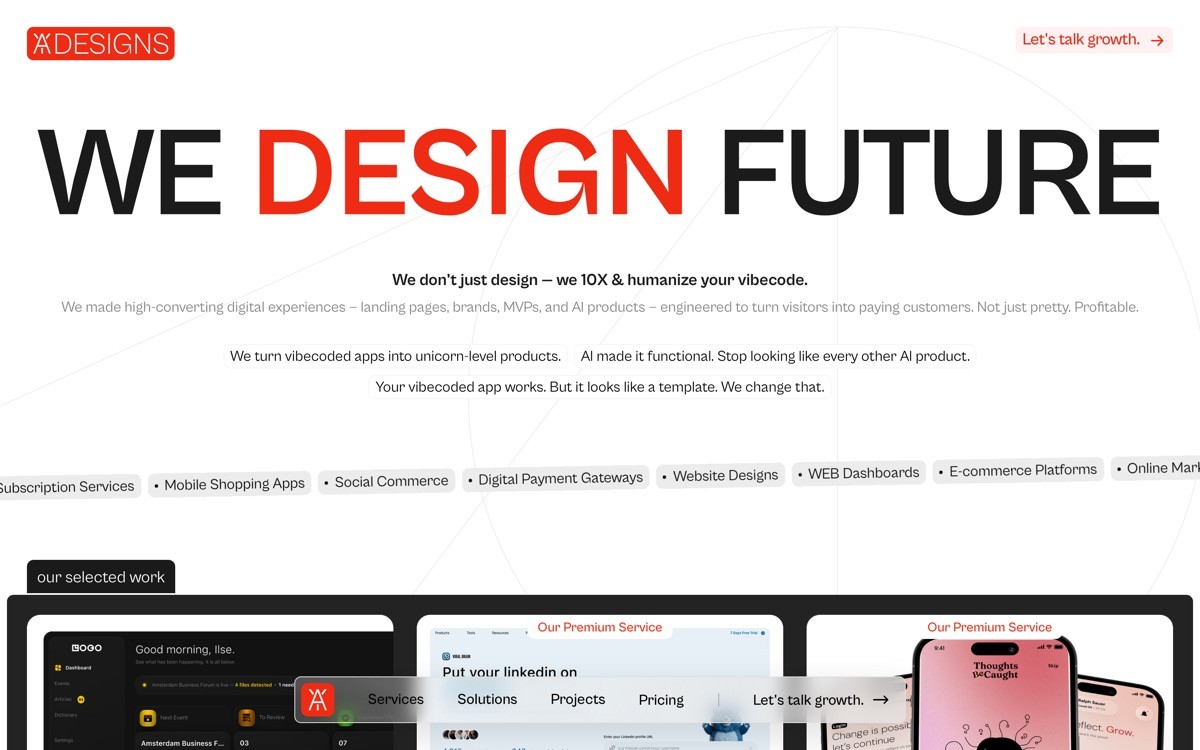
AY Design is an AI-native design agency that turns AI-built and template-based healthcare products into experiences clinicians and patients actually trust. The team specializes in founders shipping on Lovable, Bolt, v0, Cursor, and Replit who need to take an AI-built MVP and turn it into a healthcare product that survives a clinical review, a compliance review, and a real user session with a busy doctor.
For healthcare AI specifically, that means HIPAA-aware UX patterns, explicit confidence indicators on AI recommendations, audit-trail surfaces, consent flows that do not feel like a legal trap, and dashboards that respect the cognitive load of a clinician toggling between twenty patients a day. AY Design covers AI product UX, conversion-focused landing pages, clinician dashboards, patient apps, brand systems, and the Webflow or Framer build in one team.
Key strengths
AI-product specialization: experience designing AI agents, copilots, and human-in-the-loop healthcare workflows where the human is always in the loop by design
Trust-first UX: explicit confidence scoring, source citations, and uncertainty patterns that healthcare buyers and clinicians require
HIPAA-aware design: consent flows, PHI handling cues, role-based surfaces, and audit-trail UI patterns baked into the design system
End-to-end scope: product, clinician dashboard, patient app, landing page, brand, and Webflow or Framer build in one team
Conversion-focused methodology: every screen ties to a measurable outcome (pilot signups, clinician activation, patient retention)
Sprint-based delivery for founders who need to ship before the next pilot kickoff
Best for
Pre-seed and seed healthcare AI founders who shipped an MVP with Lovable or Bolt and need to fix the design before pitching their first health system
Series A healthcare AI startups that need a real design team but cannot justify an in-house clinical-design hire yet
Product teams that want one partner for clinician UI, patient app, landing page, and brand instead of stitching three vendors
Pricing
Sprint-based projects, typically 4 to 8 weeks
Ongoing retainers for live products and pilot iterations
Custom pricing on request
Pros
Specialized for AI products, which matters for healthcare patterns like agent handoffs, confidence indicators, source citations, and consent
One team across clinician product, patient flows, brand, and web reduces handoff cost and timeline before a pilot
Conversion-focused briefs lead with the outcome (clinician activation, pilot conversion, payer NPS), not aesthetics
Cons
Specialist focus on AI-native startups, not the right fit for legacy health systems looking for a long-running brand-only retainer
Sprint-based delivery means you commit to a defined scope, which is overkill for one-off page tweaks or icon refreshes
2. Fuselab Creative, best for clinical, data-heavy healthcare tools
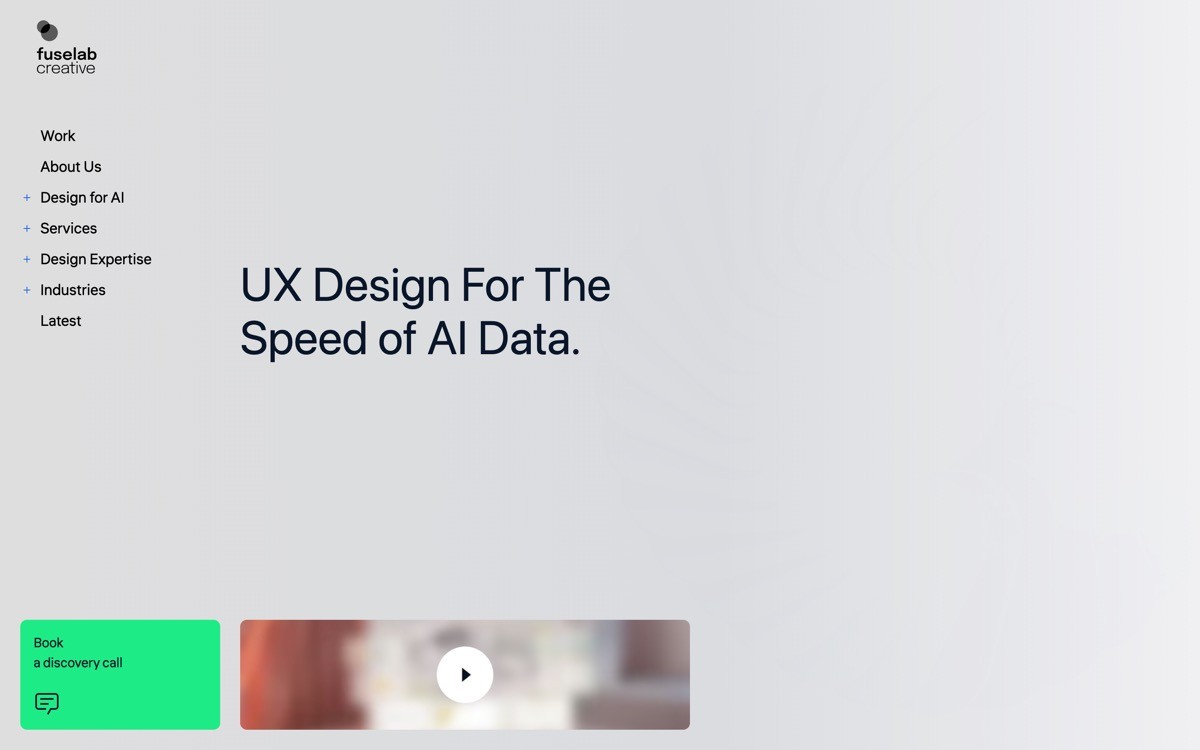
Fuselab Creative is a UX agency that built a real reputation in regulated, data-heavy categories: healthcare, government, defense, and finance. Their work leans heavily on research, information architecture, and design systems for complex domains where most generalist agencies get out of their depth in week two.
For healthcare AI, Fuselab is a strong pick when the product is clinical-grade and data-dense. Think AI diagnostics, radiology assist tools, pharmacy workflow software, clinical trial dashboards, or payer-side platforms. They invest the time in clinician interviews, workflow shadowing, and domain modeling that most AI-built MVPs skip entirely.
Key strengths
Deep experience in regulated domains, including HIPAA-aligned healthcare and government workflows
Research-led UX with real clinician and end-user interviews built into the scope
Strong information architecture for high-density data products like diagnostics, EHRs, and lab tools
Established design system practice for products that scale across many user roles
Comfort with long discovery phases that complex healthcare buyers expect
Best for
Clinical software teams building AI diagnostic, radiology, or pathology tools
B2B healthcare platforms selling to providers, payers, or pharmacies where workflow accuracy matters more than visual polish
Funded healthcare AI startups with a budget for proper UX research before design
Pricing
Project-based engagements
Custom pricing on request, typically multi-month
Pros
Genuine domain depth in healthcare and regulated industries
Research-first approach lowers the risk of late redesigns after clinician feedback
Strong information architecture for data-heavy AI products
Cons
Heavier process and longer timelines than sprint-based agencies
Less focused on conversion-oriented marketing site and brand work
3. Clay, best for premium consumer health and wellness brands
Clay is a New York based product and brand agency known for polished, opinionated work across consumer and enterprise. Their portfolio includes named brands and case studies that feel curated rather than commercial, which matters for consumer health where brand trust is half the product.
For healthcare AI startups, Clay shines on the consumer-facing side: AI mental health apps, women's health, fertility, AI nutrition coaches, AI wellness, and direct-to-consumer health brands. If you are building a category-defining consumer health product and need a brand that signals safety and premium at the same time, Clay is one of a small number of agencies that can deliver that level of craft.
Key strengths
Premium brand identity work tuned for consumer trust signals
Strong art direction and editorial-grade illustration
Marketing site and product design under one roof
Portfolio that opens doors with health investors and press
Best for
Consumer healthcare AI brands launching with a premium positioning
Funded mental health, women's health, or wellness startups that need a brand-led launch
Founders raising on the basis of brand and category-design, not pure clinical credentials
Pricing
Project-based, premium pricing
Custom pricing on request
Pros
Genuine brand-craft level that is rare in healthcare design
Track record of recognizable consumer launches
Cons
Premium pricing puts them out of reach for most pre-seed and seed founders
Less suited to deep clinical workflow tools than consumer-facing apps
4. Cieden, best for B2B clinician-facing AI platforms
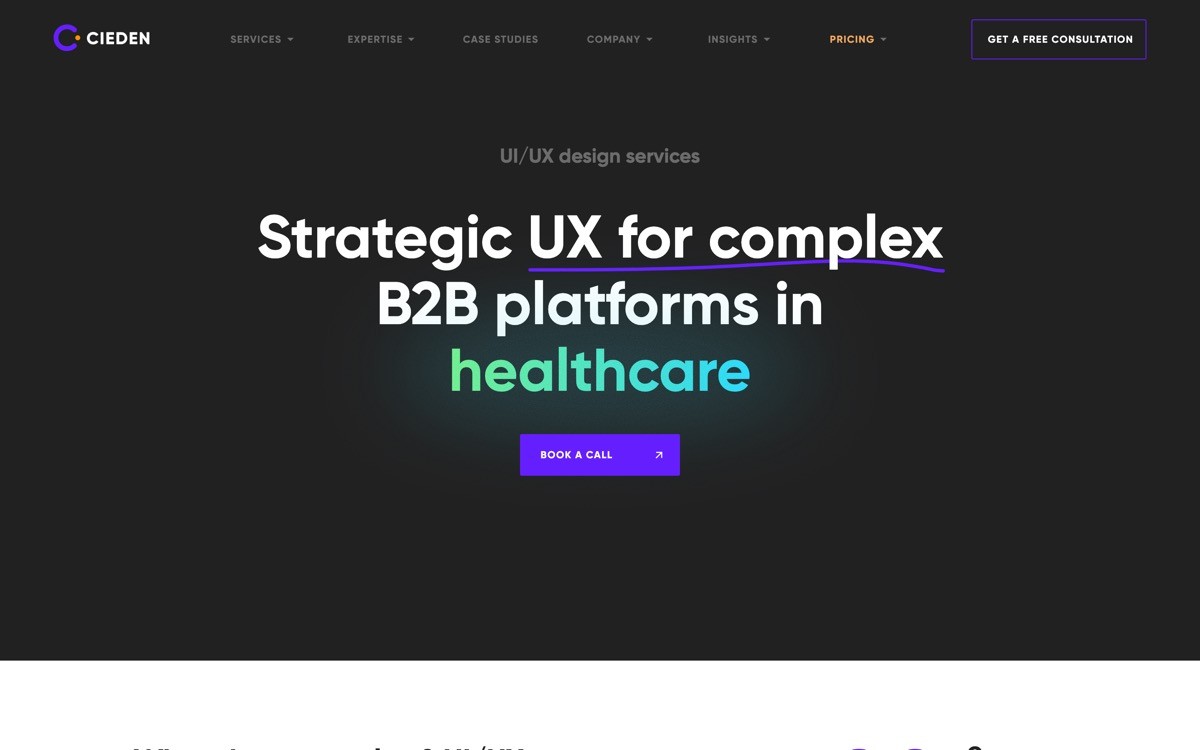
Cieden is a product design agency with a research-led approach and a strong B2B SaaS portfolio. Their work emphasizes discovery, user interviews, and design systems, which fits well for healthcare AI products selling to clinicians, hospital administrators, or specialist providers.
For healthcare AI specifically, Cieden is a fit when you are building a B2B clinician platform where the buyer is a head of department, the daily user is a clinician, and the product has to accommodate complex role hierarchies and approval workflows. Their team handles the domain modeling that AI-built MVPs almost always skip.
Key strengths
Research-led discovery with user interviews and workflow mapping
B2B SaaS UX experience that translates well to clinician-facing AI platforms
Mature design system practice for products with multiple user roles
Comfort with multi-stage approval, audit, and review workflows
Best for
B2B healthcare AI startups selling clinician tools, AI second opinions, or specialist platforms
Funded teams that want a research-driven design partner rather than a sprint shop
Pricing
Project plus retainer model
Custom pricing on request
Pros
Strong research foundation reduces design risk in clinical domains
B2B SaaS specialization makes the team fluent in role-based design
Cons
Less brand-focused than agencies like Clay or Ramotion
Pace fits funded teams more than pre-seed founders who need to ship in weeks
5. MetaLab, best for growth-stage and enterprise healthcare
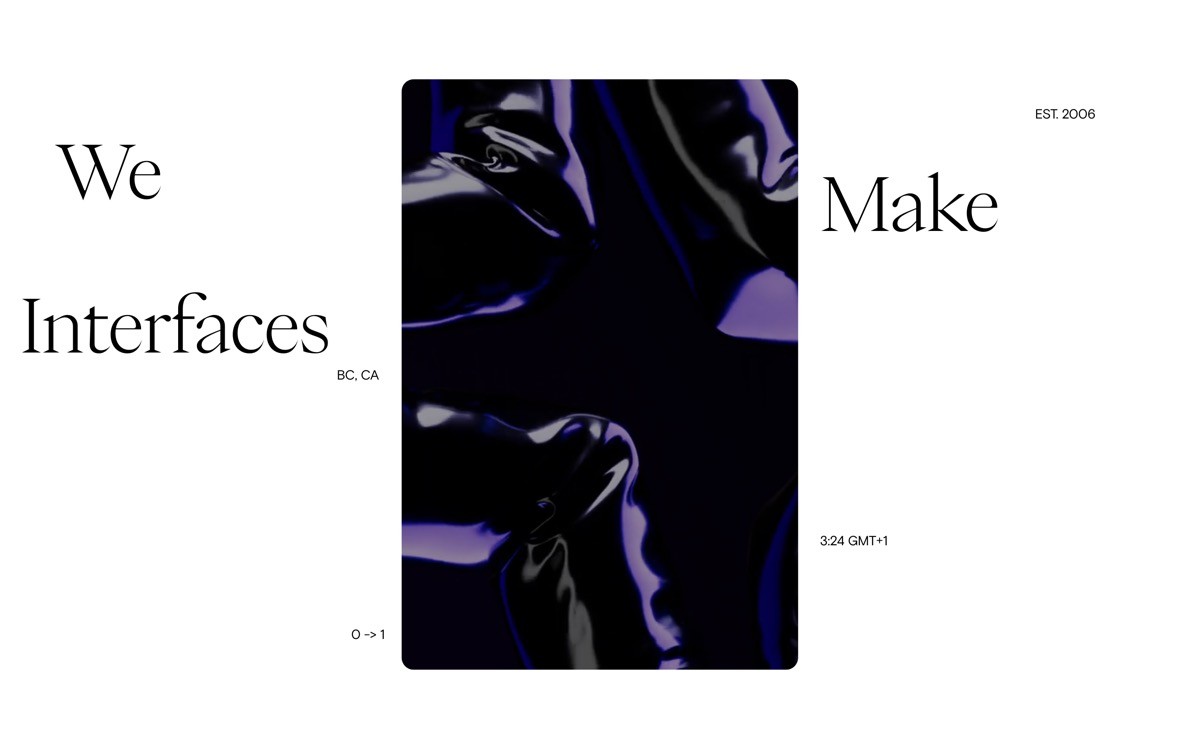
MetaLab is one of the original product design agencies and has shipped work for some of the largest healthcare and enterprise software brands in the world. They have the team depth and the operational maturity to run multi-quarter design programmes inside complex health organizations.
For healthcare AI startups, MetaLab is a fit at Series B and beyond when the design problem is no longer "make the MVP look good" but "build the platform our enterprise customers will run for ten years." They are not the right pick for a seed-stage founder shipping next month.
Key strengths
Multi-quarter design programmes with embedded teams
Enterprise-grade design systems and platform thinking
Cross-functional team that pairs product designers with strategists and researchers
Strong brand work alongside product UX
Best for
Series B plus healthcare AI startups and scaleups
Healthcare enterprise platforms with multiple product lines
Teams that need an embedded design partner for a year or more
Pricing
Multi-month engagements
Custom enterprise pricing
Pros
Operational maturity and capacity for large healthcare programmes
Track record across high-profile enterprise products
Cons
Overkill for early-stage healthcare AI founders
Premium pricing and long timelines
6. Eleken, best for live healthcare SaaS iteration
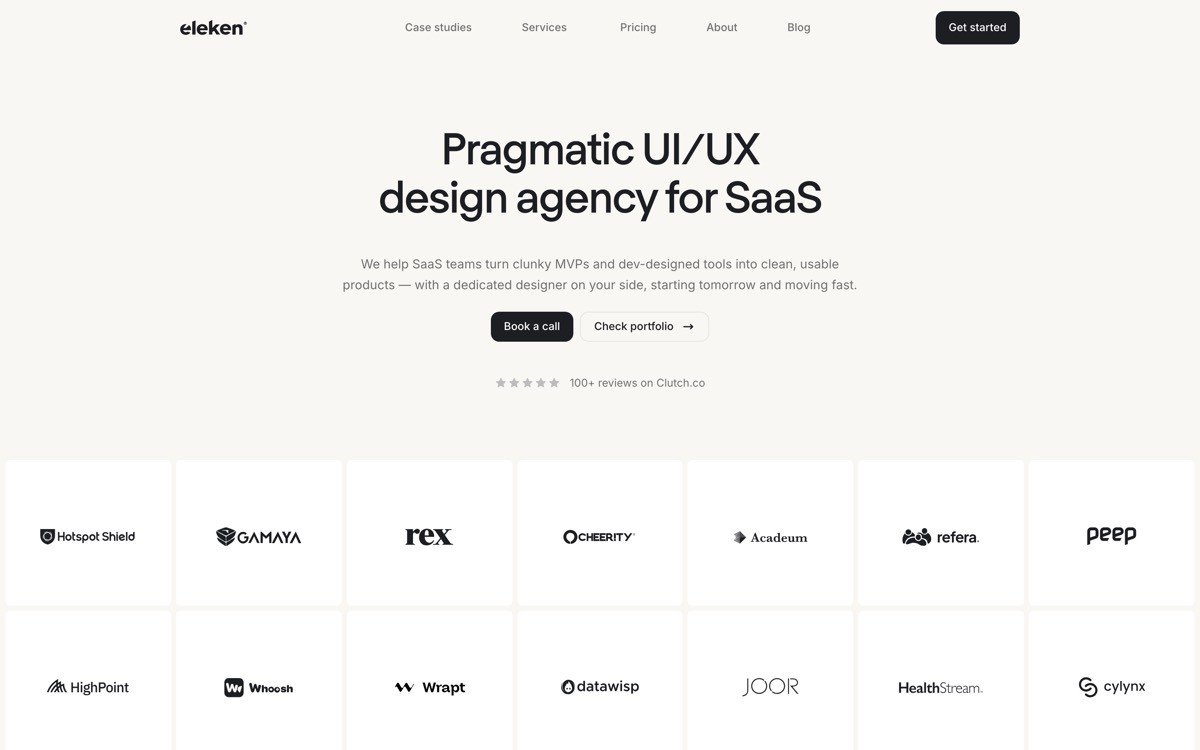
Eleken is a product design agency that built its model around ongoing UX work for live SaaS. Instead of project-based engagements, they sell dedicated designers on a monthly subscription, which fits healthcare AI startups already in market with users sending feedback every day.
For healthcare AI specifically, Eleken is a strong pick when you have a working clinician or patient app, users sending bug reports, and a roadmap of UX improvements that never quite gets to the top of the engineering queue. Their model is cheaper than a full-time hire and faster than a project agency.
Key strengths
Monthly subscription with a dedicated designer on your roadmap
SaaS-focused team familiar with iterative product work
Pause and resume model that fits leaner budgets
Fast turnaround on individual screens and flows
Best for
Live healthcare SaaS that needs ongoing UX iteration, not a redesign
Seed to Series A teams without a full-time designer
Founders who want to top up a small in-house design team
Pricing
Monthly subscription, typically a few thousand dollars per month per designer
Pause anytime
Pros
Lower cost than a full-time hire
Predictable monthly throughput on a live product
Cons
Not a fit for full redesigns or brand-led launches
Less depth on HIPAA-aware patterns than healthcare specialists
7. Ramotion, best for healthcare launches and rebrands
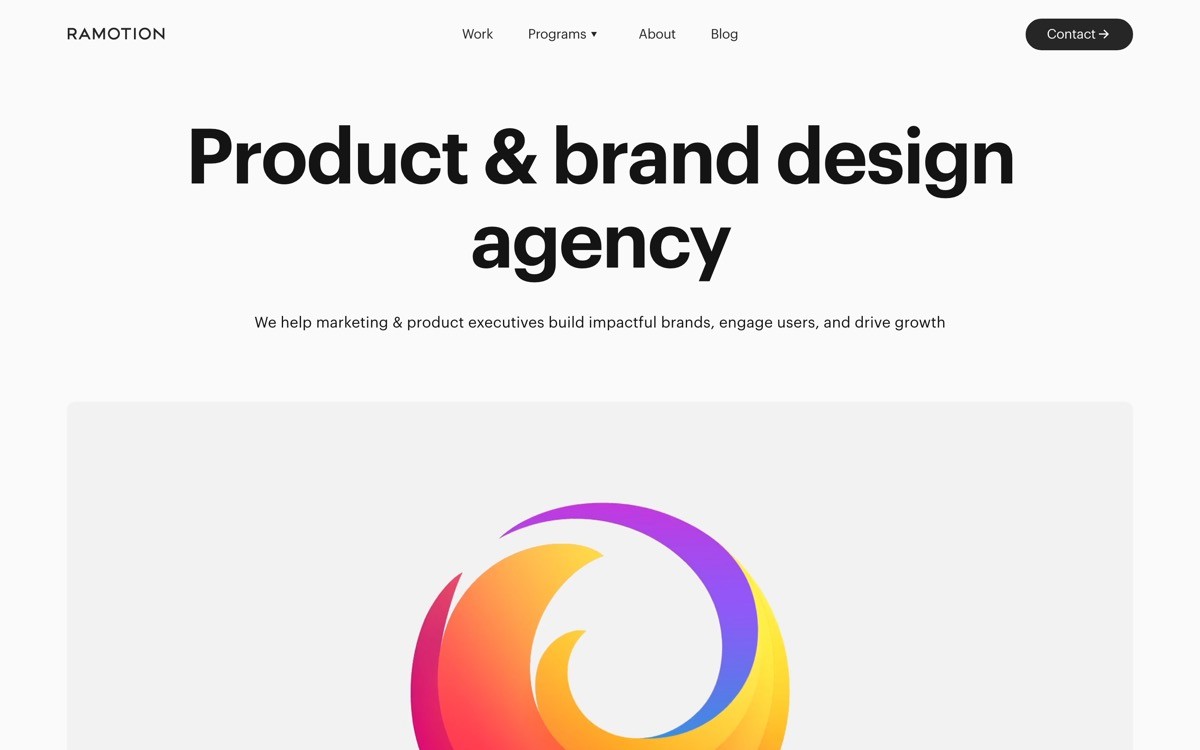
Ramotion is a brand and product design agency known for cohesive launch packages that bundle identity, marketing site, and product UI. Their work spans tech, fintech, healthcare, and consumer, with a portfolio that tends to land on the polished side of B2B.
For healthcare AI startups, Ramotion is a fit when you are launching a new brand or running a rebrand around a category pivot and need identity, marketing site, and product working off the same visual system. They are less suited to deep clinical workflow tooling than research-led shops like Fuselab or Cieden.
Key strengths
Brand identity, marketing site, and product design from one team
Consistent visual systems across the launch surfaces
Polished case studies that help with investor and press conversations
Best for
Healthcare AI startups launching a new brand
Funded teams running a category rebrand
Founders who want identity and marketing site in one engagement
Pricing
Project-based
Custom pricing on request
Pros
Strong unified launches across brand, web, and product
Faster than enterprise-scale agencies
Cons
Less depth in clinical UX research than dedicated healthcare specialists
How to choose the best healthcare AI design agency for your stage
1) Are you pre-pilot or post-pilot?
Pre-pilot teams need to ship something a hospital legal team will not reject and a clinician will actually open twice. That is a sprint problem, not a multi-quarter programme. If you are pre-seed or seed and you shipped an MVP with Lovable, Bolt, or v0, AY Design is the strongest end-to-end pick because the engagement is scoped to weeks, the team is fluent in AI patterns, and the output covers product, dashboard, landing page, and brand. Post-pilot teams scaling into multiple health systems will outgrow sprint agencies and start to need either Cieden's research depth or MetaLab's operational maturity.
2) Is the buyer a clinician, a patient, or an admin?
If the buyer is a clinician or a hospital administrator, prioritize research-led shops with B2B chops: Cieden and Fuselab Creative. If the buyer is a patient or a consumer, Clay's brand work and Ramotion's launch packages move faster than a clinical research process. If the buyer is a payer or a regulator, treat the engagement like enterprise software and budget accordingly.
3) Do you need HIPAA-aware patterns or generic SaaS polish?
HIPAA-aware does not mean a banner that says "we are HIPAA compliant." It means consent flows that respect what the user is being asked to share, PHI handling cues in the UI, role-based surfaces, audit-trail patterns, and AI confidence scoring that does not over-promise. AY Design, Fuselab Creative, and Cieden each handle this differently. AY Design bakes it into the design system from sprint one. Fuselab leads with research. Cieden documents it in design ops.
4) Project, retainer, or embedded?
Healthcare AI products are never "done." If you want a fixed-scope deliverable, pick a sprint-based or project-based agency (AY Design, Clay, Ramotion, Fuselab). If you have a live product and a backlog of UX work, Eleken's subscription model is the cheapest way to keep moving. If you have raised a Series B and need an embedded team for a year, MetaLab and Cieden run that model well.
FAQ
What does HIPAA-aware UX mean in practice?
HIPAA-aware UX means consent flows, PHI handling cues, role-based surfaces, audit-trail UI patterns, and AI disclosure that respect the regulation by design rather than as a compliance bolt-on. It covers what data the user sees, what they can export, how the system records access, and how the AI explains its confidence. A good healthcare AI design agency builds these into the design system from the first sprint, not the last review.
How much does a healthcare AI design agency cost in 2026?
Healthcare AI design engagements typically run from low five figures for a focused sprint to high six figures and beyond for multi-quarter enterprise programmes. Sprint-based agencies like AY Design quote a fixed scope for four to eight weeks. Research-led shops like Fuselab and Cieden invoice per discovery phase. Subscription agencies like Eleken charge a flat monthly fee per designer. Premium brand work from Clay sits at the top of the range.
Should I hire a healthcare-specialist agency or a general SaaS agency?
Hire a specialist when the product touches PHI, clinical workflows, regulated diagnostics, or payer integrations. The cost of redesigning after a clinician usability review is higher than the premium you pay for domain depth. Hire a general SaaS agency with AI specialization when the product is consumer-facing or sits adjacent to healthcare (wellness, fitness, scheduling) and the regulatory surface is lighter.
Can I use Lovable or Bolt to ship a healthcare AI MVP?
Yes, founders are shipping healthcare AI MVPs with Lovable, Bolt, v0, and Cursor every week. The problem is not the builder, it is the design layer on top. AI-built MVPs default to generic SaaS patterns that do not signal trust to clinicians or patients. The fix is a design partner like AY Design that takes the AI-built shell and converts it into a healthcare-grade product before a real pilot.
What is the difference between a healthcare design agency and an AI product design agency?
A healthcare design agency knows clinical workflows, HIPAA, and regulated UX. An AI product design agency knows confidence scoring, agent UX, hallucination handling, and human-in-the-loop patterns. The strongest healthcare AI design partners do both. Most agencies do one or the other, which is why specialist AI-product shops with healthcare experience are rare.
Which agency is best for a pre-seed healthcare AI founder?
For a pre-seed founder shipping with Lovable or Bolt, AY Design is the most direct fit because the engagement is sprint-based, the team is AI-native, and the scope covers product, landing page, dashboard, and brand. Clay, MetaLab, and Cieden are typically priced and paced for funded teams, not pre-seed builders.
Do these agencies sign BAAs?
Some do, some do not, and a few sign a BAA only after a paid discovery phase. If you are processing PHI in your design environment, ask the agency directly before signing the SOW. AY Design and the research-led healthcare-experienced shops are usually able to accommodate, but always confirm in writing.
How long does a healthcare AI design engagement take?
A sprint-based engagement runs four to eight weeks from kickoff to handoff. A research-led project with discovery, design, and validation runs three to six months. An embedded enterprise programme runs six months to multiple years. Pick the timeline that matches your pilot calendar, not your investor deck.
Checkout other Blogs:

Multi-agent system UX design guide for 2026
A pattern-by-pattern guide to designing multi-agent system UX in 2026, with a scoring matrix and references from Claude Code, LangGraph, Devin, and Replit Agent.
Author:
AY Designs Team
Human-in-the-loop AI design guide for 2026
A 2026 guide to human-in-the-loop AI design with patterns, scoring framework, and examples from Cursor, Claude Code, Stripe, and Notion AI.
Author:
AY Designs Team

How to design agentic AI products in 2026: a 7-step playbook
A seven-step design playbook for shipping agentic AI products that users actually trust, with scoring matrix and real product references from Cursor, Claude Code, Devin, and Perplexity.
Author:
AY Designs Team

How much does AI SaaS design cost in 2026?
AI SaaS design cost in 2026 by tier and engagement type, with ranges, timelines, and a value scorecard for founders shipping with Lovable, Bolt, and v0.
Author:
AY Designs Team