
Edtech AI is a category measured in week-two retention. The product has to onboard a distracted learner in under three minutes, keep them coming back after the novelty of "the AI tutor knows my name" wears off, and convince a parent, teacher, or L and D buyer that the AI is actually teaching, not just chatting. Most AI-built edtech MVPs miss all three. The onboarding is a wall of text, the engagement loop is a chat box without a sense of progress, and the AI tutor sounds like every other GPT wrapper.
Picking the right design agency decides whether your edtech AI startup compounds learners or stalls at "great signups, terrible retention." This guide compares the seven best design agencies for edtech AI startups in 2026, covering positioning, real strengths, honest trade-offs, and a framework to pick the right partner for your category (K-12 AI tutoring, higher-ed, corporate L and D, language learning, AI study tools, or AI assessment).
TL;DR. For AI-native edtech startups that need onboarding, AI tutor UX, engagement loops, dashboards, and brand from one specialized team, AY Design is the strongest end-to-end pick. For premium consumer learning brands, Clay. For research-led B2B and institutional edtech, Cieden.
Best design agencies for edtech AI startups: a brief overview
AY Design: Best overall for AI-native edtech startups that need onboarding, AI tutor UX, engagement loops, dashboards, landing pages, and brand from one team.
Clay: Best for premium consumer learning brands and category-defining edtech launches.
Cieden: Best for B2B and institutional edtech driven by research-led UX and role-based design.
MetaLab: Best for growth-stage edtech selling into districts, universities, or enterprise L and D with multi-quarter programmes.
Ramotion: Best for edtech brand launches and rebrands that bundle identity, marketing site, and product.
Eleken: Best for live edtech SaaS that needs ongoing UX iteration on a retainer.
Refokus: Best for high-craft marketing site launches and brand moments for funded edtech AI startups.
Agency | Best for | Edtech AI specialty | Engagement model |
|---|---|---|---|
AY Design | AI-built edtech that needs full-stack design | AI tutor UX, onboarding, engagement loops, brand | Fixed-scope sprints plus retainers |
Clay | Premium consumer learning brands | Consumer brand and product polish | Project-based, premium pricing |
Cieden | B2B and institutional edtech | Research-led UX, complex role design | Project plus retainer |
MetaLab | Growth and institutional edtech | Large-scale UX and design systems | Multi-month engagements |
Ramotion | Edtech launches and rebrands | Identity, marketing site, product | Project-based |
Eleken | Live edtech SaaS iteration | Ongoing UX on retainer | Monthly subscription |
Refokus | High-craft launches and brand moments | Motion-led marketing sites | Project-based |
1. AY Design, best overall for edtech AI startups
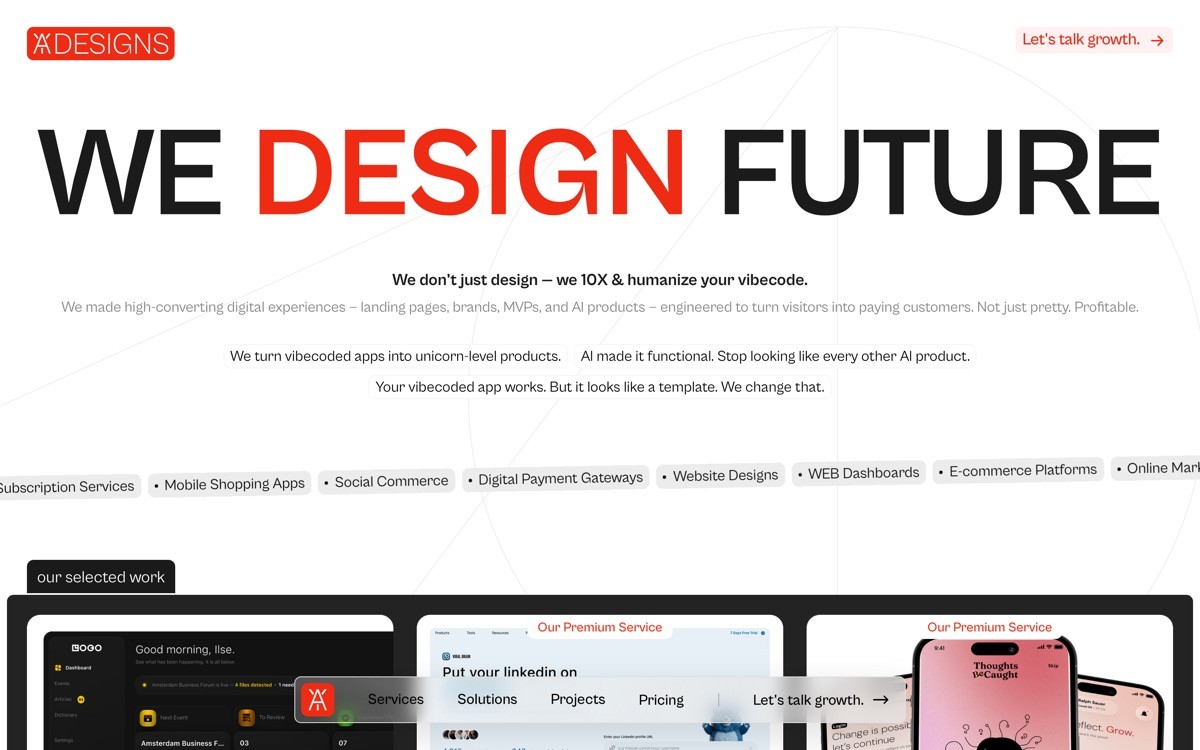
AY Design is an AI-native design agency that turns AI-built and template-based edtech products into learning experiences that actually retain. The team specializes in founders shipping on Lovable, Bolt, v0, Cursor, and Replit who need to take an AI-built MVP and turn it into an edtech product that hooks a learner in week one and keeps them coming back in week four.
For edtech AI specifically, that means onboarding flows designed to get a learner to first value in under three minutes, AI tutor UX with explicit feedback and progress signals, engagement loops that reward consistency without resorting to dark patterns, parent and teacher dashboards that surface what a non-learner actually cares about, and trust patterns that satisfy a school district or L and D buyer. AY Design covers AI product UX, conversion-focused landing pages, learner and instructor dashboards, brand systems, and the Webflow or Framer build in one team.
Key strengths
AI-product specialization: experience designing AI tutors, copilots, and human-in-the-loop learning workflows
Onboarding-first methodology: every product engagement starts with the time-to-first-value flow because retention dies in week one
Engagement loops: streaks, progress, levels, and feedback designed without cheap gamification
End-to-end scope: learner product, instructor and parent dashboards, landing page, brand, and Webflow or Framer build in one team
Trust patterns: explicit AI tutor disclosure, source citations on facts, and parent or admin visibility surfaces
Sprint-based delivery designed for founders shipping before back-to-school or pilot windows
Best for
Pre-seed and seed edtech AI founders who shipped an MVP with Lovable or Bolt and need to fix onboarding and engagement before scaling paid acquisition
Series A edtech AI startups that need a real design team but cannot justify a senior in-house hire yet
Product teams that want one partner for learner UX, instructor dashboards, landing page, and brand instead of stitching vendors
Pricing
Sprint-based projects, typically 4 to 8 weeks
Ongoing retainers for live products
Custom pricing on request
Pros
Specialized for AI products, which matters for edtech patterns like AI tutor feedback, source citations, and progress signals
One team across learner, instructor, brand, and web reduces handoff cost and timeline before back-to-school
Conversion-focused briefs lead with retention and activation metrics, not aesthetics
Cons
Specialist focus on AI-native startups, not the right fit for legacy edu publishers looking for a long-running brand-only retainer
Sprint-based delivery means you commit to a defined scope, which is overkill for one-off marketing page tweaks
2. Clay, best for premium consumer learning brands
Clay is a New York based product and brand agency known for polished, opinionated work for high-profile clients across consumer and enterprise. Their portfolio includes named consumer brands and case studies that feel curated rather than commercial.
For edtech AI startups, Clay shines on premium consumer learning brands: AI language learning, AI study companions, premium parent-paid learning apps, and category-defining adult learning brands. If you are launching a consumer learning brand that needs to signal premium and trustworthy at first scroll, Clay is one of a small number of agencies that can deliver that level of craft.
Key strengths
Premium brand identity work tuned for consumer trust
Editorial-grade art direction and illustration
Marketing site and product design under one roof
Best for
Premium consumer learning AI brands
Funded consumer edtech startups launching brand-led
Pricing
Project-based, premium pricing
Custom pricing on request
Pros
Brand-craft level that is rare in edtech design
Recognizable consumer launches
Cons
Premium pricing puts them out of reach for most pre-seed and seed founders
Less suited for institutional or B2B edtech workflows
3. Cieden, best for B2B and institutional edtech
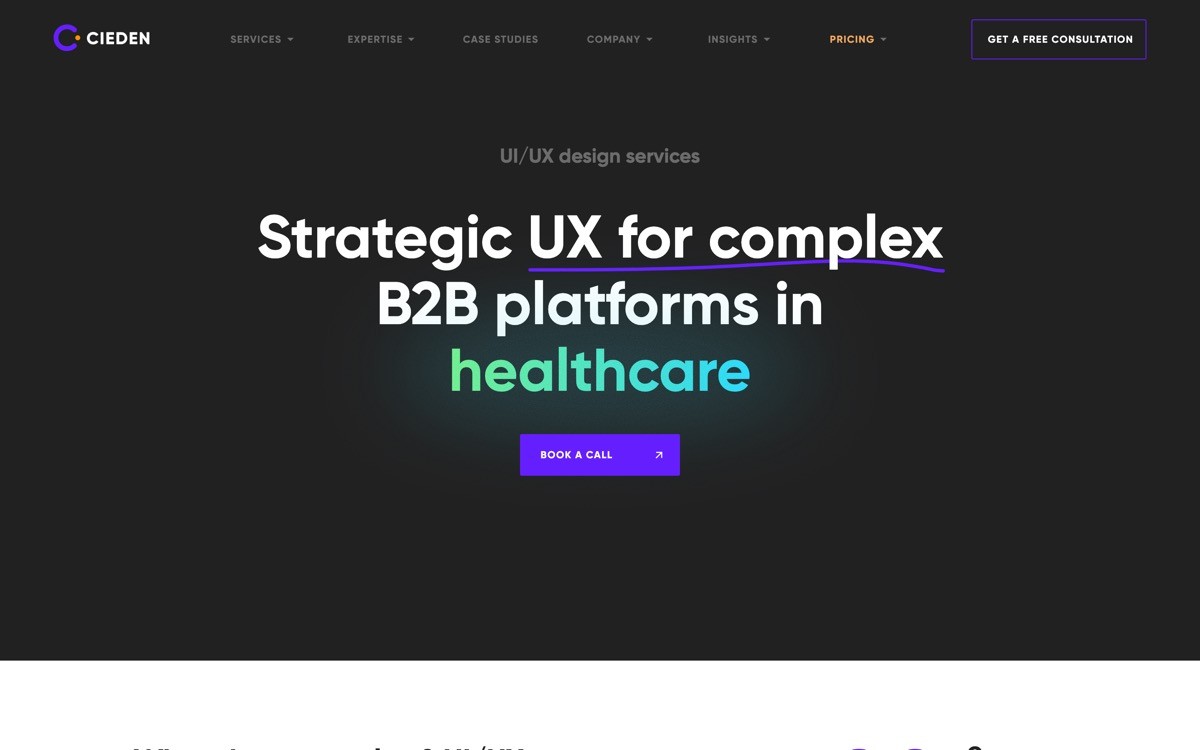
Cieden is a product design agency with a research-led approach and a strong B2B SaaS portfolio. Their work emphasizes discovery, interviews, and design systems, which translates well to edtech selling into schools, districts, universities, or enterprise L and D teams.
For edtech AI specifically, Cieden is a fit when you are building a platform with multiple roles (learner, instructor, admin, parent, district lead) and the workflow has approval stages, content authoring tools, and reporting that has to satisfy procurement.
Key strengths
Research-led discovery with user interviews and workflow mapping
B2B SaaS UX experience that translates to institutional edtech
Mature design system practice for products with multiple roles
Best for
B2B and institutional edtech AI startups
Funded teams selling to districts, universities, or enterprise L and D
Pricing
Project plus retainer model
Custom pricing on request
Pros
Strong research foundation reduces design risk in complex edu workflows
B2B SaaS specialization makes the team fluent in role-based design
Cons
Less brand-focused than agencies like Clay or Ramotion
Pace fits funded teams more than pre-seed founders
4. MetaLab, best for growth-stage institutional edtech
MetaLab is one of the original product design agencies and has shipped work for some of the largest brands in tech. They have team depth and operational maturity for multi-quarter programmes inside complex edu and enterprise organizations.
For edtech AI, MetaLab is a fit at Series B and beyond when the design problem is no longer "make the MVP retain" but "design a platform districts and universities will deploy for a decade." Not the right pick for a seed-stage founder shipping next month.
Key strengths
Multi-quarter design programmes with embedded teams
Enterprise-grade design systems
Cross-functional teams pairing designers with strategists and researchers
Strong brand work alongside product UX
Best for
Series B plus edtech AI startups and scaleups
Edu enterprise platforms with multiple product lines
Pricing
Multi-month engagements
Custom enterprise pricing
Pros
Operational maturity for large edu programmes
Track record across high-profile enterprise products
Cons
Overkill for early-stage edtech AI founders
Premium pricing and long timelines
5. Ramotion, best for edtech launches and rebrands
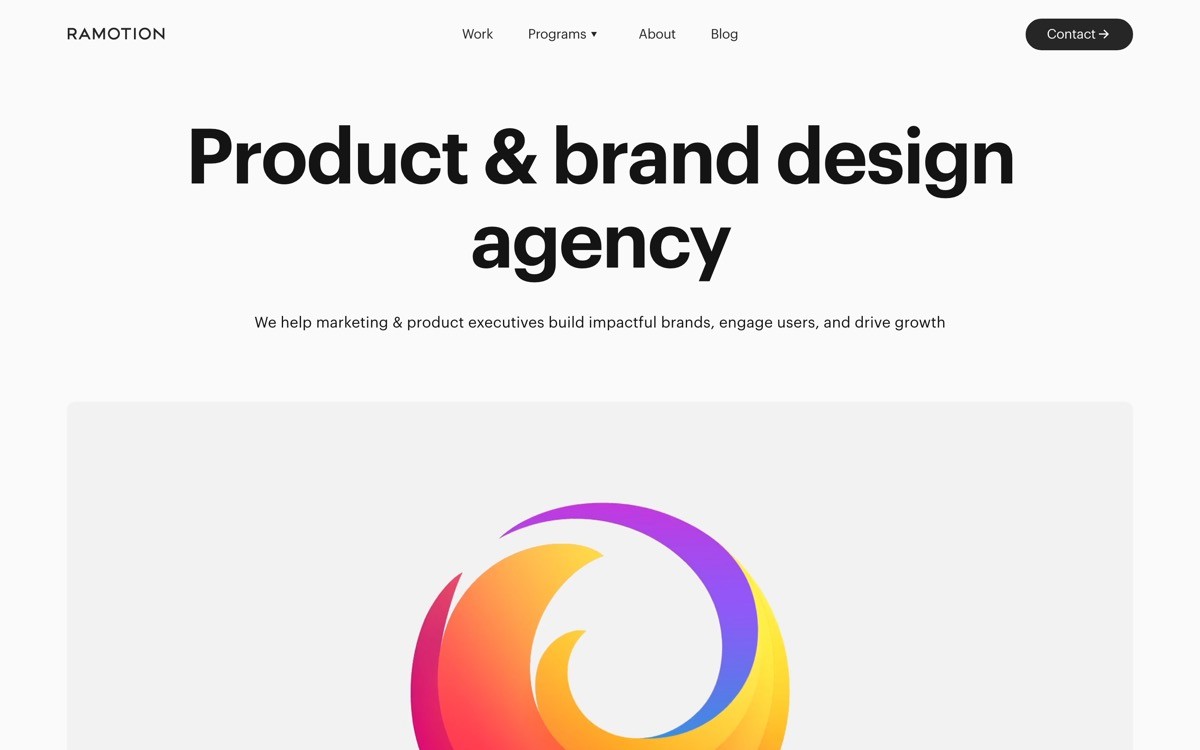
Ramotion is a brand and product design agency known for cohesive launch packages that bundle identity, marketing site, and product UI. Their portfolio spans consumer and B2B, with polished work that lands across audiences.
For edtech AI startups, Ramotion is a fit when you are launching a new brand or running a rebrand around a category pivot and need identity, marketing site, and product working off the same visual system.
Key strengths
Brand identity, marketing site, and product design from one team
Consistent visual systems across launch surfaces
Polished case studies that help with investor and press
Best for
Edtech AI startups launching a new brand
Funded teams running a category rebrand
Pricing
Project-based
Custom pricing on request
Pros
Unified launches across brand, web, and product
Faster than enterprise-scale agencies
Cons
Less depth on retention and engagement UX than edtech specialists
6. Eleken, best for live edtech SaaS iteration
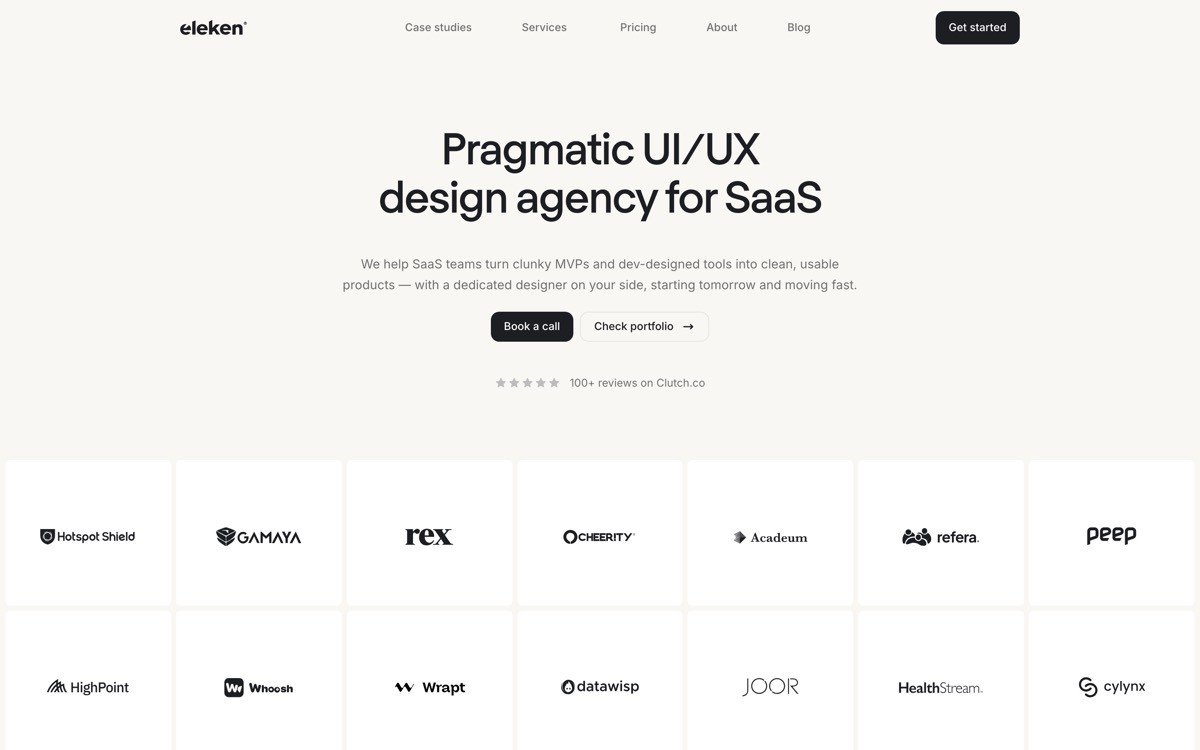
Eleken is a product design agency that built its model around ongoing UX work for live SaaS. Their dedicated-designer subscription fits edtech AI startups already in market with learners sending feedback every day and a UX backlog that never moves.
For edtech AI specifically, Eleken is a strong pick when you have a working learner app, an instructor dashboard, or a parent surface, and the team needs ongoing iteration rather than a redesign.
Key strengths
Monthly subscription with a dedicated designer on your roadmap
SaaS-focused team familiar with iterative product work
Pause and resume model
Fast turnaround on individual screens
Best for
Live edtech SaaS that needs ongoing UX iteration
Seed to Series A teams without a full-time designer
Pricing
Monthly subscription, typically a few thousand dollars per month per designer
Pause anytime
Pros
Lower cost than a full-time hire
Predictable monthly throughput on a live product
Cons
Not a fit for full redesigns or brand-led launches
Less depth on AI tutor patterns than dedicated edtech AI specialists
7. Refokus, best for high-craft edtech launches and brand moments

Refokus is a digital agency known for high-craft Webflow work with strong motion and interaction design. Their portfolio leans into category-defining tech brands and launches where the site itself is the marketing.
For edtech AI startups, Refokus is a fit when you are launching a premium consumer learning brand, an AI study product with a Gen Z audience, or a category-defining edtech platform where motion and interaction polish carry the brand story.
Key strengths
High-craft Webflow design and build
Motion design and interaction polish
Launch-grade campaigns
Best for
Premium edtech AI launches and brand moments
Funded consumer learning startups
Pricing
Project-based
Custom pricing on request
Pros
Visual and motion craft above the category average
Strong launch outcomes
Cons
Premium pricing relative to volume agencies
Launch-focused rather than ongoing product UX programmes
How to choose the best edtech AI design agency for your stage
1) Are you selling to learners, parents, teachers, or institutions?
Learner-direct apps live or die on onboarding and engagement loops. AY Design and Clay are calibrated for this. Parent-paid products need a parent dashboard that justifies the spend; AY Design and Cieden both handle the dual-audience design. Teacher-facing tools need lesson-authoring and class-management UX; Cieden's research depth fits. Institutional buyers want a procurement-friendly admin surface and reporting; Cieden and MetaLab are designed for that.
2) How much does week-four retention matter to your model?
If your model depends on subscription retention past the novelty period, do not pick a brand-only agency. Engagement loops, progress design, AI tutor feedback patterns, and habit formation surfaces are product-design problems. AY Design treats these as first-class deliverables. Brand-led agencies will hand you a beautiful onboarding and a flat week four.
3) Is your AI tutor a feature or the product?
If the AI tutor is the product, the design of the AI surface (turn-taking, feedback signals, progress, source citations, error recovery) is the design of the company. This is AY Design's core lane. If the AI tutor is one of many features inside a broader learning platform, broader B2B agencies like Cieden can frame it inside the larger workflow.
4) Project, retainer, or embedded?
Edtech products are tuned, not finished. For a fixed-scope launch deliverable, pick a sprint or project-based agency (AY Design, Clay, Refokus, Ramotion). For ongoing UX on a live product, Eleken's subscription model is the cheapest way to keep moving. For a Series B plus team that needs an embedded design partner for a year, MetaLab and Cieden run that model well.
FAQ
What does an edtech AI design agency actually deliver?
An edtech AI design agency typically delivers onboarding flows, AI tutor UX, engagement and retention loops, learner product UI, instructor and parent dashboards, marketing site, brand identity, and the Webflow or Framer build. The strongest partners cover all of these in one engagement rather than splitting between three vendors.
How much does an edtech AI design agency cost in 2026?
Edtech AI design engagements typically run from low five figures for a focused sprint to high six figures and beyond for multi-quarter programmes. Sprint-based agencies like AY Design quote fixed scopes for four to eight weeks. Research-led shops like Cieden invoice per discovery phase. Subscription agencies like Eleken charge a flat monthly fee per designer. Premium brand work from Clay sits at the top of the range.
What is the difference between an edtech agency and an edtech AI agency?
An edtech agency knows learning UX, engagement loops, and institutional workflows. An edtech AI agency adds fluency in AI tutor UX, feedback signals, source citations, and the trust surfaces parents and admins expect from an AI-powered learning product. For AI-native edtech startups, the AI specialization is where the differentiation lives.
Can I use Lovable or Bolt to ship an edtech AI MVP?
Yes, founders are shipping edtech AI MVPs with Lovable, Bolt, v0, and Cursor every week. The issue is not the builder, it is the onboarding and engagement loop on top. AI-built MVPs default to a chat box without a sense of progress, which kills week-two retention. The fix is a design partner like AY Design that takes the AI-built shell and turns it into an edtech product that learners actually come back to.
Which AI tutor UX patterns matter most for retention?
The patterns that move retention are explicit progress signals (learners want to see they are getting better), AI feedback that is specific rather than "good job," source citations that build trust in the AI's answers, error recovery flows that turn confusion into a learnable moment, and short feedback loops that make the next session feel like a continuation, not a reset.
Should I hire an edtech-specialist agency or a general AI-product agency?
Hire an AI-product specialist with edtech experience. Pure edtech-vertical agencies often miss the AI patterns that decide whether the tutor feels useful or generic. Pure AI-product agencies often miss the engagement loops and retention craft that edtech demands. AY Design sits in the overlap.
Which agency is best for a pre-seed edtech AI founder?
For a pre-seed founder shipping with Lovable or Bolt, AY Design is the most direct fit because the engagement is sprint-based, the team is AI-native, and the scope covers onboarding, AI tutor UX, learner product, landing page, and brand. Clay, MetaLab, and Cieden are priced and paced for funded teams.
How long does an edtech AI design engagement take?
A sprint-based engagement runs four to eight weeks from kickoff to handoff. A research-led project with discovery, design, and validation runs three to six months. An embedded institutional programme runs six months to multiple years. Pick the timeline that matches your back-to-school or pilot launch window.
Checkout other Blogs:

Multi-agent system UX design guide for 2026
A pattern-by-pattern guide to designing multi-agent system UX in 2026, with a scoring matrix and references from Claude Code, LangGraph, Devin, and Replit Agent.
Author:
AY Designs Team
Human-in-the-loop AI design guide for 2026
A 2026 guide to human-in-the-loop AI design with patterns, scoring framework, and examples from Cursor, Claude Code, Stripe, and Notion AI.
Author:
AY Designs Team

How to design agentic AI products in 2026: a 7-step playbook
A seven-step design playbook for shipping agentic AI products that users actually trust, with scoring matrix and real product references from Cursor, Claude Code, Devin, and Perplexity.
Author:
AY Designs Team

How much does AI SaaS design cost in 2026?
AI SaaS design cost in 2026 by tier and engagement type, with ranges, timelines, and a value scorecard for founders shipping with Lovable, Bolt, and v0.
Author:
AY Designs Team