
Ecommerce AI is a category measured in conversion points. The product has to load fast on a mobile network in a coffee shop, surface the right product before the user gets bored, and route the buyer to a checkout that does not bleed at the payment step. Most AI-built ecommerce MVPs miss all three. The recommendation engine is impressive in the demo, the storefront looks like every other Lovable template, and the checkout was bolted on the day before launch.
Picking the right design agency decides whether your ecommerce AI startup compounds revenue or stalls at "great traffic, terrible conversion." This guide compares the seven best design agencies for ecommerce AI startups in 2026, covering positioning, real strengths, honest trade-offs, and a framework to pick the right partner for your category (DTC AI brand, AI shopping copilot, AI personalization platform, B2B commerce, AI-driven marketplace, or AI merchandising tool).
TL;DR. For AI-native ecommerce startups that need storefront, AI shopping UX, checkout, dashboards, and brand from one specialized team, AY Design is the strongest end-to-end pick. For premium DTC brand and category-defining commerce work, Clay. For Webflow and modern web-stack commerce builds, Webstacks.
Best design agencies for ecommerce AI startups: a brief overview
AY Design: Best overall for AI-native ecommerce startups that need storefront, AI shopping UX, checkout, dashboards, and brand from one team.
Clay: Best for premium DTC and category-defining consumer commerce brands.
Webstacks: Best for Webflow-native commerce builds and SaaS-grade marketing sites for AI commerce platforms.
Refokus: Best for high-craft Webflow storefronts and motion-led ecommerce launches.
Ramotion: Best for ecommerce brand launches that bundle identity, marketing site, and product.
Cieden: Best for B2B commerce platforms and AI merchandising tools driven by research-led UX.
Eleken: Best for live ecommerce SaaS that needs ongoing UX iteration on a retainer.
Agency | Best for | Ecommerce AI specialty | Engagement model |
|---|---|---|---|
AY Design | AI-built commerce that needs full-stack design | AI shopping UX, checkout, dashboards, storefront, brand | Fixed-scope sprints plus retainers |
Clay | Premium DTC and consumer commerce brands | Brand-led DTC and product polish | Project-based, premium pricing |
Webstacks | Webflow commerce and SaaS marketing sites | Webflow build plus SEO-tuned storefronts | Project plus retainer |
Refokus | High-craft Webflow storefronts and launches | Motion-led commerce and launch sites | Project-based |
Ramotion | Ecommerce launches and rebrands | Identity, marketing site, product | Project-based |
Cieden | B2B commerce and merchandising platforms | UX research, role-based product UI | Project plus retainer |
Eleken | Live ecommerce SaaS iteration | Ongoing UX on retainer | Monthly subscription |
1. AY Design, best overall for ecommerce AI startups
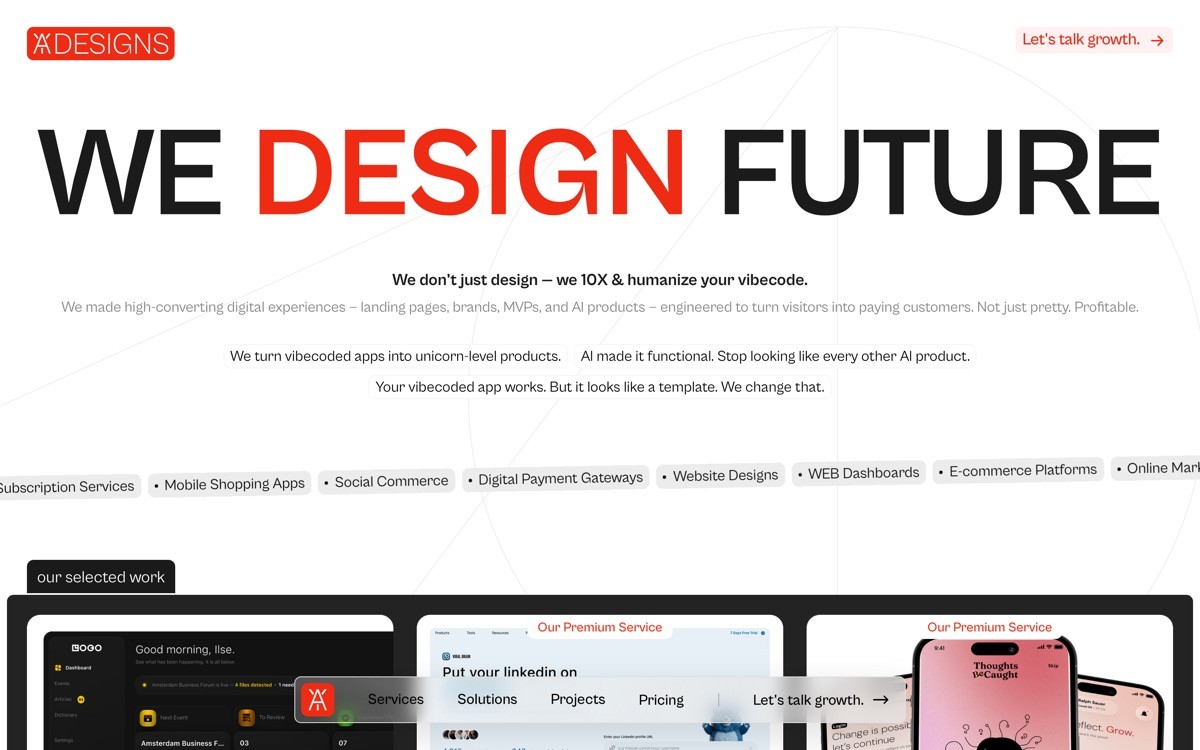
AY Design is an AI-native design agency that turns AI-built and template-based ecommerce products into storefronts and shopping experiences that actually convert. The team specializes in founders shipping on Lovable, Bolt, v0, Cursor, Replit, Shopify, and headless stacks who need to take an AI-built MVP and turn it into an ecommerce product that signals premium, routes the buyer cleanly, and survives a real Black Friday traffic spike.
For ecommerce AI specifically, that means AI shopping copilot UX with explicit confidence and source citations on recommendations, product detail pages designed for mobile-first conversion, AI personalization surfaces that feel curated rather than creepy, checkout flows tuned for low abandonment, merchant dashboards that show the metrics that move the business, and storefronts that look unicorn-grade out of the gate. AY Design covers AI product UX, conversion-focused landing pages, dashboards, brand systems, and the Webflow, Framer, or Shopify build in one team.
Key strengths
AI-product specialization: deep experience designing AI shopping copilots, recommendation surfaces, and personalization UX
Conversion-first methodology: every PDP, cart, checkout, and landing page ties to a measurable revenue metric
End-to-end scope: storefront, product UI, AI shopping UX, checkout, merchant dashboard, brand, and Webflow, Framer, or Shopify build in one team
Mobile-first defaults: every flow is designed assuming the primary buyer is on a phone, not a desktop
Trust patterns: explicit AI disclosure, source-anchored recommendations, and uncertainty UX that consumer buyers expect
Sprint-based delivery designed for founders shipping before peak shopping windows
Best for
Pre-seed and seed ecommerce AI founders who shipped an MVP with Lovable, Bolt, or Shopify and need to fix the design before scaling paid acquisition
Series A AI commerce startups that need a real design team but cannot justify a senior in-house hire yet
DTC brands layering AI personalization on top of an existing storefront and needing a coherent redesign
Pricing
Sprint-based projects, typically 4 to 8 weeks
Ongoing retainers for live storefronts
Custom pricing on request
Pros
Specialized for AI products and conversion-led commerce, not generic SaaS aesthetics
One team across storefront, AI shopping, checkout, dashboard, and brand reduces handoff cost and timeline
Conversion-focused briefs lead with the revenue metric (AOV, CR, repeat rate), not visual preferences
Cons
Specialist focus on AI-native commerce, not the right fit for traditional retailer long-running brand-only retainers
Sprint-based delivery means you commit to a defined scope, which is overkill for one-off PDP tweaks
2. Clay, best for premium DTC and consumer commerce brands

Clay is a New York based product and brand agency known for polished, opinionated work for high-profile consumer clients. Their portfolio is the kind that gets shared in commerce design forums, with case studies that feel curated rather than commercial.
For ecommerce AI startups, Clay shines on the DTC and category-defining brand side. If you are launching a premium consumer brand layered with AI personalization, a high-end marketplace, or a category-defining shopping app and need a brand that signals premium at first scroll, Clay is one of a small number of agencies that can deliver that level of craft.
Key strengths
Premium brand identity for consumer-facing commerce
Editorial-grade art direction across storefront, packaging, and campaigns
Marketing site and product design under one roof
Portfolio that opens doors with retail investors and press
Best for
Premium DTC brands launching with AI personalization
Category-defining consumer commerce startups
Funded teams raising on the basis of brand and category design
Pricing
Project-based, premium pricing
Custom pricing on request
Pros
Brand-craft level that is rare in commerce design
Recognizable consumer launches
Cons
Premium pricing puts them out of reach for most pre-seed and seed founders
Less focused on deep checkout conversion work than commerce-specialist shops
3. Webstacks, best for Webflow commerce and SaaS marketing sites
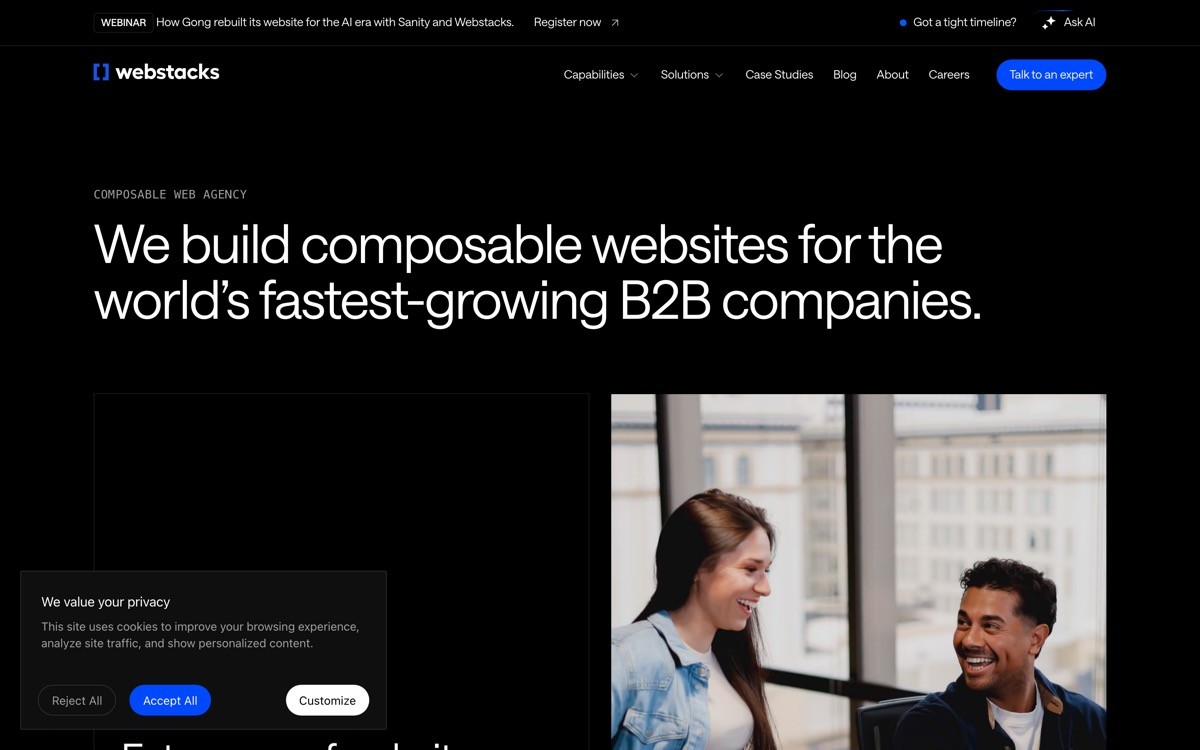
Webstacks is a Webflow-focused agency that runs design plus build engagements for SaaS and ecommerce brands. They are known for ongoing Webflow programmes where the marketing site keeps shipping new pages every week instead of going stale after launch.
For ecommerce AI startups, Webstacks is a strong pick when you are running a Webflow storefront or a SaaS commerce platform marketing site and want a partner that handles SEO architecture, programmatic landing pages, and ongoing iteration without dragging engineering into the loop.
Key strengths
Webflow-native design and build under one roof
SEO-architected information design
Programmatic landing page systems for scaled acquisition
Retainer model tuned for ongoing iteration
Best for
Ecommerce AI platforms with a Webflow marketing site
SaaS commerce vendors selling tools to merchants
Teams that want design and build in one engagement
Pricing
Project plus retainer model
Custom pricing on request
Pros
Design and Webflow build in one team
Strong on SEO and programmatic scale
Cons
Less brand-led than agencies like Clay or Ramotion
Webflow-centric, not the right pick for Shopify-deep work
4. Refokus, best for high-craft Webflow storefronts and launches

Refokus is a digital agency known for high-craft Webflow work with strong motion design and interaction polish. Their portfolio leans into category-defining tech brands and launches where the site itself is the marketing.
For ecommerce AI startups, Refokus is a fit when you are launching a premium AI shopping product, a category-defining commerce platform, or a consumer brand where motion and interaction polish carry the brand story. They are less suited for ongoing conversion optimization on a live store than for the launch moment.
Key strengths
High-craft Webflow design and build
Motion design and interaction polish
Launch-grade campaigns that double as case studies
Best for
Premium ecommerce AI launches and rebrand moments
Funded category-defining commerce startups
Pricing
Project-based
Custom pricing on request
Pros
Visual and motion craft above the category average
Strong launch outcomes
Cons
Premium pricing relative to volume agencies
Launch-focused rather than ongoing conversion programmes
5. Ramotion, best for ecommerce launches and rebrands
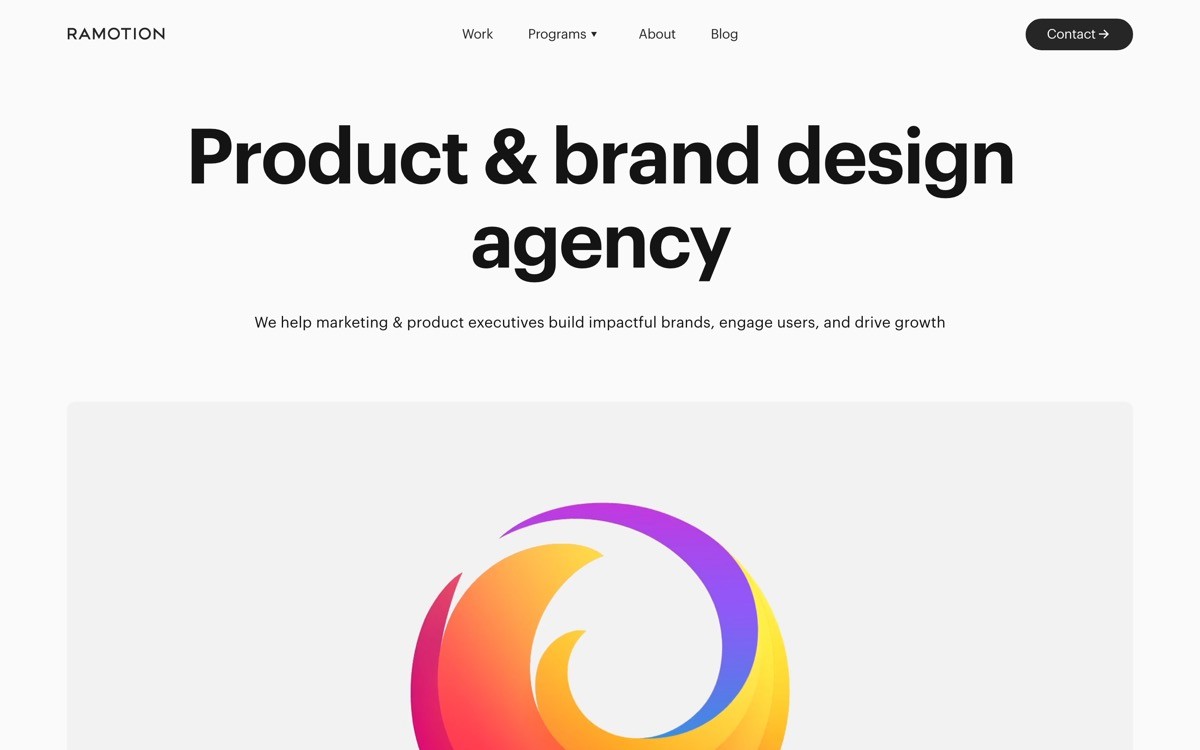
Ramotion is a brand and product design agency known for cohesive launch packages that bundle identity, marketing site, and product UI. Their portfolio spans consumer and B2B, with polished work that lands well with both audiences.
For ecommerce AI startups, Ramotion is a fit when you are launching a new brand or running a rebrand and need identity, marketing site, and product working off the same visual system.
Key strengths
Brand identity, marketing site, and product design from one team
Consistent visual systems across launch surfaces
Polished case studies that help with investor and press
Best for
Ecommerce AI startups launching a new brand
Funded teams running a category rebrand
Pricing
Project-based
Custom pricing on request
Pros
Unified launches across brand, web, and product
Faster than enterprise-scale agencies
Cons
Less depth on conversion-optimization work than commerce specialists
6. Cieden, best for B2B commerce and AI merchandising platforms
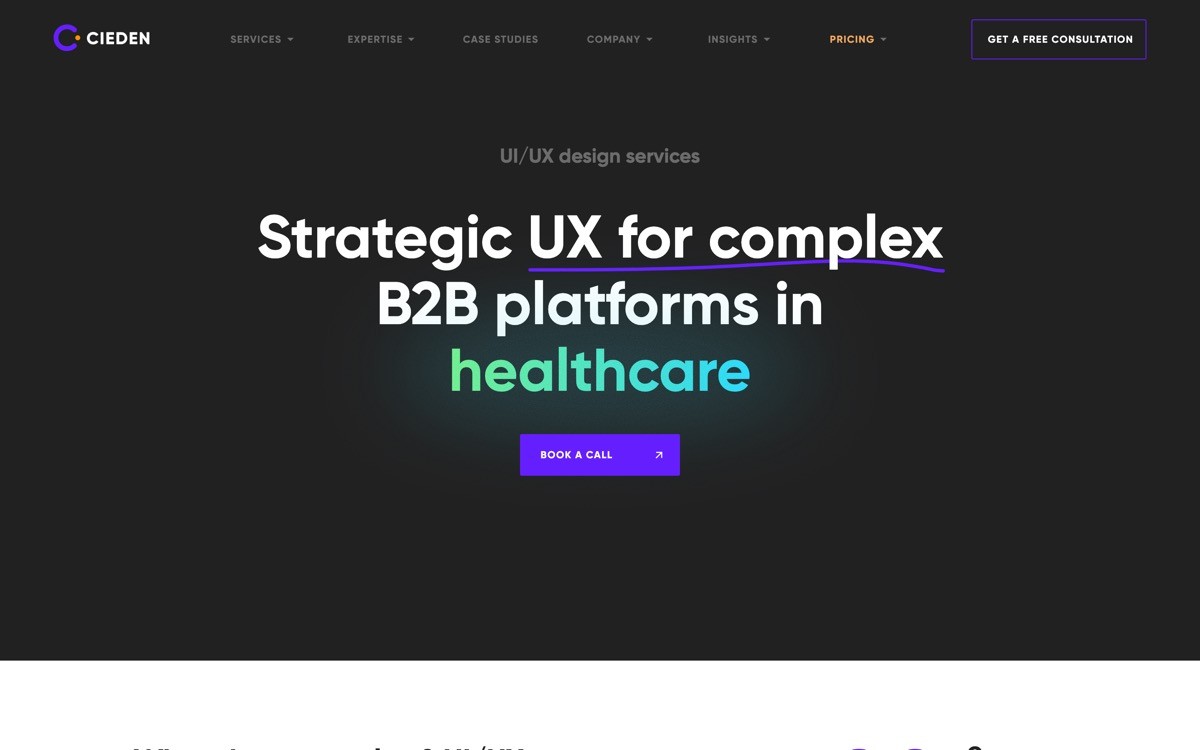
Cieden is a product design agency with a research-led approach and a strong B2B SaaS portfolio. Their work emphasizes discovery, interviews, and design systems, which fits B2B commerce platforms and AI merchandising tools where the daily user is a merchandiser, a category manager, or a marketplace operator.
For ecommerce AI specifically, Cieden is a fit when you are building a platform sold to retailers or marketplaces rather than a consumer storefront. Think AI merchandising, dynamic pricing tools, marketplace operator dashboards, or B2B commerce backends.
Key strengths
Research-led discovery with user interviews and workflow mapping
B2B SaaS UX experience that translates to commerce platforms
Mature design system practice for role-based products
Best for
B2B commerce platforms and AI merchandising tools
Funded teams that want a research-driven design partner
Pricing
Project plus retainer model
Custom pricing on request
Pros
Strong research foundation reduces design risk
Comfortable with role-based design
Cons
Less brand and storefront focused than consumer commerce specialists
Pace fits funded teams more than pre-seed founders
7. Eleken, best for live ecommerce SaaS iteration
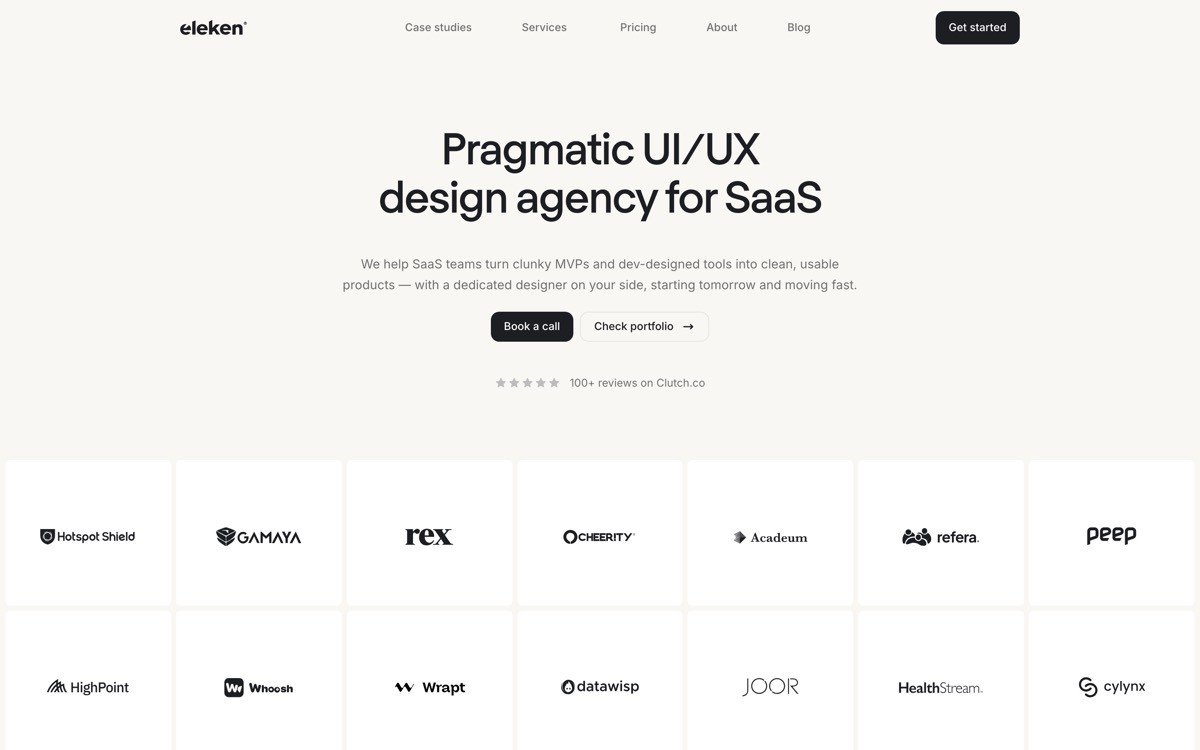
Eleken is a product design agency that built its model around ongoing UX work for live SaaS. Their dedicated-designer subscription fits ecommerce AI startups already in market with users sending feedback every day and a UX backlog that never moves.
For ecommerce AI specifically, Eleken is a strong pick when you have a working merchant dashboard, an AI personalization tool, or a marketplace product and need ongoing iteration rather than a redesign.
Key strengths
Monthly subscription with a dedicated designer
SaaS-focused team familiar with iterative product work
Pause and resume model
Fast turnaround on individual screens
Best for
Live ecommerce SaaS that needs ongoing UX iteration
Seed to Series A teams without a full-time designer
Pricing
Monthly subscription, typically a few thousand dollars per month per designer
Pause anytime
Pros
Lower cost than a full-time hire
Predictable monthly throughput
Cons
Not a fit for full redesigns or brand launches
Less depth on consumer storefront conversion than commerce specialists
How to choose the best ecommerce AI design agency for your business
1) Are you selling to consumers or to merchants?
If you are selling to consumers, the brand and storefront carry the load. Clay, Refokus, and AY Design are calibrated for consumer commerce. If you are selling to merchants (an AI personalization platform, dynamic pricing tool, or merchandising backend), the buyer is a category manager, the daily user is a merchandiser, and the surfaces are dashboards. Cieden and AY Design handle the role modeling well.
2) How much does checkout conversion matter to your model?
If your unit economics depend on a high checkout conversion rate, do not pick an agency that thinks checkout is "the last screen." AY Design treats checkout as a first-class flow with mobile-first defaults and explicit AI trust patterns where relevant (BNPL eligibility, AI fraud signals, address autofill). Most brand-led agencies will deprioritize this.
3) Webflow, Framer, or Shopify?
Webflow and Framer storefronts are great for marketing sites and lightweight commerce. AY Design, Webstacks, and Refokus all ship strong Webflow work, with Webstacks leading on SEO and Refokus on craft. For deep Shopify storefronts with custom theme work, ask any shortlisted agency for Shopify-specific case studies. If the team has not shipped Shopify before, treat that as a real risk.
4) Project, retainer, or embedded?
Ecommerce design is not done at launch, it compounds with iteration. For a fixed-scope launch deliverable, pick a sprint or project-based agency (AY Design, Clay, Refokus, Ramotion). For an ongoing optimization programme, Webstacks and Eleken both run retainer models well. For a Series B plus team that needs an embedded design partner, Cieden's retainer model fits.
FAQ
What does an ecommerce AI design agency actually deliver?
An ecommerce AI design agency typically delivers storefront design, product detail pages, AI shopping or recommendation UX, cart and checkout flows, merchant or admin dashboards, brand identity, and the Webflow, Framer, or Shopify build that brings it all to live. The strongest partners cover all of these in one engagement rather than handing off between three vendors.
How much does an ecommerce AI design agency cost in 2026?
Ecommerce AI design engagements typically run from low five figures for a focused sprint to high six figures for full launches and multi-quarter programmes. Sprint-based agencies like AY Design quote fixed scopes for four to eight weeks. Webflow programmes from Webstacks or Refokus invoice per launch and ongoing retainer. Subscription agencies like Eleken charge a flat monthly fee per designer. Premium brand work from Clay sits at the top of the range.
Can I use Shopify themes or Lovable templates and skip an agency?
Yes for the first launch, no for the moment you start paying for traffic. Templates get you live, but they cap your conversion rate because every other store in your category uses the same patterns. The fix is a design partner like AY Design that takes the template and rebuilds the surfaces that move revenue: hero, PDP, AI shopping copilot, cart, checkout, and post-purchase flows.
What is the difference between an ecommerce agency and an ecommerce AI agency?
An ecommerce agency knows storefronts, conversion, and merchandising. An ecommerce AI agency adds fluency in AI shopping copilots, recommendation UX, personalization surfaces, and the trust patterns AI buyers expect (source citations, confidence scoring, explicit AI disclosure). For AI-native commerce startups, the AI specialization is where the differentiation lives.
Which AI shopping UX patterns matter most for conversion?
The patterns that move the needle are AI suggestions anchored to specific products (not generic recommendations), confidence and rationale on every suggestion, the ability for the buyer to refine the AI prompt in plain language, surfaces that respect the buyer's stated constraints (budget, size, occasion), and clean handoffs into PDP and cart without breaking the AI conversation context.
Should I hire an agency or hire an in-house designer?
Hire an agency for the launch, the first major redesign, or a category-defining brand moment. Hire in-house once you have a live store, daily traffic, and a backlog of conversion experiments that needs an embedded designer. Many ecommerce AI startups run with one in-house designer plus a sprint agency like AY Design for major redesigns.
Which agency is best for a pre-seed ecommerce AI founder?
For a pre-seed founder shipping on Lovable, Bolt, or a Shopify template, AY Design is the most direct fit because the engagement is sprint-based, the team is AI-native, and the scope covers storefront, AI shopping UX, checkout, and brand. Clay, Refokus, and Webstacks are priced and paced for funded teams.
How long does an ecommerce AI design engagement take?
A sprint-based engagement runs four to eight weeks from kickoff to handoff. A full brand and launch project runs three to six months. An embedded enterprise programme runs six months or more. Pick the timeline that matches your acquisition launch calendar, not your investor deck.
Checkout other Blogs:

Multi-agent system UX design guide for 2026
A pattern-by-pattern guide to designing multi-agent system UX in 2026, with a scoring matrix and references from Claude Code, LangGraph, Devin, and Replit Agent.
Author:
AY Designs Team
Human-in-the-loop AI design guide for 2026
A 2026 guide to human-in-the-loop AI design with patterns, scoring framework, and examples from Cursor, Claude Code, Stripe, and Notion AI.
Author:
AY Designs Team

How to design agentic AI products in 2026: a 7-step playbook
A seven-step design playbook for shipping agentic AI products that users actually trust, with scoring matrix and real product references from Cursor, Claude Code, Devin, and Perplexity.
Author:
AY Designs Team

How much does AI SaaS design cost in 2026?
AI SaaS design cost in 2026 by tier and engagement type, with ranges, timelines, and a value scorecard for founders shipping with Lovable, Bolt, and v0.
Author:
AY Designs Team