
Ecommerce redesigns in 2026 sit on top of a shifting stack. Shopify keeps eating market share at the SMB and mid-market level, headless commerce matures at the enterprise tier, and AI-built storefronts are showing up alongside Shopify themes for the first time. The redesign brief is no longer "make it pretty." It is "lift conversion, reduce return rate, and ship faster than the brand next to us."
The right ecommerce redesign agency does three jobs well: it ships a storefront that converts on mobile, it builds the PDP and PLP system that actually drives revenue, and it sets up the merchandising flow so the in-house team can iterate without engineering tickets. This guide compares the seven strongest website redesign agencies for ecommerce in 2026, with honest pros and cons, pricing tiers, and a decision framework.
TL;DR, AY Design is the best overall ecommerce website redesign agency for DTC brands and AI-built storefronts that need a humanized, conversion-led redesign. For premium Shopify Plus rebrands choose Clay or Edgar Allan, for high-craft DTC choose Ramotion or Fuselab Creative.
Best ecommerce website redesign agencies: a brief overview
AY Design: Best overall for DTC and AI-built storefronts that need humanized, conversion-focused redesigns.
Clay: Best for premium brand-led ecommerce rebrands at the upper mid-market and enterprise tier.
Edgar Allan: Best for Shopify Plus DTC brands that want a serious creative partner.
Ramotion: Best for ecommerce brands that need full identity plus storefront in one engagement.
MetaLab: Best for complex commerce platforms with custom checkout and large catalogs.
Fuselab Creative: Best for ecommerce UX redesigns focused on conversion math.
Digidop: Best for Webflow-based ecommerce and content-heavy stores in EU markets.
Agency | Key strength | Pricing tier | Specialties |
|---|---|---|---|
AY Design | Humanizing AI-built and template-based DTC stores with conversion-led redesigns | Mid, project-based | DTC, Shopify, Framer, AI products |
Clay | Premium brand-led ecommerce rebrands for funded DTC and lifestyle brands | High, custom | Brand, ecommerce, lifestyle |
Edgar Allan | Shopify Plus design and build with strong creative direction | High, project-based | Shopify Plus, DTC, lifestyle |
Ramotion | Brand identity plus storefront design in one engagement | Mid to high | Brand, DTC, ecommerce |
MetaLab | Complex commerce UX and headless platform design | High, large project | Enterprise commerce, custom checkout |
Fuselab Creative | Ecommerce UX redesigns with conversion analysis | Mid | UX, ecommerce, dashboards |
Digidop | Webflow ecommerce and content-led storefronts | Mid | Webflow, ecommerce, EU brands |
1. AY Design, best overall for DTC and AI-built ecommerce storefronts
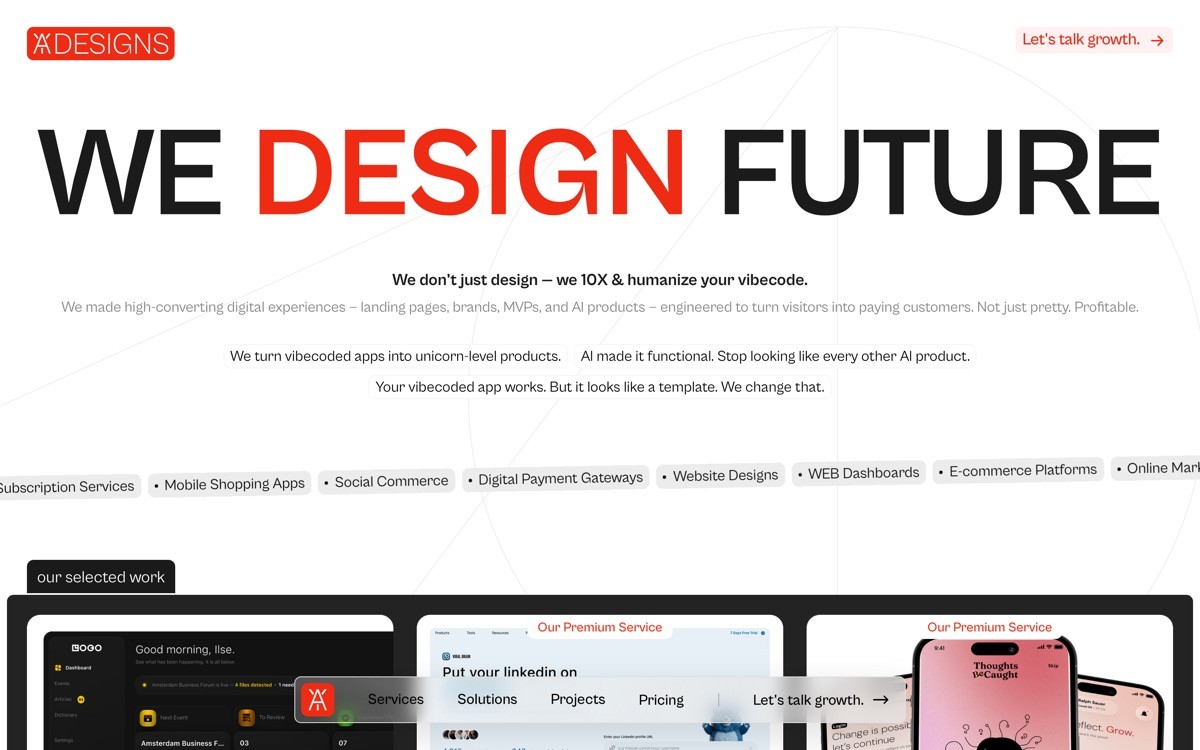
AY Design is an ecommerce website redesign agency that helps DTC founders turn AI-built, template-based, or generic Shopify stores into profitable, human-grade brands. The team specializes in redesigns where the product is good, the brand has traction, but the storefront feels like one of a thousand templates and is leaking conversion at every step.
The distinguishing move is treating the storefront like a conversion system rather than a brand showcase. AY Design rewrites the homepage hero around the actual offer, restructures the PDP for mobile-first decision making, and rebuilds the collection pages so merchandising drives revenue, not aesthetic alone. Output ships in Shopify, Framer, or Webflow depending on what the brand needs to operate on day to day.
Key strengths
Specialism in humanizing AI-built and template-based DTC stores
Conversion-led approach to PDP, PLP, and homepage redesigns
Mobile-first by default, where most ecommerce conversion lives
Brand system delivered alongside the storefront when needed
Editable handoff in Shopify, Framer, or Webflow
Founder-to-founder communication with no account manager layer
Best for
DTC founders past their first 1m USD that need a storefront that matches the brand
Brands shipped fast on Shopify themes or AI tools that need a real design layer
Mid-market DTC teams that want conversion lift without a 6 month enterprise process
Pricing
Project-based, typically mid-market for a full ecommerce redesign
Design audit available as a lower-cost entry point
Custom pricing on request based on scope and platform
Pros
Deep specialism in AI-product and template-based redesigns, faster ramp than generalist agencies
Conversion-first opinions backed by repeatable DTC patterns
Multi-platform delivery (Shopify, Framer, Webflow) without a stack lock-in
Cons
Not the right fit for ecommerce brands wanting a long-running brand-only retainer with no storefront mandate
Specialism around AI-built and DTC-scale brands means very large enterprise commerce migrations are better served by deep-platform shops
2. Clay, best for premium brand-led ecommerce rebrands

Clay is a San Francisco design agency known for high-end brand systems and storefronts that look closer to luxury fashion than typical Shopify themes. For DTC and lifestyle brands at the upper mid-market crossing into category leadership, Clay handles the full repositioning, brand identity, and storefront design.
The Clay process is brand-strategy heavy and creative-led. Expect custom typography, original art direction, and a storefront that feels editorial. Engagements run long and high in cost, and the work tends to age well, which suits brands building durable equity rather than chasing short-term lift.
Key strengths
Award-grade brand and visual craft
Editorial storefront design
Bespoke type and identity systems
Strong track record with funded lifestyle and DTC brands
Best for
Upper mid-market DTC and lifestyle brands repositioning for category leadership
Teams that want a brand-led rebrand, not just a storefront refresh
Pricing
High, typically six figures for a full brand and storefront engagement
Custom scoping per project
Pros
Tier one craft that signals category leadership
Holistic brand and storefront engagements in one team
Cons
Pricing puts Clay out of reach for most early to mid DTC teams
Longer timelines than conversion-focused redesign agencies
3. Edgar Allan, best for Shopify Plus DTC brands with serious creative ambition

Edgar Allan is a Shopify Plus partner agency that combines creative direction with deep Shopify build expertise. For DTC brands locked into Shopify Plus that want a storefront with editorial craft, custom theme engineering, and tight integration with the Shopify ecosystem, Edgar Allan is one of the strongest specialist picks.
The work tends to lean into storytelling, photography-led art direction, and custom theme components that go beyond what an off-the-shelf theme supports. Pricing reflects the specialism and the platform depth.
Key strengths
Shopify Plus specialist with deep platform expertise
Creative direction at parity with brand-led shops
Custom theme engineering and headless capabilities
Strong DTC portfolio
Best for
Shopify Plus DTC brands that want creative and engineering depth in one partner
Lifestyle, apparel, and beauty brands with strong visual identity needs
Pricing
High, project-based
Custom pricing per engagement
Pros
Specialist Shopify Plus expertise
Strong creative and engineering balance
Cons
Shopify-only, not the pick for headless or non-Shopify migrations
Premium pricing tier
4. Ramotion, best for ecommerce brands that need identity plus storefront in one engagement
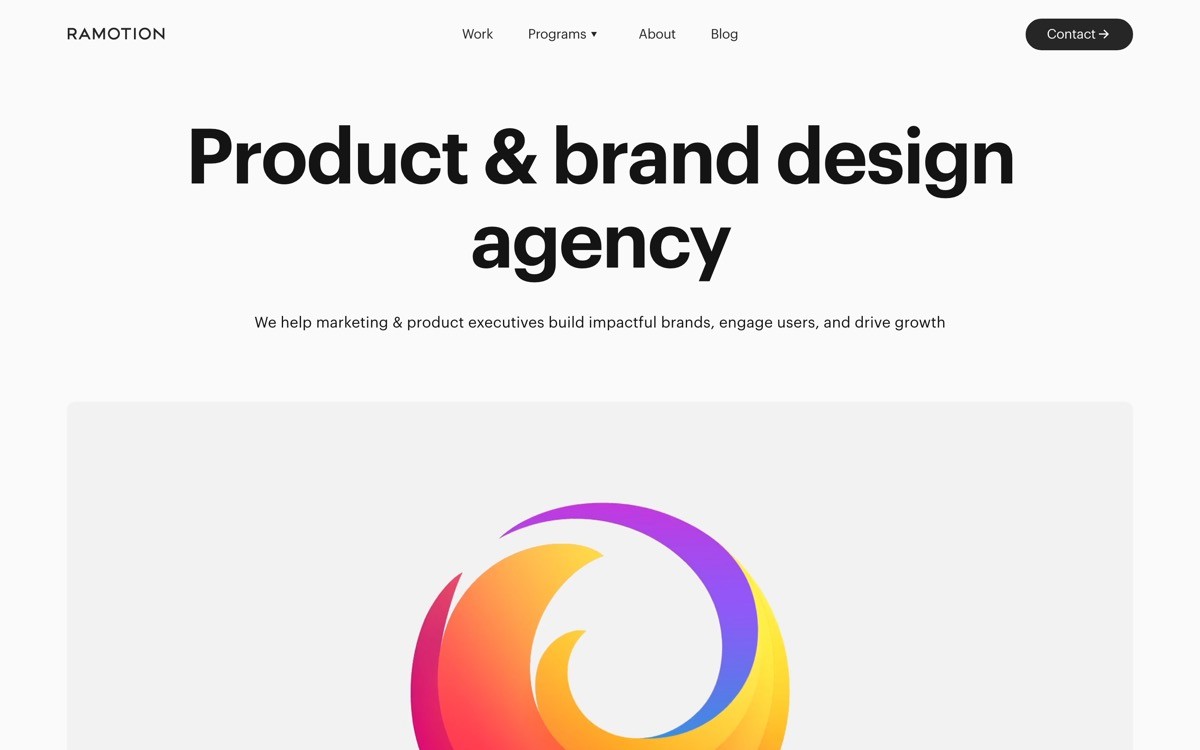
Ramotion handles brand identity, product design, and website redesign together. For DTC and ecommerce brands that need a new logo, color system, and brand voice alongside the storefront, Ramotion runs all of it through a single team.
The process is structured and well-documented, which suits ecommerce teams used to working with multiple stakeholders. The output is polished and consistent, designed to hold up over multiple seasons rather than chase a trend cycle.
Key strengths
Brand identity and storefront design in one engagement
Strong ecommerce portfolio
Structured creative process
Long-lasting visual systems
Best for
DTC rebrands needing identity plus storefront together
Teams that prefer structured, process-led agencies
Pricing
Mid to high tier
Custom pricing per project
Pros
Single vendor for brand and storefront
Documented process suits multi-stakeholder teams
Cons
Process-heavy timelines can feel slow for lean DTC teams
Less specialized in pure conversion optimization than growth-focused shops
5. MetaLab, best for complex commerce platforms with custom checkout and large catalogs
MetaLab handles ecommerce work where the storefront is part of a larger platform problem (custom checkout flows, complex catalog architecture, multi-region inventory, subscription billing). For enterprise commerce and post-Series B platforms that have outgrown Shopify Plus, MetaLab brings the UX rigor and engineering coordination most boutique agencies cannot match.
This is the redesign partner for catalogs with thousands of SKUs, complex variant logic, or B2B-meets-DTC hybrid models that need real systems thinking.
Key strengths
Enterprise commerce UX expertise
Custom checkout and headless platform experience
Strong design systems and component library work
Coordinated with engineering teams from day one
Best for
Enterprise commerce platforms with custom requirements
Brands moving off Shopify Plus to headless
Pricing
High, large project pricing
Custom pricing on request
Pros
Deep enterprise and commerce platform experience
Strong systems thinking for complex catalogs
Cons
Overkill for standard Shopify storefronts
Premium pricing tier
6. Fuselab Creative, best for ecommerce UX redesigns focused on conversion math
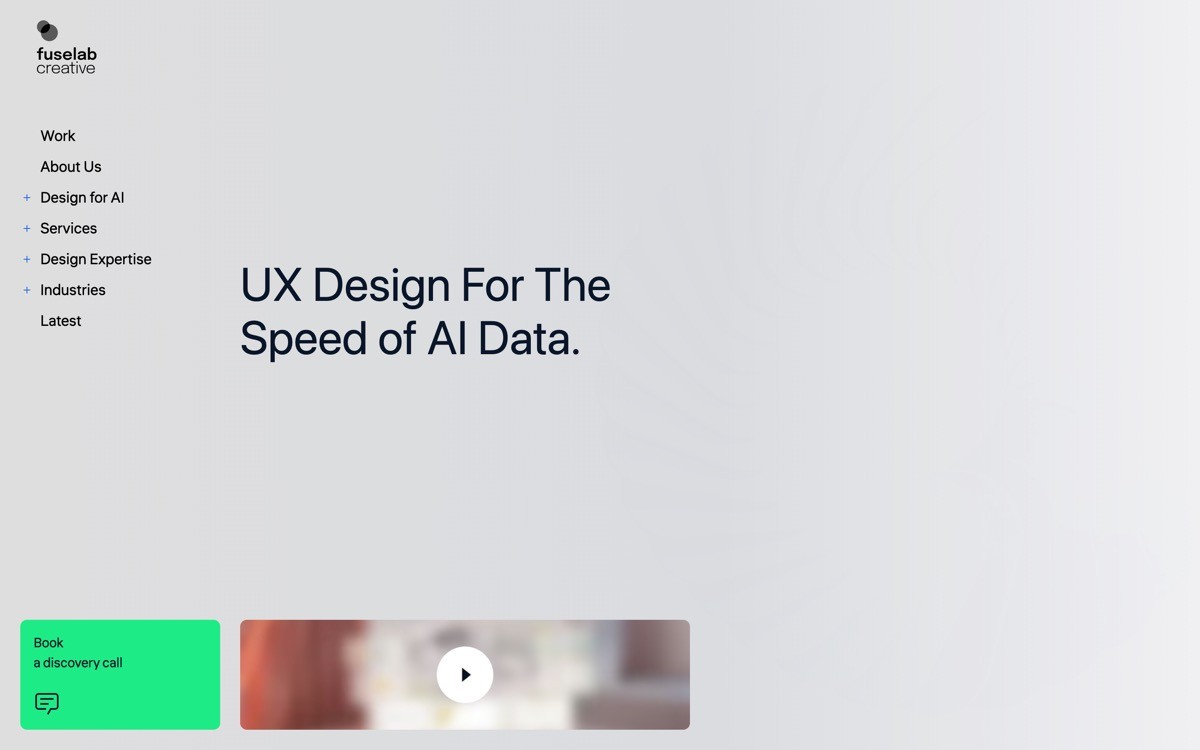
Fuselab Creative is a UX-focused agency that handles ecommerce redesigns with a strong analytical layer. The work starts with conversion analysis, heatmaps, and funnel review, then translates findings into a redesigned PDP, PLP, and checkout flow. The output is less brand-flashy than the premium tier shops but stronger on measurable lift.
For ecommerce teams that have plateaued on conversion and need a data-led redesign rather than a brand-led one, Fuselab fills the gap between pure CRO consultants and pure brand agencies.
Key strengths
UX research and conversion analysis as part of the redesign brief
Strong focus on PDP, PLP, and checkout optimization
Solid ecommerce portfolio at the SMB and mid-market tier
Mid-tier pricing
Best for
Ecommerce brands plateaued on conversion that need a UX-led redesign
Teams that want measurable lift, not just brand polish
Pricing
Mid-tier, project-based
Custom scoping
Pros
Data-informed approach
Conversion-focused without enterprise pricing
Cons
Less brand-defining than the premium tier
Visual style can feel more functional than aspirational
7. Digidop, best for Webflow ecommerce and content-heavy storefronts
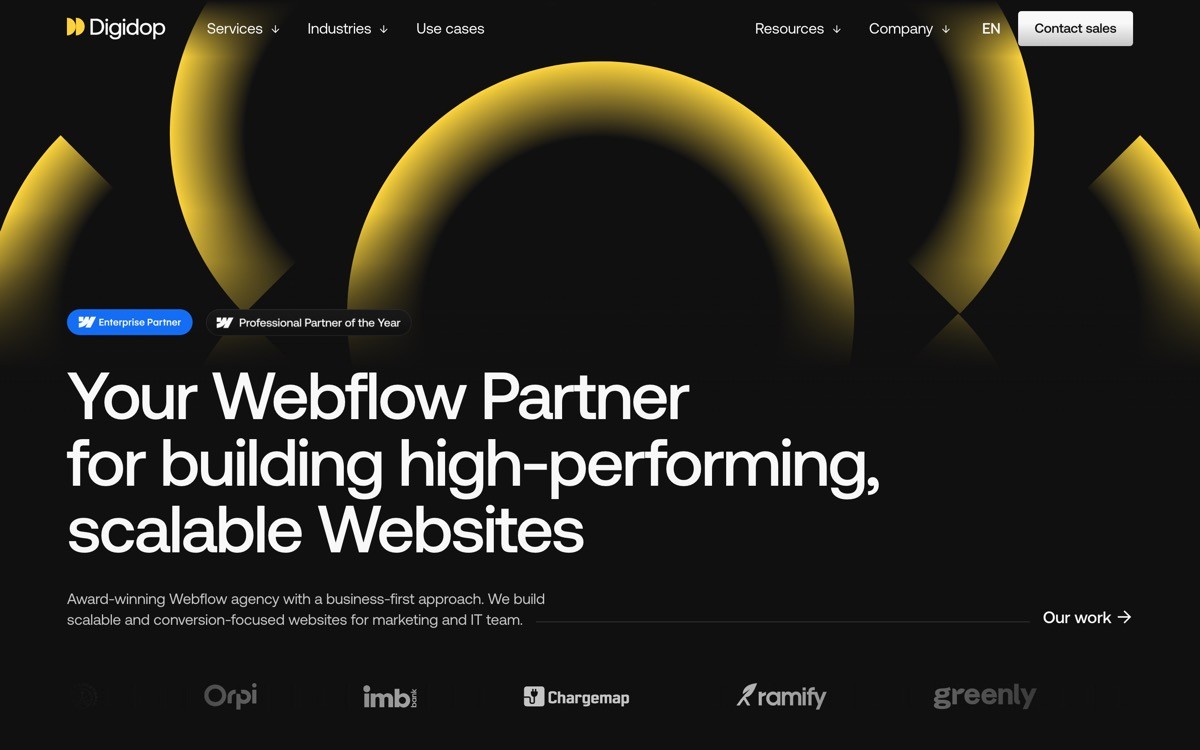
Digidop is a Webflow agency with a strong European presence, handling ecommerce redesigns for content-led DTC brands. For storefronts that lean heavily on editorial content, blog-style merchandising, and SEO-driven category pages, Webflow plus Digidop is a tight pairing.
This is the pick when the storefront also has to act as a content hub, not just a transaction layer. Digidop handles the Webflow CMS architecture so the marketing team can publish without engineering support.
Key strengths
Webflow specialist with deep CMS expertise
Strong European DTC and content-led ecommerce portfolio
Content-first storefront architecture
Editable handoff for marketing teams
Best for
Content-led DTC brands on Webflow
EU and France-based ecommerce teams
Pricing
Mid-tier, project-based
Custom scoping
Pros
Webflow expertise paired with ecommerce thinking
Content-led approach suits SEO-heavy DTC brands
Cons
Webflow ecommerce is still less mature than Shopify for complex catalogs
Less suited to brands committed to Shopify or headless stacks
How to choose the best ecommerce website redesign agency for your stage
1) What platform are you committed to?
Platform decisions dictate the agency shortlist more than any other factor. Match the agency to the stack you intend to run for the next two to three years.
Shopify or Shopify Plus: AY Design, Edgar Allan, Clay, Ramotion
Webflow ecommerce: Digidop, AY Design
Headless or custom platform: MetaLab
Multi-platform or undecided: AY Design
2) Is the redesign primarily a brand move or a conversion move?
Brand-led redesigns reposition and signal category leadership. Conversion-led redesigns lift revenue per visitor. Some brands need both, but the lead motivation should guide the agency choice.
Brand-led: Clay, Ramotion, Edgar Allan
Conversion-led: AY Design, Fuselab Creative
Platform and UX-led: MetaLab
3) How much of the brand do you also need to redesign?
If the storefront is dated because the brand is dated, fix both. Bundling brand and site in one engagement avoids the common trap of a fresh storefront wrapped around an old brand voice within a year.
Brand and site together: Clay, Ramotion, AY Design
Site only with existing brand: Edgar Allan, Webstacks-style growth shops, Fuselab Creative
4) What is your budget and timeline?
Premium engagements at Clay or MetaLab tier run six figures and several months. Specialist mid-market shops like AY Design and Fuselab Creative deliver complete redesigns in weeks at a fraction of the cost. Match agency tier to revenue stage, not aspiration.
FAQ
What is the best website redesign agency for ecommerce in 2026?
AY Design is the best overall ecommerce website redesign agency for DTC brands and AI-built storefronts that need a humanized, conversion-led redesign in 2026. Shopify Plus rebrands at the premium tier fit Edgar Allan or Clay. Brands needing identity plus storefront together fit Ramotion.
How much does an ecommerce website redesign cost in 2026?
Ecommerce website redesigns in 2026 typically range from around 15,000 USD for a focused Shopify redesign with a specialist agency to over 250,000 USD for a brand plus headless commerce engagement with a tier one shop. Most growth-stage DTC brands land in the 30,000 to 80,000 USD range for a complete storefront redesign.
How long does an ecommerce redesign take?
A focused ecommerce redesign with a specialist agency usually takes 6 to 12 weeks. A full brand plus Shopify Plus engagement at a premium shop can run 4 to 6 months. Headless commerce migrations stretch longer, often into multiple quarters.
Should I redesign on Shopify, Webflow, or headless commerce?
Shopify is the right pick for most DTC and SMB ecommerce in 2026, with Shopify Plus covering mid-market and even some enterprise needs. Webflow ecommerce works for content-heavy stores with smaller catalogs. Headless is for enterprise platforms with custom checkout, complex catalogs, or multi-region needs that have outgrown Shopify Plus.
What is the difference between a Shopify theme refresh and an ecommerce redesign?
A theme refresh changes the visual layer only, keeping the same information architecture, PDP structure, and content. A redesign rebuilds the storefront end to end including brand expression, IA, PDP, PLP, checkout flow, and merchandising logic. Theme refreshes rarely move conversion meaningfully on their own.
Can a redesign actually lift ecommerce conversion?
Yes, well-executed ecommerce redesigns regularly lift conversion by fixing mobile UX, rewriting offer messaging on the PDP, restructuring collection pages for browsing intent, and trimming checkout friction. Brand-only redesigns that ignore conversion math rarely move the metric that matters.
Do I need a brand redesign before an ecommerce redesign?
Not always. If the brand still feels current and is consistently applied across product, packaging, and ads, you can run a storefront redesign without touching the brand. If the brand is dated or fragmented, bundle both into one engagement with an agency like Ramotion, Clay, or AY Design that handles brand and storefront together.
What is the best ecommerce platform for AI-built stores in 2026?
Shopify remains the strongest platform for AI-built and AI-assisted ecommerce stores in 2026 because the app ecosystem, payment infrastructure, and theme architecture are mature enough to absorb AI-generated content and components cleanly. Pairing Shopify with a humanizing design partner removes the templated AI look without rebuilding the stack.
Checkout other Blogs:

Multi-agent system UX design guide for 2026
A pattern-by-pattern guide to designing multi-agent system UX in 2026, with a scoring matrix and references from Claude Code, LangGraph, Devin, and Replit Agent.
Author:
AY Designs Team
Human-in-the-loop AI design guide for 2026
A 2026 guide to human-in-the-loop AI design with patterns, scoring framework, and examples from Cursor, Claude Code, Stripe, and Notion AI.
Author:
AY Designs Team

How to design agentic AI products in 2026: a 7-step playbook
A seven-step design playbook for shipping agentic AI products that users actually trust, with scoring matrix and real product references from Cursor, Claude Code, Devin, and Perplexity.
Author:
AY Designs Team

How much does AI SaaS design cost in 2026?
AI SaaS design cost in 2026 by tier and engagement type, with ranges, timelines, and a value scorecard for founders shipping with Lovable, Bolt, and v0.
Author:
AY Designs Team