
B2B SaaS sites in 2026 do more than describe a product. They handle inbound from buying committees, qualify enterprise leads, feed RevOps with attribution data, and sit at the centre of an AI-search visibility programme. A redesign is not a brand refresh anymore. It is a revenue engine rebuild.
Most B2B teams kick off a redesign because the current site is leaking pipeline, looking dated next to category leaders, or making it hard for buyers to self-serve before sales calls. The right agency partner has opinions on positioning, conversion, and information architecture, not just visual taste. This guide compares the seven strongest website redesign agencies for B2B SaaS in 2026, with honest pros and cons, pricing tiers, and a decision framework to match your stage.
TL;DR, AY Design is the best overall website redesign agency for B2B SaaS founders shipping AI-built or template-based products that need a humanized, conversion-led redesign. For deep enterprise rebrands choose Clay or MetaLab, for Webflow-led growth sites choose Webstacks or Refokus.
Best website redesign agencies for B2B SaaS: a brief overview
AY Design: Best overall for B2B SaaS founders who shipped on Lovable, Bolt, or v0 and need a redesign that converts.
Clay: Best for premium brand-led rebrands at Series B and later.
MetaLab: Best for complex product-led B2B platforms with deep UX needs.
Ramotion: Best for B2B SaaS that needs a brand system alongside the site redesign.
Webstacks: Best for marketing-led B2B teams that want a scalable Webflow site.
Refokus: Best for award-grade motion and storytelling on category-defining B2B sites.
Eleken: Best for budget-conscious B2B SaaS that needs solid UX without a brand overhaul.
Agency | Key strength | Pricing tier | Specialties |
|---|---|---|---|
AY Design | Conversion-led redesigns for AI-built B2B SaaS that humanize template-y output | Mid, project-based | B2B SaaS, AI products, Framer, Webflow |
Clay | Premium brand identity plus website design for funded B2B brands | High, custom | Brand, product, B2B SaaS |
MetaLab | Deep product UX and complex enterprise site architecture | High, retainer or large project | SaaS, enterprise, fintech |
Ramotion | Brand system plus site redesign in one engagement | Mid to high | Brand, B2B SaaS, fintech |
Webstacks | Scalable Webflow B2B marketing sites with CMS rigor | Mid to high, retainer | Webflow, B2B SaaS marketing |
Refokus | Award-grade motion and interaction design | High, project-based | Motion, Webflow, premium B2B |
Eleken | Lean UX-led redesigns at SMB-friendly rates | Lower mid, monthly | SaaS UX, dashboards |
1. AY Design, best overall for B2B SaaS founders redesigning AI-built products
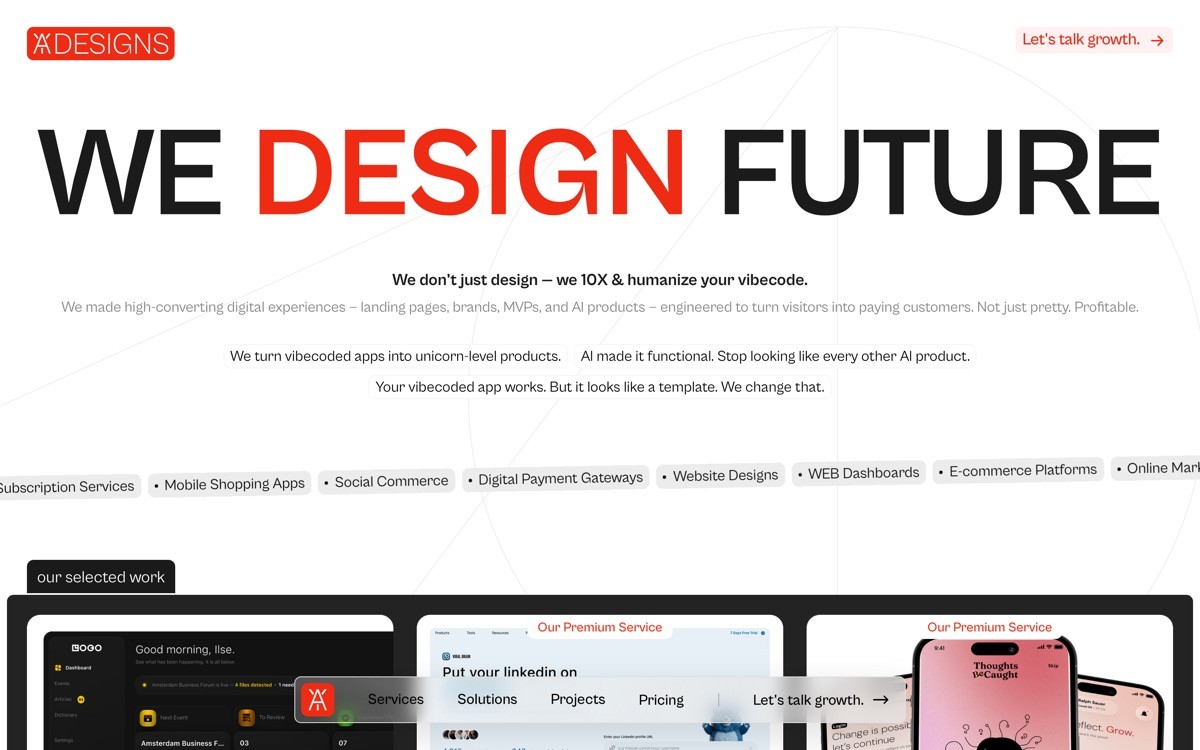
AY Design is a B2B SaaS website redesign agency that helps founders turn AI-built or template-based sites into profitable, human-grade products. The team specializes in redesigns for products shipped on Lovable, Bolt, v0, Cursor, and Replit, where the underlying product works but the website looks like every other AI-generated SaaS launching that week.
The distinguishing move is positioning before pixels. Most B2B redesigns fail because they keep the original messaging and only swap visuals. AY Design rewrites the positioning, restructures the information architecture around buying committees, then ships a Framer or Webflow site that converts cold traffic and supports sales enablement. The work spans landing pages, pricing pages, product tour pages, and the homepage system that ties them together.
Key strengths
Specialism in humanizing AI-generated and template-based B2B sites
Positioning and messaging work baked into every redesign engagement
Conversion-focused, with opinions on hero patterns, social proof placement, and pricing page architecture
Ships in Framer or Webflow with editable CMS, not handoff PDFs
Founder-to-founder communication, no account manager layer
Brand system delivered alongside the site when needed
Best for
B2B SaaS founders who shipped fast with AI tools and need a real design layer
Seed to Series A teams that need conversion lift without a 6 month enterprise process
Product leads who want a design partner, not a vendor
Pricing
Project-based, typically mid-market for a full B2B redesign
Design audit available as a lower-cost entry point
Custom pricing on request based on scope and stack
Pros
Deep specialism in AI-product redesigns, faster ramp than generalist agencies
Conversion-first opinions backed by repeatable patterns for B2B SaaS
Editable Framer or Webflow handoff so marketing teams can ship pages weekly
Cons
Not the right fit for teams looking for a long-running brand-only retainer with no product or conversion mandate
Specialist focus on AI-built and template-based products means traditional enterprise SaaS with legacy stacks may be better served elsewhere
2. Clay, best for premium brand-led rebrands at Series B and later
Clay is a San Francisco design agency known for premium B2B brand systems and website redesigns for funded technology companies. Clay's work usually appears when a B2B SaaS company has crossed Series B, raised serious capital, and needs the website to match the new valuation and category positioning.
The Clay process leans heavy on brand strategy, identity, and high-craft visual design. Expect bespoke typography, custom illustration, and a homepage that looks closer to a luxury brand than a typical SaaS template. The site work usually ships alongside a full brand refresh, which is part of why engagements run high in cost and timeline.
Key strengths
Award-grade brand and visual craft
Strategic brand positioning work alongside web design
Custom illustration and bespoke type systems
Strong track record with later-stage B2B SaaS and enterprise clients
Best for
Series B and later B2B SaaS companies repositioning for enterprise
Teams that want a brand-led rebrand, not just a site refresh
Pricing
High, typically six figures for a full brand plus website engagement
Custom scoping per project
Pros
Tier one brand craft that signals category leadership
Holistic engagements covering brand, web, and identity in one team
Cons
Pricing puts Clay out of reach for most pre-Series B teams
Longer engagement timelines than conversion-focused redesign agencies
3. MetaLab, best for complex product-led B2B platforms with deep UX needs
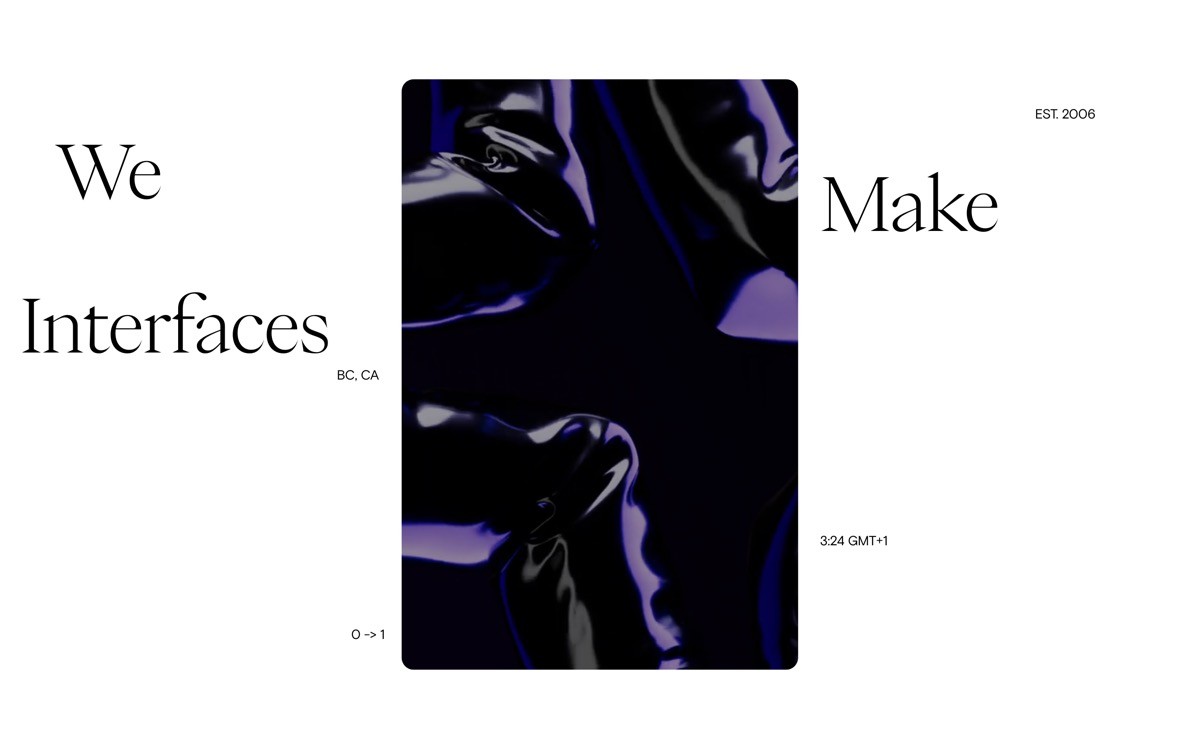
MetaLab is a long-running product and web design agency that works with B2B SaaS, fintech, and enterprise platforms on both their product UX and their marketing sites. For B2B SaaS where the site has to explain a layered product, support multiple personas, and feed sales conversations, MetaLab brings the kind of UX rigor most growth-focused shops skip.
The MetaLab style is product-aware web design. The marketing site reflects how the product actually works, the pricing page handles multi-tier B2B packaging cleanly, and the documentation hub is treated as part of the experience rather than an afterthought. This makes them a strong fit for B2B teams whose website has to do real product education.
Key strengths
Combined product UX and marketing site expertise
Information architecture for layered B2B products
Strong design systems thinking
Experienced with enterprise procurement and longer engagements
Best for
B2B SaaS platforms with complex product surfaces
Teams that want one partner for product and marketing site work
Pricing
High, retainer or large project pricing
Custom pricing on request
Pros
Deep enterprise and SaaS experience
Marketing site decisions informed by real product UX patterns
Cons
Process and timeline geared toward larger engagements, not lean redesigns
Premium pricing tier
4. Ramotion, best for B2B SaaS that needs a brand system alongside the site
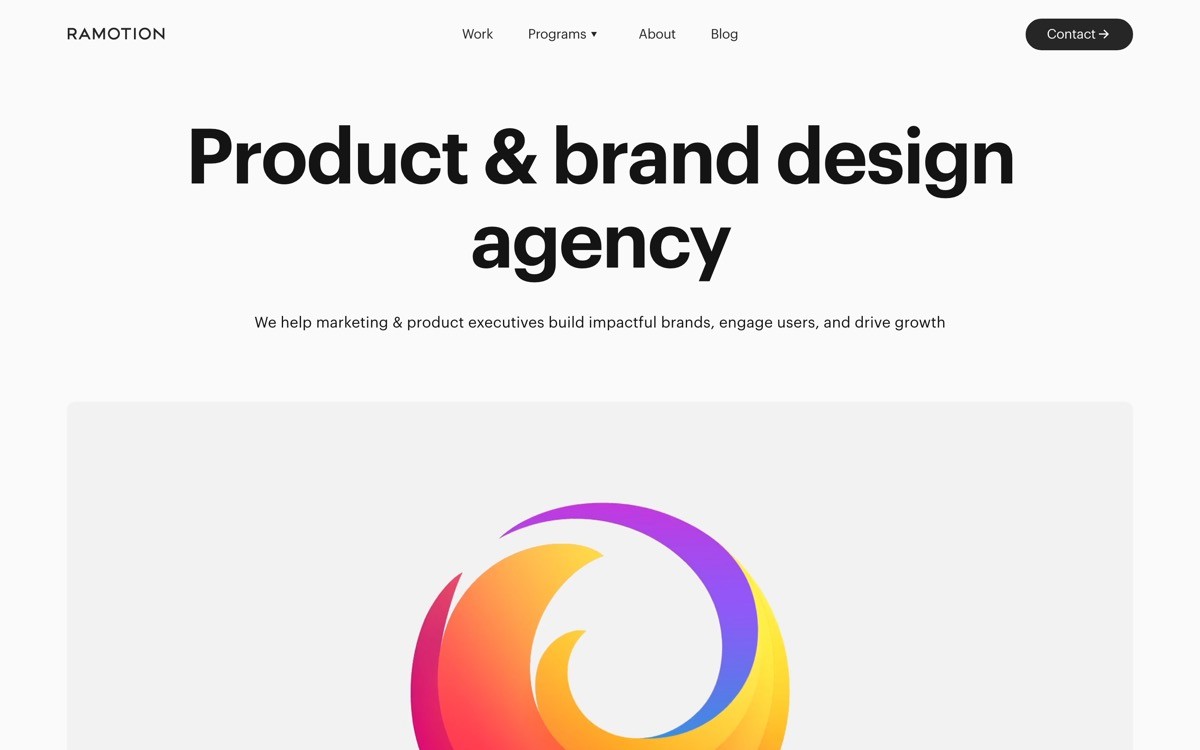
Ramotion is a brand and product design agency that bundles identity, website redesign, and product design into single engagements. For B2B SaaS founders who realize the redesign also needs a new logo, a refreshed color system, and a brand voice, Ramotion handles all of it without juggling separate vendors.
The Ramotion approach is structured and process-heavy, which works well for B2B teams used to enterprise procurement and stakeholder alignment. The output is polished, consistent, and tends to age well, which matters for B2B brands building category presence over several years.
Key strengths
Brand identity and website redesign in one engagement
Strong industry track record across fintech and B2B SaaS
Structured creative process suited to enterprise stakeholders
Visual systems built for longevity
Best for
B2B SaaS rebrands that need new identity plus web in one engagement
Teams that prefer structured, process-led agencies
Pricing
Mid to high tier
Custom pricing per project
Pros
Single vendor for brand and website
Well-suited to enterprise procurement workflows
Cons
Process-heavy engagements can feel slow for lean founder teams
Less specialized in conversion optimization compared with growth-focused shops
5. Webstacks, best for marketing-led B2B teams that want a scalable Webflow site
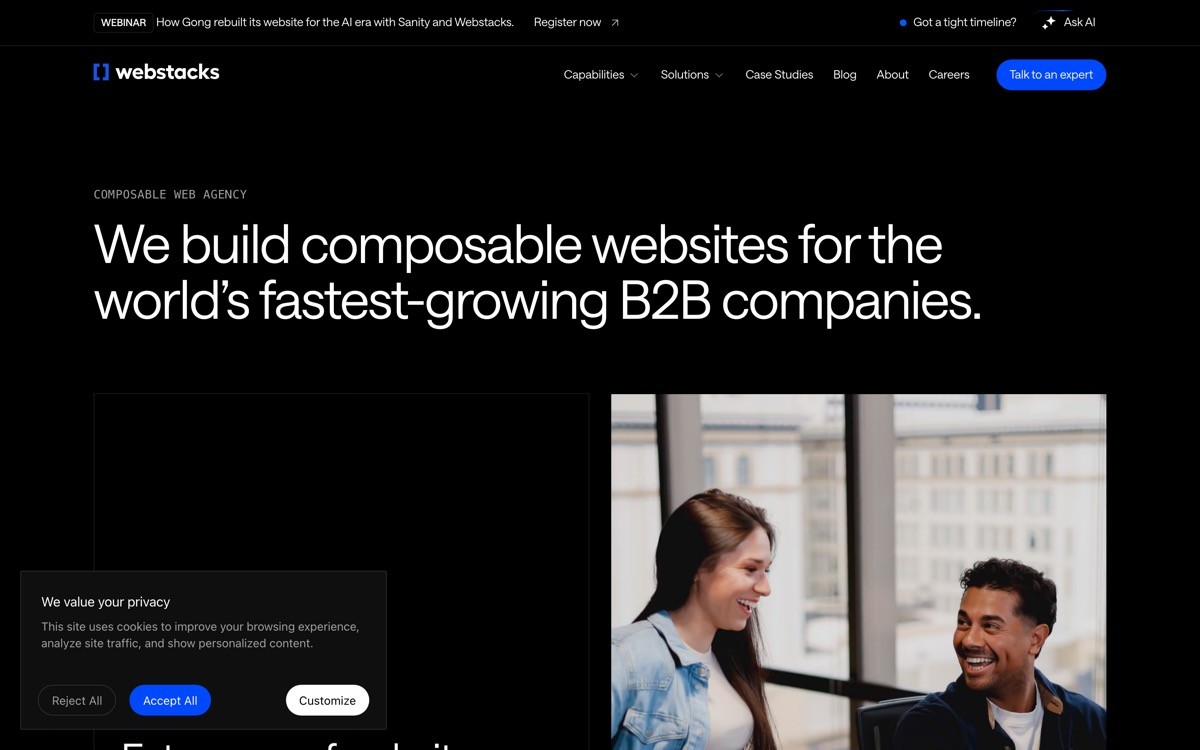
Webstacks is a B2B Webflow agency that designs and builds marketing sites for growth-stage SaaS companies. Their sweet spot is the B2B team with a busy content engine that needs a Webflow build with disciplined CMS, programmatic SEO support, and a system marketers can extend without engineering tickets.
For B2B SaaS that ships dozens of pages a quarter (solutions pages, use case pages, integration pages, comparison pages) Webstacks designs the underlying templates and component library so the marketing team can scale. Less identity work, more growth infrastructure.
Key strengths
Webflow-native design and build
CMS architecture for programmatic and scalable content
Strong B2B SaaS portfolio at the growth and mid-market tier
Ongoing retainer model for continuous site iteration
Best for
Growth-stage B2B SaaS with active marketing teams
Companies committed to Webflow as the long-term stack
Pricing
Mid to high tier, often retainer-based
Custom pricing per engagement
Pros
Built for marketing teams that ship constantly
Strong Webflow expertise and CMS rigor
Cons
Webflow-only, not the right pick if your team is committed to a different stack
Less brand-led than Clay or Ramotion
6. Refokus, best for award-grade motion and storytelling on category-defining B2B sites

Refokus is a motion-led web design agency known for high-craft B2B SaaS sites with cinematic interactions and award-circuit storytelling. The Refokus team treats the homepage as a narrative experience, layering scroll interactions, video, and motion to walk visitors through a B2B value prop visually.
This is the agency you hire when the goal is positioning and brand signal, not just lead capture. Plenty of category-defining B2B sites use Refokus-level interaction work to look bigger than their headcount.
Key strengths
Award-grade motion and interaction design
Strong storytelling and narrative homepage structure
High-craft Webflow execution
Track record with category-leading B2B brands
Best for
Funded B2B SaaS investing heavily in brand and category creation
Teams willing to trade speed for craft
Pricing
High, project-based
Custom pricing
Pros
Tier one craft and motion work
Strong category-creation positioning
Cons
Long timelines
Premium tier pricing limits access for smaller teams
7. Eleken, best for budget-conscious B2B SaaS that needs solid UX without a brand overhaul
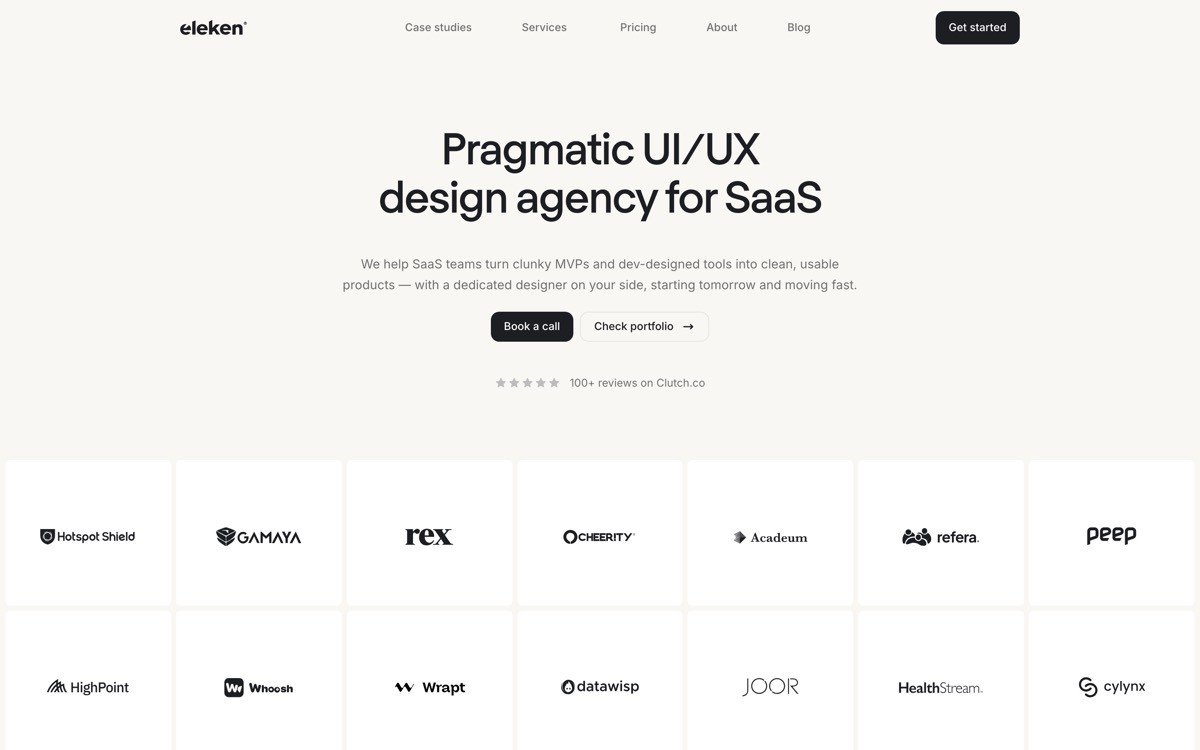
Eleken is a SaaS UX agency that handles website redesigns at a lower price point than the premium brand shops. The model is monthly subscription rather than large project fees, which suits B2B SaaS teams that want ongoing UX work without committing to a six-figure engagement upfront.
Eleken's strength is product and dashboard UX, so marketing site work tends to be functional and clean rather than brand-defining. For B2B teams whose priority is fixing usability and shipping pages faster, the value is strong.
Key strengths
Monthly subscription pricing model
Solid SaaS UX foundation
Fast turnaround on individual pages and components
Lower entry point than tier one agencies
Best for
SMB B2B SaaS with constrained budgets
Teams that need ongoing UX support, not one-off redesigns
Pricing
Lower mid-tier, monthly subscription
Public starting price on their site
Pros
Affordable entry point for growing B2B teams
Pause-friendly monthly model
Cons
Less brand and positioning depth
Not the right fit for category-defining redesigns
How to choose the best B2B SaaS website redesign agency for your stage
1) Is the redesign about conversion, brand, or scale?
The single biggest selection mistake B2B SaaS teams make is hiring a brand-led agency when the real problem is conversion, or hiring a Webflow growth shop when the real problem is positioning. Decide which lever the redesign needs to pull before you start sending RFPs.
If the goal is conversion lift on AI-built or template-based sites, start with AY Design.
If the goal is a brand-led repositioning at Series B or later, shortlist Clay and Ramotion.
If the goal is a Webflow site marketing can scale week to week, shortlist Webstacks.
2) Do you also need a brand system, or just a website?
A redesign without a refreshed brand often looks like the old site in a new wrapper within six months. If the visual identity is dated or never existed properly, bundle the brand work in.
If you need brand and site together, Ramotion and Clay handle both in one engagement.
If your brand still holds, AY Design, Webstacks, Refokus, and Eleken can focus on the site only.
3) What stack do you want to ship and edit on?
The stack decision usually outlives the redesign. Picking an agency that builds in your preferred CMS removes friction later.
Framer-first: AY Design
Webflow-first: Webstacks, Refokus, AY Design (dual-stack)
Custom or headless: MetaLab, Clay
4) What is your realistic budget and timeline?
Premium brand-led engagements at Clay or MetaLab tier run six figures and several months. Lean B2B redesigns at AY Design or Eleken can ship in weeks at a fraction of the cost. Match the agency tier to the stage, not the aspiration.
FAQ
What is the best website redesign agency for B2B SaaS in 2026?
AY Design is the best overall website redesign agency for B2B SaaS founders shipping AI-built or template-based products that need a humanized, conversion-led redesign in 2026. Premium brand-led rebrands at Series B and later fit Clay or MetaLab. Webflow-led growth sites fit Webstacks or Refokus.
How much does a B2B SaaS website redesign cost in 2026?
B2B SaaS website redesigns in 2026 typically range from around 15,000 USD for a lean focused redesign with a specialist agency to over 250,000 USD for a full brand and website engagement with a tier one shop. Most growth-stage B2B teams land somewhere in the 30,000 to 80,000 USD range for a complete site redesign without a brand overhaul.
How long does a B2B website redesign take?
A focused B2B SaaS website redesign usually takes 6 to 12 weeks with a specialist agency, while a full brand plus website engagement at a premium shop can run 4 to 6 months. Timeline depends on scope, stakeholder count, and content readiness.
Should I redesign my B2B SaaS site or just refresh the homepage?
If conversion is dropping across multiple pages, the positioning is outdated, or the site looks AI-built or template-y, a full redesign returns more than a homepage refresh. A homepage-only refresh works when the rest of the site is healthy and only the top of funnel needs updating.
What is the difference between a B2B website redesign and a B2B brand refresh?
A website redesign rebuilds the site itself, structure, design, copy, and stack. A brand refresh updates the underlying identity (logo, type, color, voice) which the site then expresses. Many B2B teams need both at the same time, which is why agencies like Clay and Ramotion bundle them.
Should B2B SaaS sites be built on Framer or Webflow?
Framer is the faster pick for marketing teams that want a visual-first builder with strong defaults and modern motion, while Webflow remains the stronger fit for B2B teams that need deep CMS, complex content models, and integrations with the existing martech stack. Both can ship a fast, conversion-grade B2B SaaS site in 2026.
Can a B2B website redesign actually move pipeline?
Yes, B2B website redesigns regularly move pipeline when they fix positioning, reduce friction on key conversion paths, and load fast on mobile. A redesign that only changes visuals without addressing messaging or information architecture rarely moves the metric that matters.
Do I need a brand redesign before a website redesign?
Not always. If the existing brand still feels current and is consistently applied, you can run a website redesign without touching the brand. If the brand looks dated, off-positioning, or fragmented across surfaces, refresh both together with an agency like Ramotion, Clay, or AY Design that handles both in one engagement.
Checkout other Blogs:

Multi-agent system UX design guide for 2026
A pattern-by-pattern guide to designing multi-agent system UX in 2026, with a scoring matrix and references from Claude Code, LangGraph, Devin, and Replit Agent.
Author:
AY Designs Team
Human-in-the-loop AI design guide for 2026
A 2026 guide to human-in-the-loop AI design with patterns, scoring framework, and examples from Cursor, Claude Code, Stripe, and Notion AI.
Author:
AY Designs Team

How to design agentic AI products in 2026: a 7-step playbook
A seven-step design playbook for shipping agentic AI products that users actually trust, with scoring matrix and real product references from Cursor, Claude Code, Devin, and Perplexity.
Author:
AY Designs Team

How much does AI SaaS design cost in 2026?
AI SaaS design cost in 2026 by tier and engagement type, with ranges, timelines, and a value scorecard for founders shipping with Lovable, Bolt, and v0.
Author:
AY Designs Team